← शोध समाचार पर लौटें

#student agency

student agency

5 पेपर

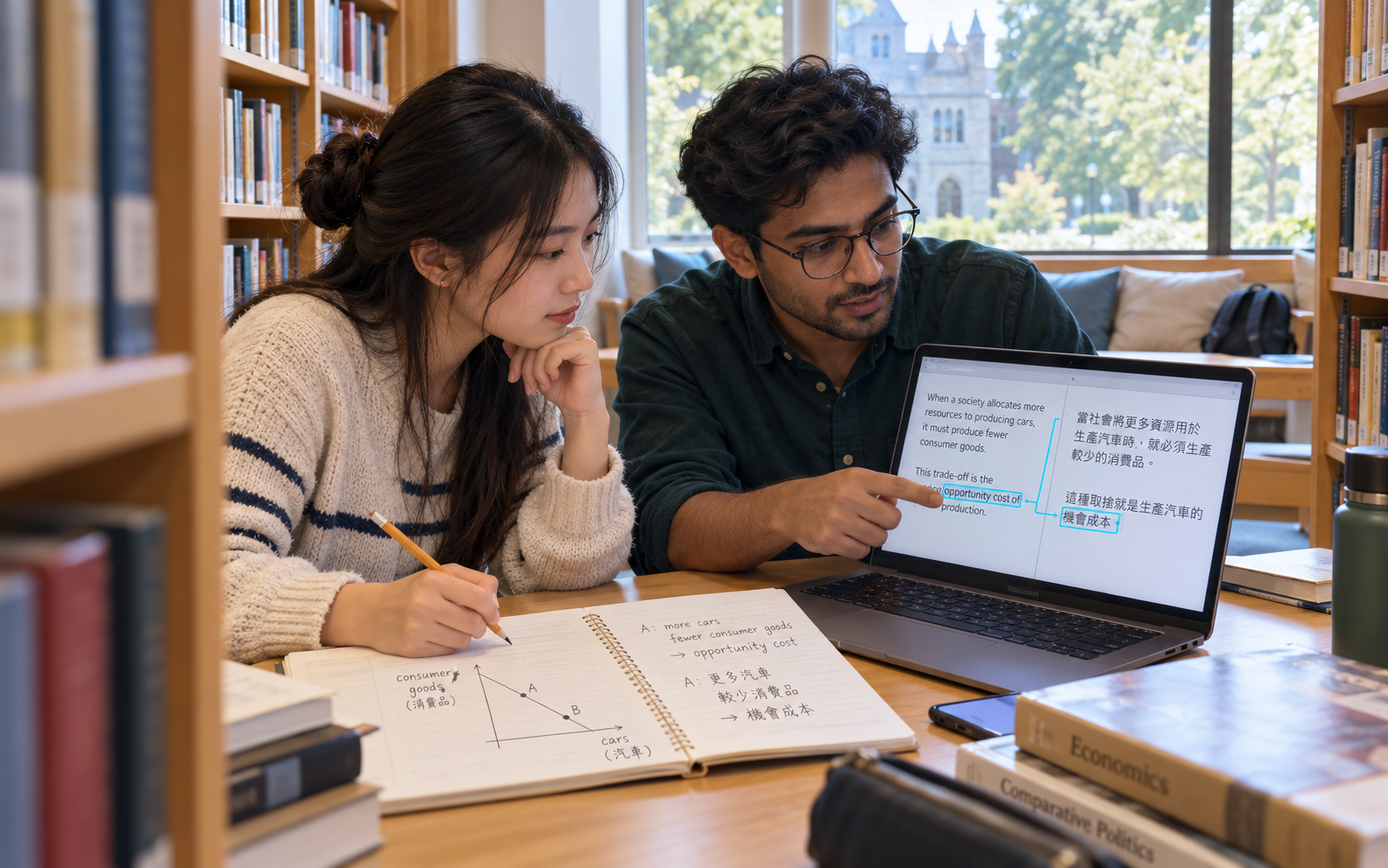
An East Asian female university student and a South Asian male language tutor compare bilingual economics notes and two AI explanations in a sunlit campus language centre
टूल / डेटासेट2026
टूल / डेटासेट 226

Preprint: Students’ access to generative AI did not ensure equally usable support across languages

Ming Li, Qin Xie, Ariunaa Enkhtur, Lilan Chen, Fei Cheng

arXiv preprint (work in progress)

Interviews with 42 undergraduates at universities in China, Japan, and Mongolia explored how students selected AI tools, chose interaction languages, and checked outputs. Participants described different routes from technical access to useful academic support, including switching languages when responses seemed inadequate. This work-in-progress preprint presents situated accounts rather than national comparisons or measured learning gains. It raises practical questions about evaluating an AI service in the languages students actually use.

preprintmultilingual educationAI access
500-शब्द सार पढ़ें →
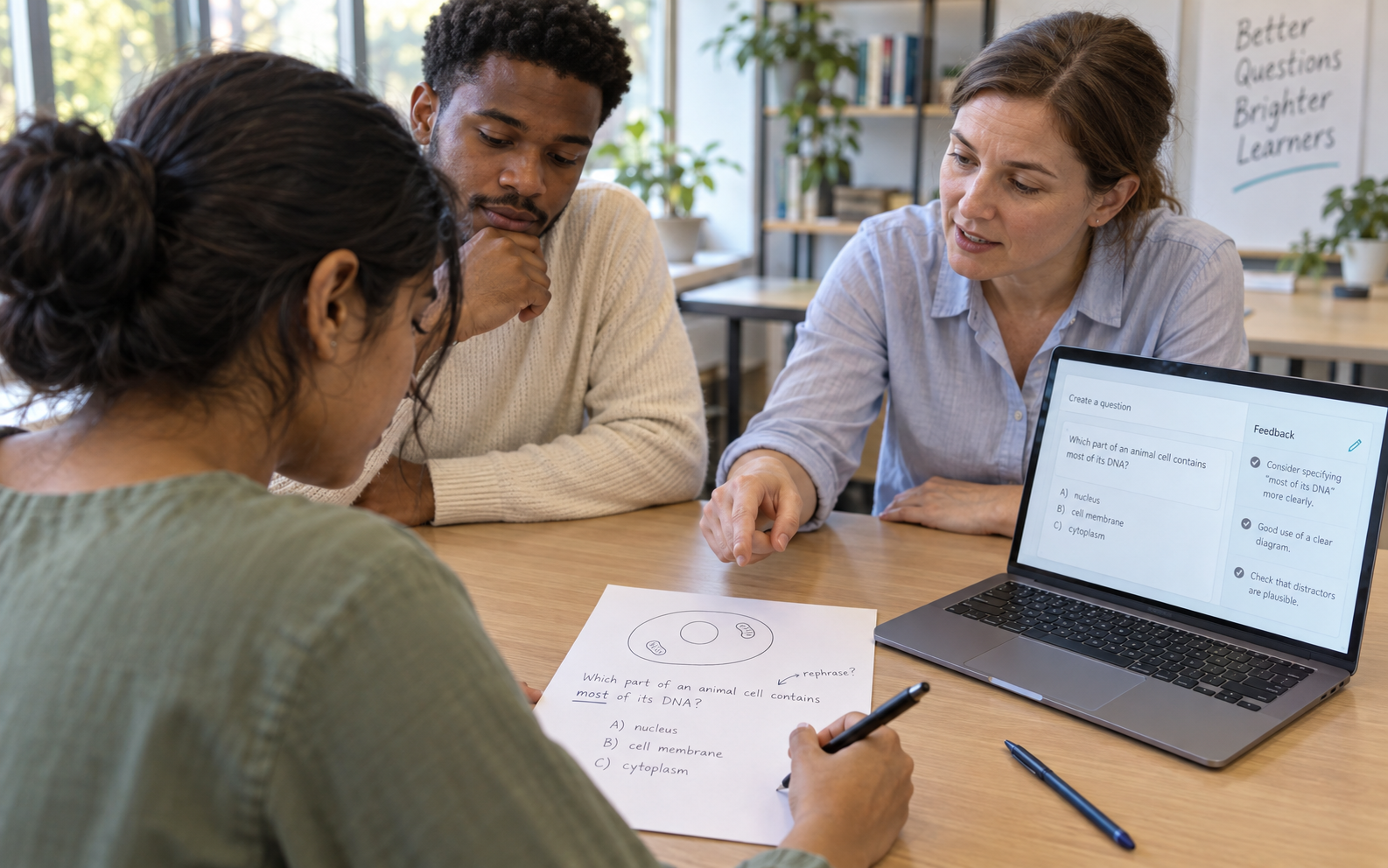
A university student revises a biology multiple-choice question while a classmate and lecturer consider feedback shown beside a simple animal-cell drawing.
जर्नल पेपर2025
जर्नल पेपर 212

AI-Assisted Co-Creation: Bridging Skill Gaps in Student-Generated Content

Stanislav Pozdniakov, Jonathan Brazil, Mehrnoush Mohammadi, Mollie Dollinger, Shazia Sadiq, Hassan Khosravi

Journal of Learning Analytics

Students often rated AI feedback positively when creating multiple-choice questions in RiPPLE, but visible revision followed in only about 35 percent of editing sessions. The study examined feedback, activity logs, and student comments across introductory university courses. Its findings separate liking a response from using it and from learning through it. They suggest that question-authoring activities need explicit support for evaluating feedback, alongside safeguards against inaccurate or irrelevant suggestions.

Learning AnalyticsStudent AgencyAI Feedback
500-शब्द सार पढ़ें →
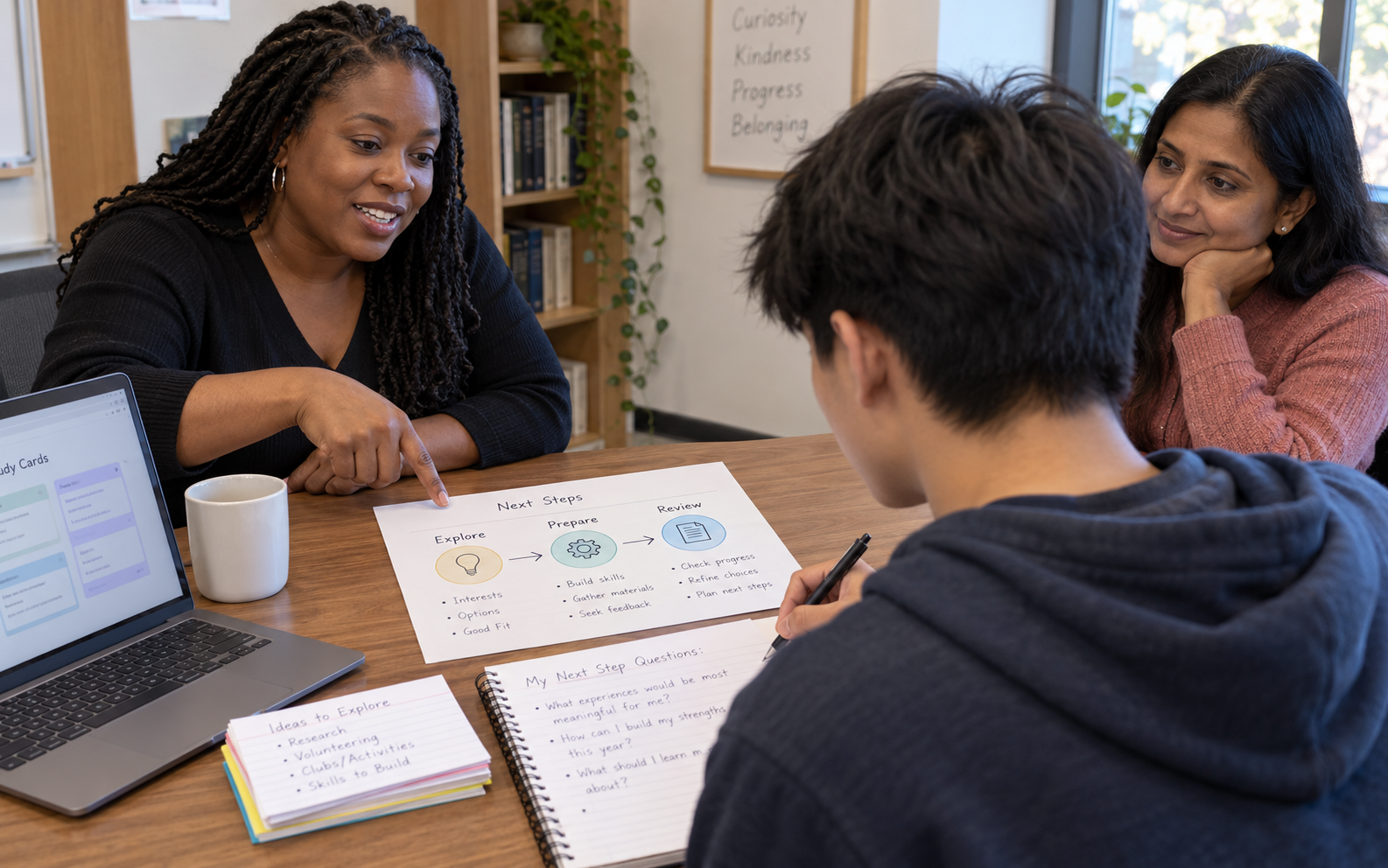
A counsellor and parent help a teenager review a next-step planning sheet and study cards while he records questions.
नीति / नैतिकता7 अक्टू॰ 2026
नीति / नैतिकता 201

Product news: ChatGPT adds teen study tools and previews a U.S.-focused College Planner

OpenAI

AI Product and Learning Report

OpenAI's October 7 update combines teen study tools with a forthcoming College Planner. The planner was not yet launched: its initial design targets U.S. students in grades 10–12 planning for four-year college, with wider coverage intended later. The announcement also discusses flashcards, quizzes, and note capture. Anthropic's teacher resources and Gemini's classroom tools provide comparisons, while reported usage should not be mistaken for demonstrated learning or admissions outcomes.

product newsChatGPT for TeensCollege Planner
500-शब्द सार पढ़ें →
A lecturer and two students compare a hand-drawn low-carbon neighborhood plan with a streetscape on a laptop, discussing a cycling route and solar roofs.
जर्नल पेपर2025
जर्नल पेपर 130

AI-supported climate futures activities accompanied greater hope, without isolating the contribution of AI

Shu-Chiu Liu, Pierre-Alexandre Château

Journal of Science Education and Technology

A climate-change course integrated image or text generation into a structured activity about desirable futures. Across two semester cohorts, students expressed more positive future perspectives and greater climate hope after instruction, with some self-perceived action gains in the image group. The study combined AI with scientific preparation, discussion, and narrative work, so it cannot attribute those changes specifically to AI or establish that intentions became actual climate action.

climate educationfutures thinkinggenerative AI
500-शब्द सार पढ़ें →
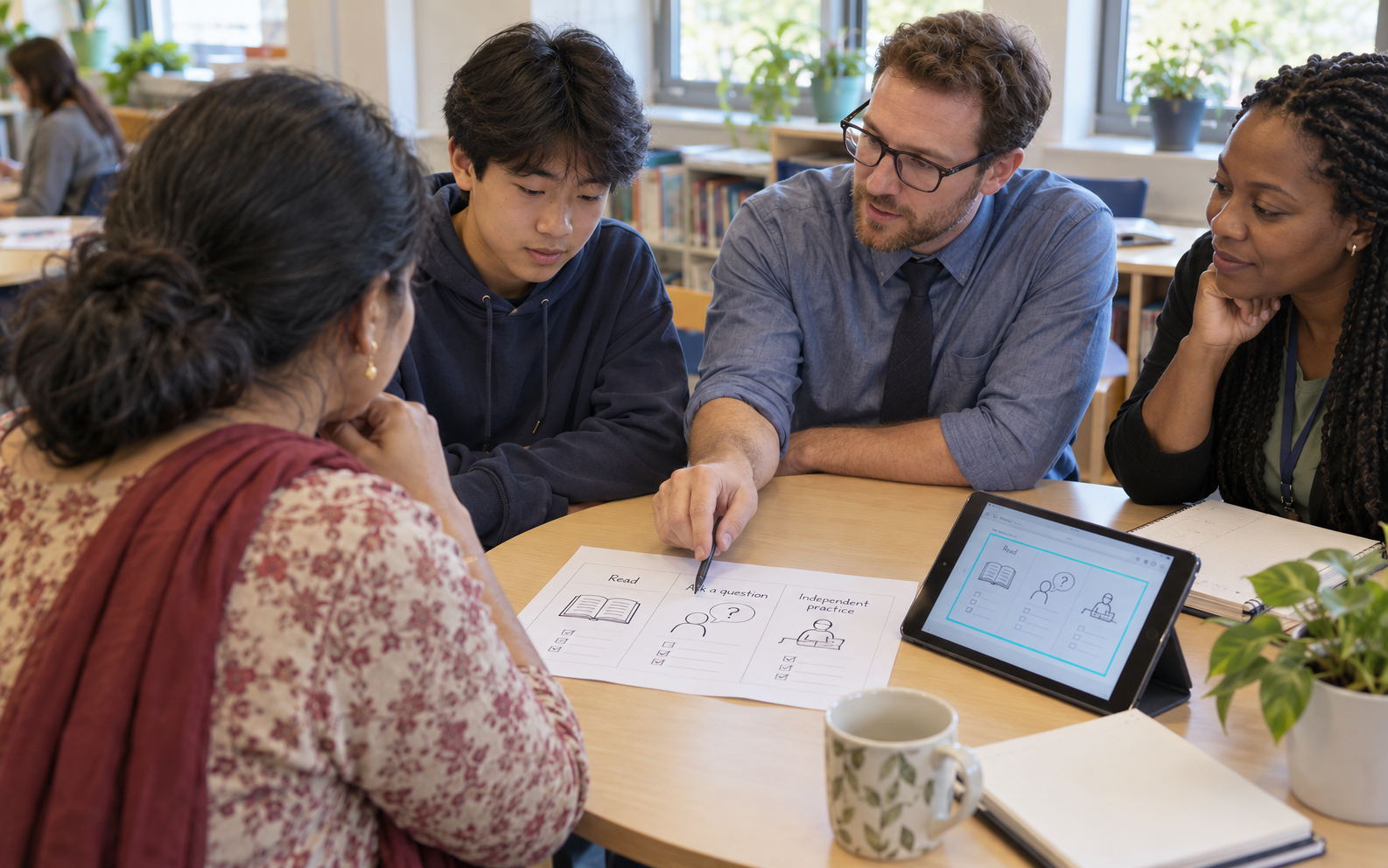
A parent, student, teacher and school coordinator discuss an illustrated learning-activity sheet and a tablet during a school meeting.
नीति / नैतिकता31 अग॰ 2026
नीति / नैतिकता 129

Industry news: OpenAI backs California youth AI safeguards while arguing for continued learning access

OpenAI

AI Product and Learning Report

OpenAI's August 31 policy statement supports California Senate Bill 1119 and argues that youth safeguards should preserve useful learning access. It is a company position urging action, not evidence that a law has taken effect or that a product is safe in every setting. Anthropic's teacher-focused institutional offer and Gemini's controlled Classroom access provide practical comparisons for schools considering which users, activities, and responsibilities belong in an AI programme.

product newsyouth AIage-appropriate design
500-शब्द सार पढ़ें →