Product news: ChatGPT Work, Claude Cowork and Gemini extend guided work across devices and classrooms
OpenAI, Anthropic, Google for Education
AI Product and Learning Report
500 字摘要

This product-news report follows a shift that is easy to overlook when attention stays on model benchmarks: AI work is becoming portable, persistent, and connected to the places where people learn. OpenAI's current ChatGPT desktop update lets cloud Work conversations and Project context move across web, mobile, and desktop. Anthropic is extending Claude Cowork from the desktop to web and mobile while delegated work continues in the background and consequential decisions return to the user. Google is linking adaptive study notebooks in Gemini with NotebookLM and teacher-led activities in Google Classroom. Together, these products make continuity across devices and institutional contexts a central design question for AI in education.
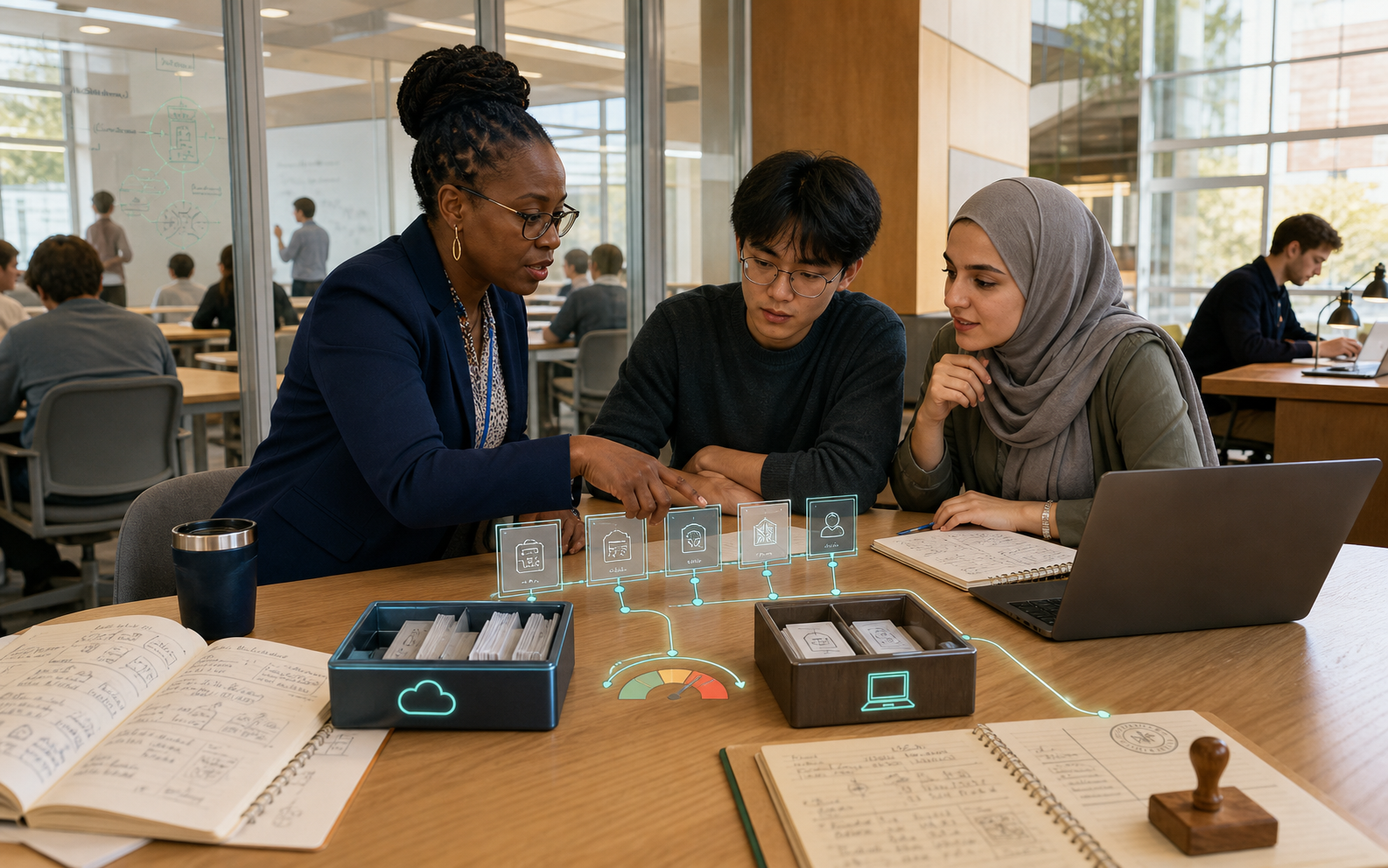
OpenAI's July 16 release notes describe a clearer desktop separation between Chat for conversational help and Work for longer, end-to-end tasks. Chat and Work conversations now share a unified recent-items view, existing ChatGPT Projects appear in the desktop app, and users can begin a cloud Work conversation on one surface and continue it on web, mobile, or desktop. Local Work conversations remain on the computer. The distinction is important for schools and universities: a project can preserve approved files, prior instructions, and work history across settings, but local and cloud tasks do not have the same data boundary.
For teaching and academic work, that continuity could support a research project that begins in a seminar, continues during independent study, and returns for review without repeatedly rebuilding context. Faculty and staff could also carry a multi-step analysis or drafting workflow between office and campus devices. Yet convenience can obscure what the system retained, which files shaped the result, and whether a mobile review was substantial. Institutions should label cloud and local work clearly, define which project materials may sync, and require process evidence when the task is assessed.
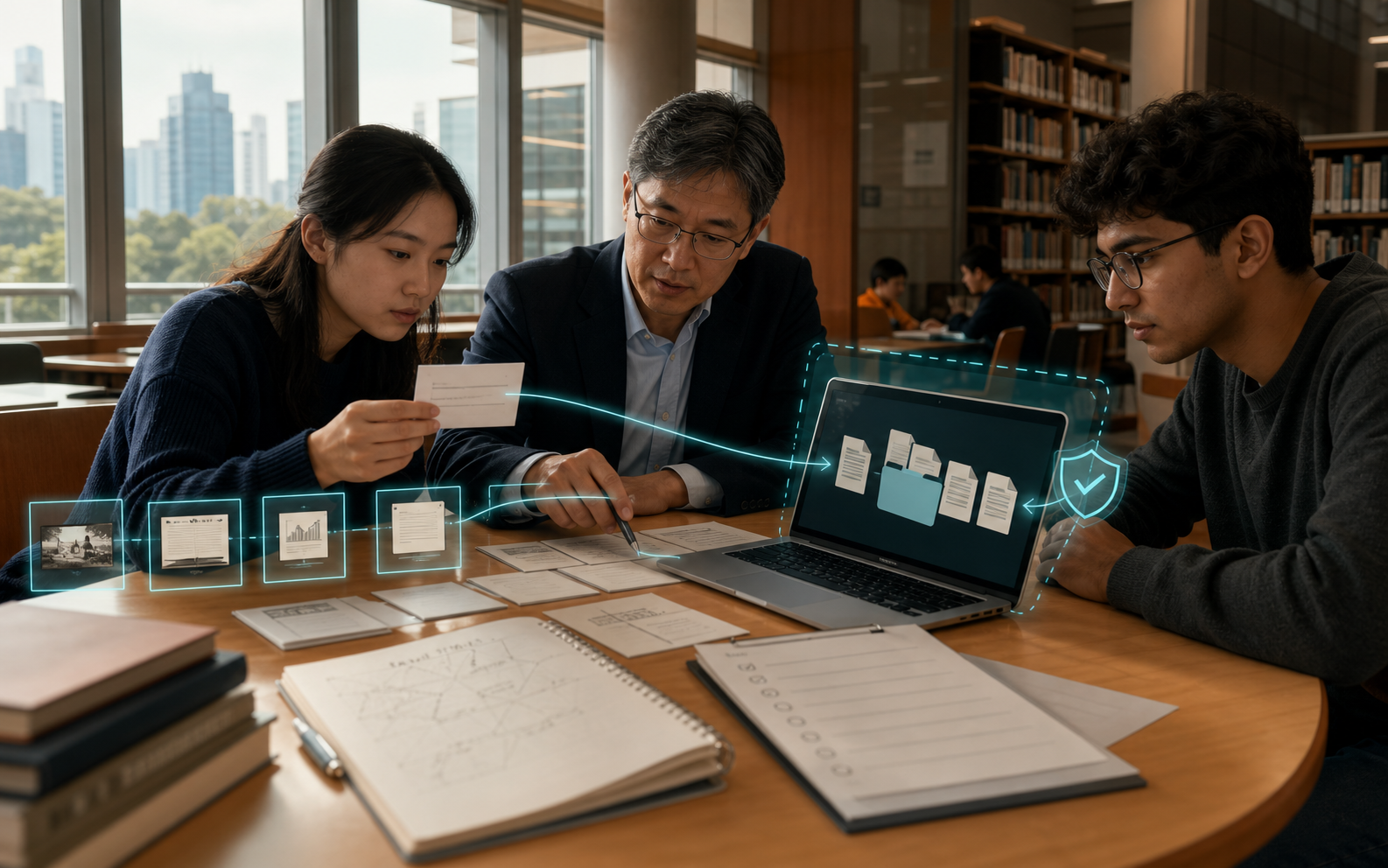
Anthropic's July 7 Claude Cowork announcement presents a similar transition. Cowork can operate across connected files, calendars, email, messaging, the web, and other tools until a delegated task is complete. The new web and mobile rollout, beginning in beta with Max users and expanding to more plans, allows a person to start work at a desk, monitor or redirect it from a phone, and retrieve the result elsewhere. Background and scheduled tasks can continue when the original device is offline. When the system reaches a decision reserved for the user, it sends the question to the phone; Anthropic says the output remains subject to human review and approval.
This design could help a teacher monitor a long-running resource search or let a project team review a draft between meetings. It also makes oversight more demanding. A notification is not proof that a person understood the preceding steps, and approval on a small screen can encourage superficial checking. The desktop retains the fuller Cowork experience, including local files and browser use, so capability and risk differ by surface. Educational pilots should identify which tools and records are available on each device, preserve an auditable plan and action history, and reserve enough time and screen space for meaningful review.
Google's June education release provides the most explicitly pedagogical version of portable continuity. Study notebooks in the Gemini app begin with a learner's goal or uploaded course materials and a diagnostic quiz. Gemini then creates bite-sized lessons and updates the plan as quiz results and new materials arrive. The notebooks can connect with NotebookLM for source-grounded questions, flashcards, and other study artifacts. Google also announced no-cost ACT and GRE practice tests, with performance broken down by topic to guide subsequent study.
The institutional bridge is Google Classroom. Google says students of all ages will be able to use Gemini in Classroom for study guides, quizzes, and Guided Learning grounded in course materials. Teachers will be able to assign a study notebook from Classroom and receive insights about where an individual learner or class may need support. The release is staged: study notebooks launched first for adult personal accounts, were scheduled to reach school-issued accounts later, and were desktop-only at announcement, with mobile support planned for later in the summer. Those limits matter when institutions evaluate access and equity.
None of these announcements establishes that cross-device persistence improves learning. Continuity may reduce setup friction, but it may also weaken stopping points where learners normally recall, reorganize, and explain what they know. Background agents can complete work while the learner is absent; adaptive notebooks can personalize activity while concealing why the pathway changed. Product evaluation should therefore measure independent understanding, not only completion speed, engagement, or the smoothness of handoff.
For Hong Kong schools and universities, the practical response is to design continuity with boundaries. A pilot should map what context follows the user, distinguish local from cloud storage, restrict connectors, show students when an agent continues without them, and require review on an appropriate device before anything consequential is submitted. Teachers should be able to inspect sources, intermediate actions, diagnostic evidence, and changes to an adaptive plan. Portability can make support more available, but educational value depends on whether learners remain able to pause, question, reconstruct, and take responsibility for the work.