GenAI-supported collaborative project-based language learning: effects on EFL undergraduates' achievement and autonomy
Safaa M. Abdelhalim, Maram Othman Almaneea
Asian-Pacific Journal of Second and Foreign Language Education
500 字摘要
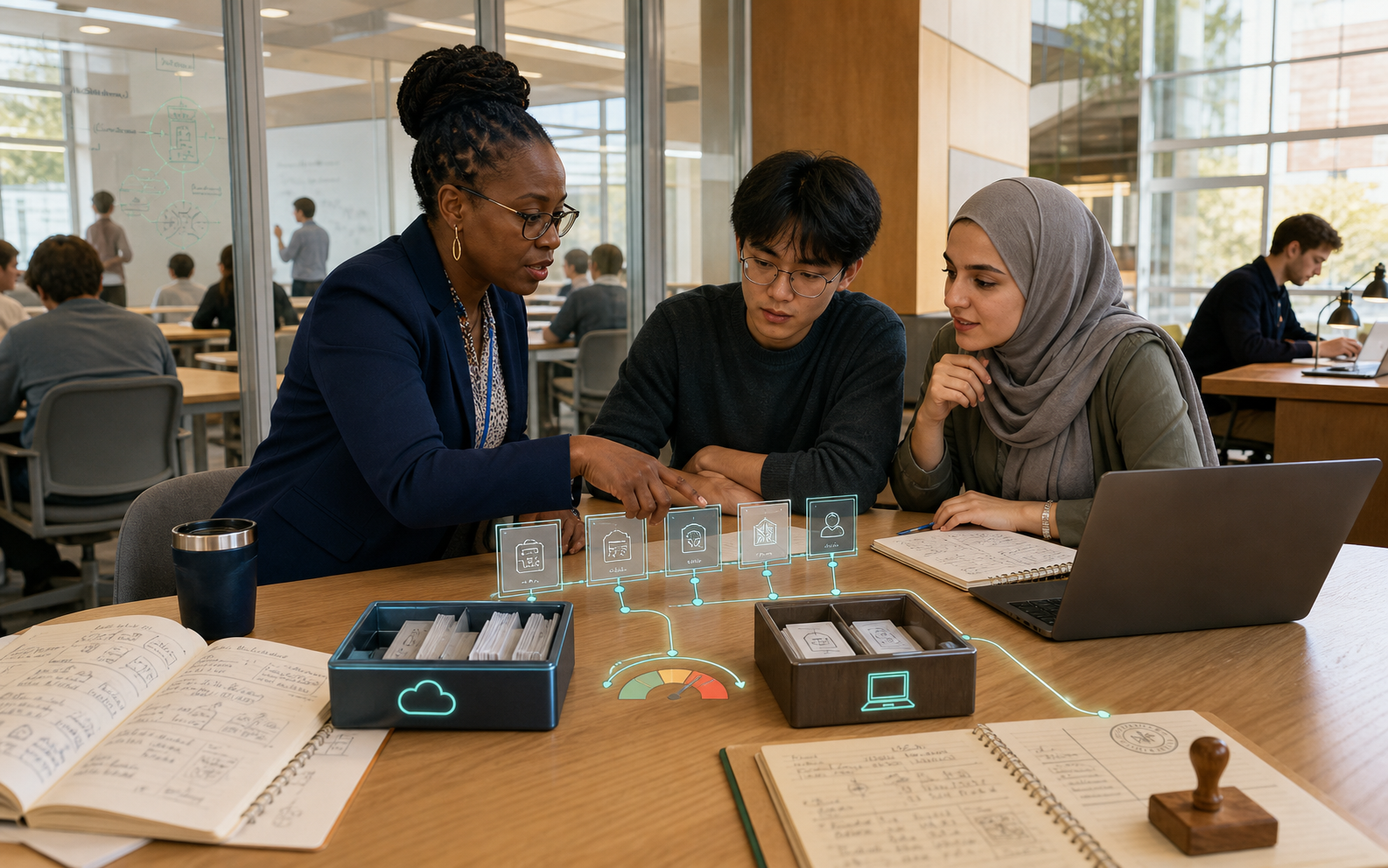
Abdelhalim and Almaneea investigate whether generative AI adds educational value when it is embedded in collaborative project-based language learning rather than offered as an individual chatbot. Their 2026 open-access study followed 53 first-year female computer-science students in a required English course at a Saudi university for 12 weeks. The design combined quantitative achievement and autonomy measures with qualitative reflections from the experimental group.
Two intact classes were selected by convenience. One class of 28 students completed sustained collaborative projects supported by generative AI; the other class of 25 received the same syllabus and contact time through conventional individual and pair activities with instructor feedback. Because students were not individually randomized and the experimental condition changed both pedagogy and technology, the study estimates the effect of the combined project-based, collaborative, GenAI-supported design rather than the isolated effect of AI.
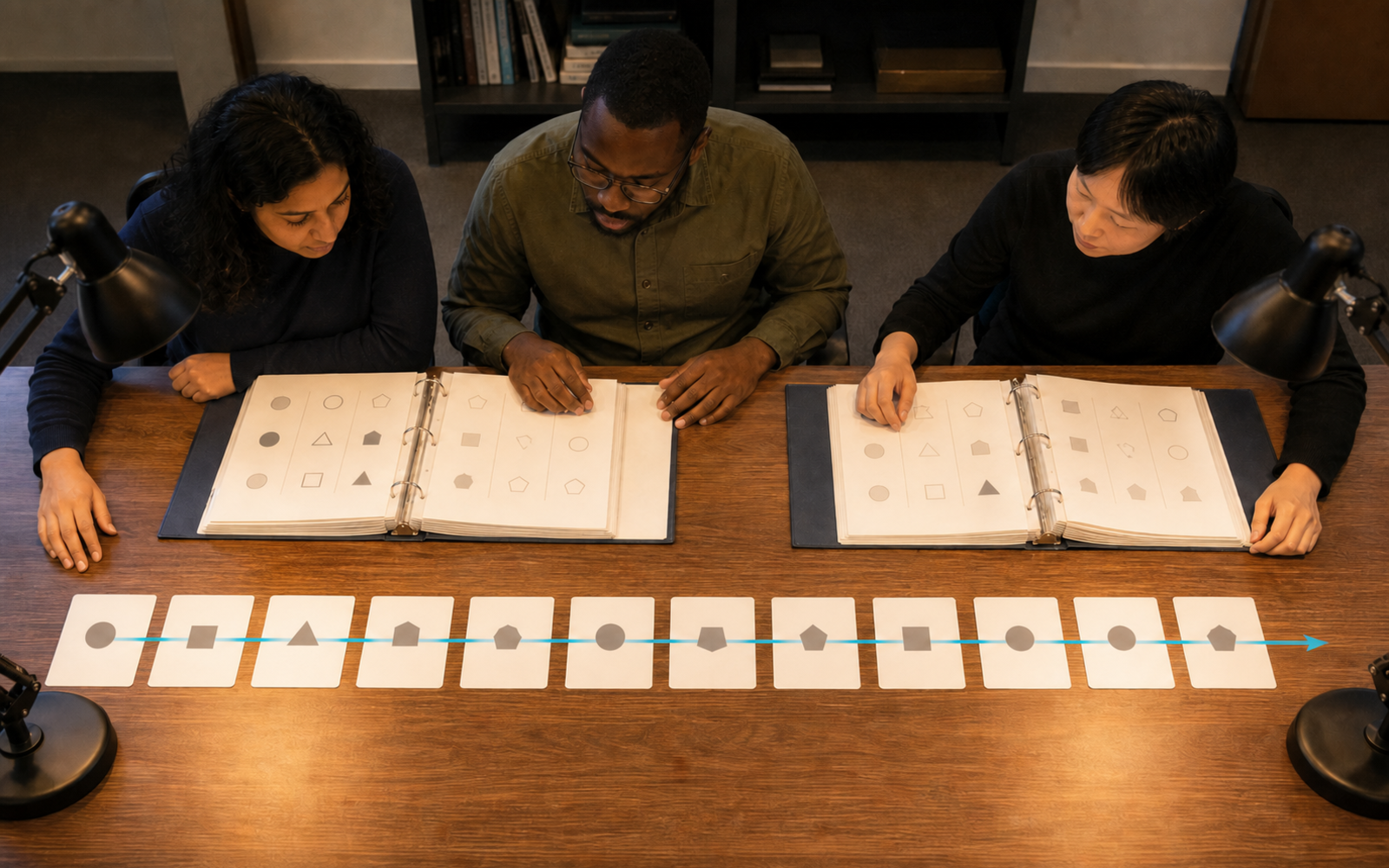
English achievement was measured with parallel pre- and post-tests covering reading, vocabulary, grammar, and writing. The researchers reported acceptable reliability and used calibrated independent raters for writing. Learner autonomy was measured through a 16-item questionnaire covering awareness, motivation, intentionality, self-regulation, and critical ability. Its internal consistency was high, although construct validation was exploratory because the sample was small.
Linear mixed-effects models found significant time-by-group interactions for reading, vocabulary, writing, and total achievement. The total-score interaction estimate was 6.387, with p below .001. Grammar improved in both conditions, but the interaction was not significant, suggesting general course progression rather than a distinctive intervention effect. The experimental class's post-test gains were more consistent, while the control class showed little overall change.
All five autonomy dimensions and the total autonomy score also showed significant time-by-group interactions favoring the experimental condition. The largest reported patterns were in motivation, self-regulation, and critical ability. Student reflections described shared planning, role distribution, peer assistance with prompting, iterative revision, confidence, and greater awareness of learning strategies. They also identified technical problems, uncertainty about tool choice, and concern about over-reliance.
The intervention appears stronger than unsupervised tool access. Students worked in teams, received an instructor-led orientation, negotiated project decisions, and had to evaluate and revise generated material. Those features may explain why autonomy increased instead of being displaced. They also mean a school cannot reproduce the reported outcome by merely enabling a chatbot account.
Several limitations narrow the claim. The sample came from one institution, one course, two intact classes, and one gender group. Baseline scores were broadly comparable but not created by individual random assignment. The control group did not receive an equivalent collaborative project without GenAI, so technology and pedagogy remain confounded. The autonomy instrument was locally developed, and the study did not report a delayed AI-free test that would establish durable transfer.
For Hong Kong language programmes, the practical lesson is to pilot a bounded collaborative project, not generic AI access. Define roles, require a shared prompt and revision log, make learners justify which suggestions they accept, and include teacher checkpoints. Compare the intervention with a similarly collaborative non-AI project, assess individual language performance after the project, and revisit outcomes later without AI. The study offers promising evidence for a carefully scaffolded package while leaving the causal contribution of GenAI itself unresolved.