News: ChatGPT Sites, Claude creative tools and Gemini Education turn learners into builders
OpenAI, Anthropic, Google for Education
AI Product
Резюме на 500 слов

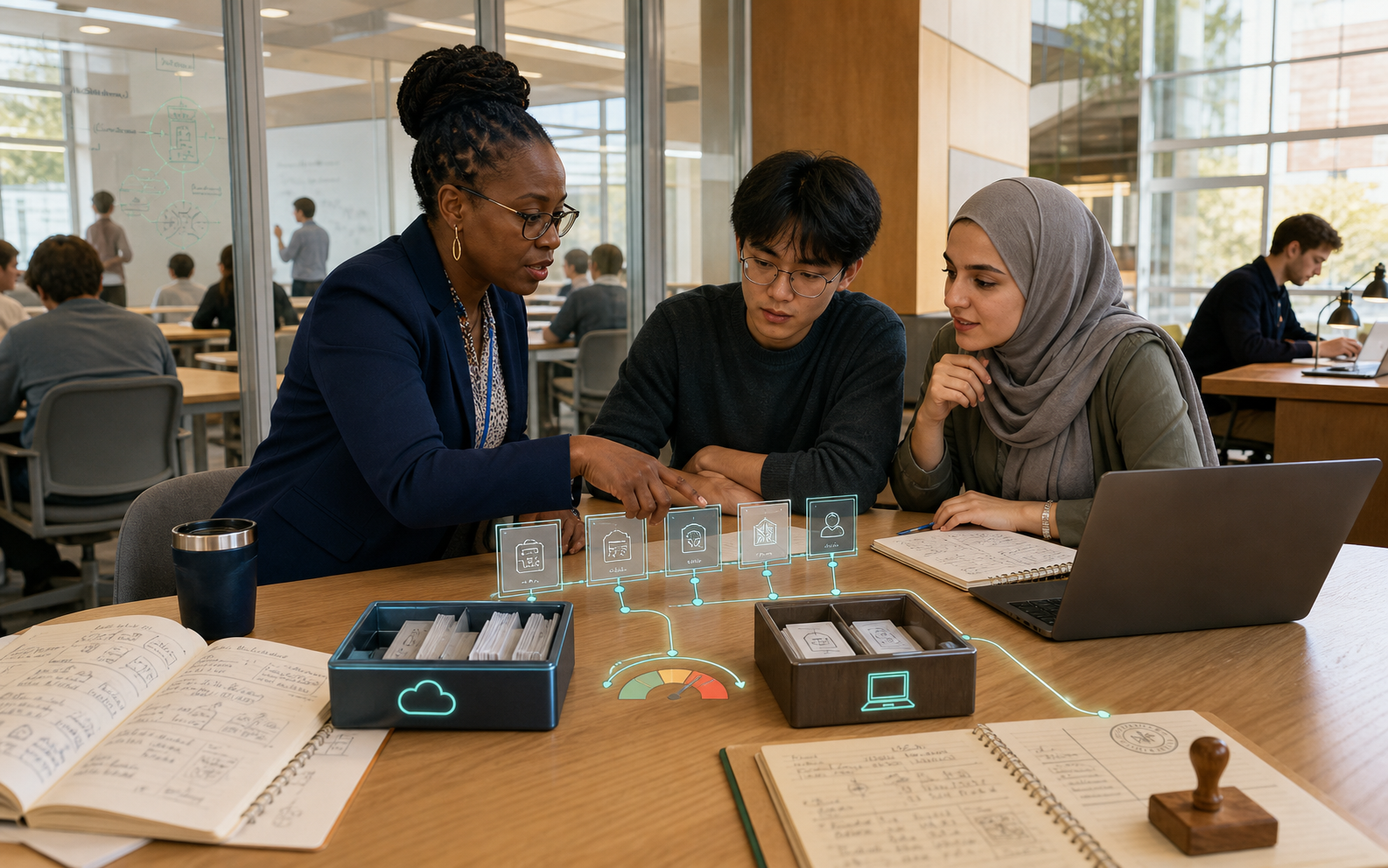
This product-news roundup follows a distinct shift in educational AI: learners can increasingly move from asking for answers to building usable artifacts. OpenAI's ChatGPT Sites turns a description into an interactive website or lightweight app. Anthropic's Claude for Creative Work connects Claude and Claude Code to professional design, audio, three-dimensional modelling, and production tools. Google's current Gemini for Education offer combines Guided Learning with quizzes, research, visual explainers, notebooks, and course integrations. Together, the products create new possibilities for project-based learning, but they also make it easier to produce a polished artifact without mastering the concepts, tools, or decisions behind it.
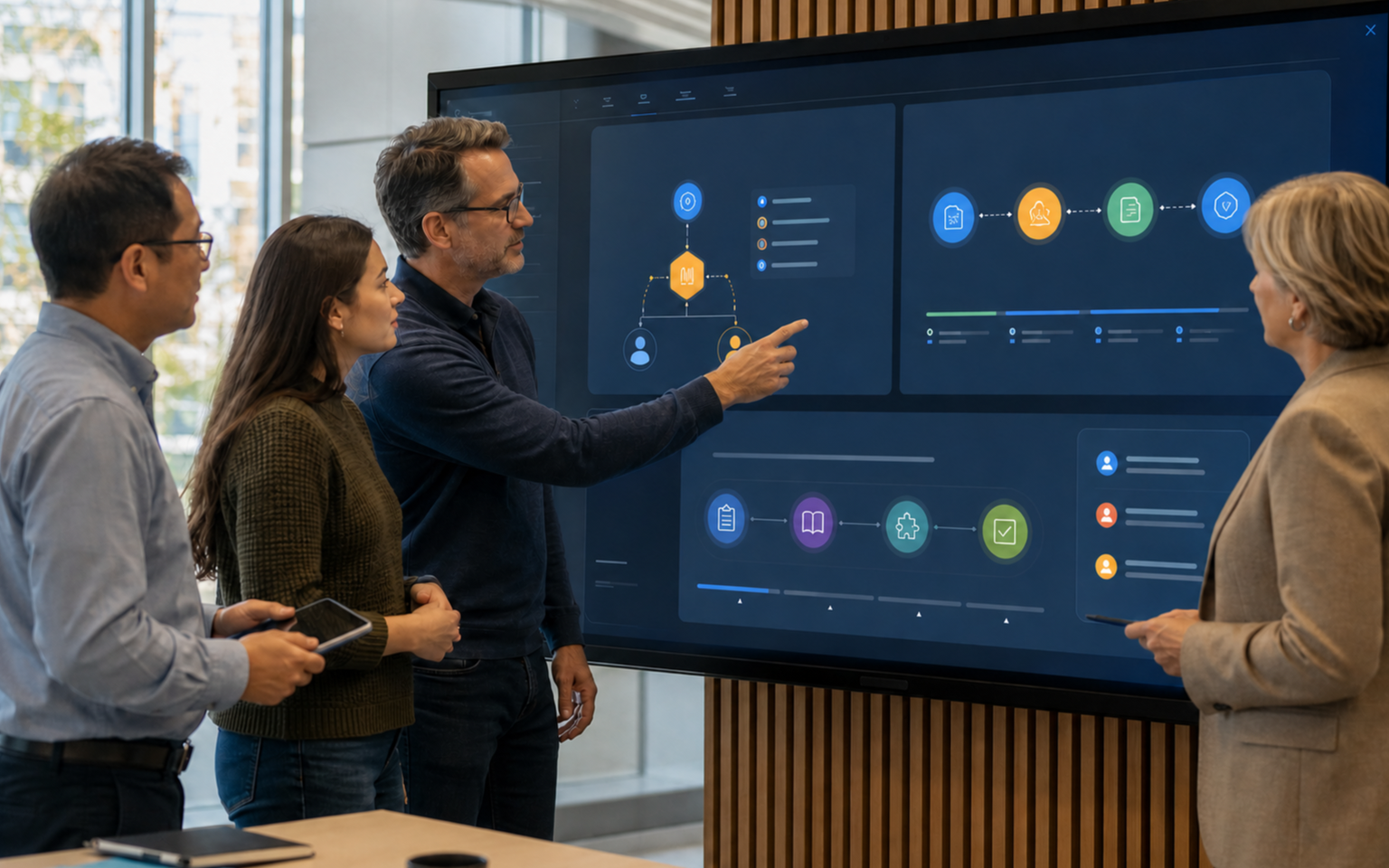
OpenAI's current ChatGPT Sites guidance describes a public beta that can create, preview, publish, and share interactive websites and lightweight applications. A user can start in ChatGPT Work on the web or in Work or Codex on the desktop, describe a dashboard, calculator, prototype, portal, or report, review a private preview, request changes, and publish it to a production URL. Paid plans receive access in stages, with Pro, Pro Lite, Enterprise, and Edu among the first groups. Workspace administrators can control creation and publishing, while public sharing must be explicitly enabled in Enterprise environments.
For education, Sites could lower the technical barrier to making a simulation, interactive explanation, research exhibit, class dashboard, or decision tool. The learning value depends on the task design. If a student only describes the desired output and submits the deployed result, the finished site may conceal weak understanding. A stronger assignment would require a written specification, evaluation criteria, version history, accessibility checks, source attribution, tests of calculations, and an explanation of what the learner changed after reviewing the generated site. OpenAI also tells users to review content and audience before publishing, which is especially important when projects contain student data, copyrighted material, or public forms.
Anthropic's April 28 Claude for Creative Work release applies the same artifact-building direction to established creative software. New connectors span Ableton, Adobe Creative Cloud, Affinity by Canva, Autodesk Fusion, Blender, Resolume, SketchUp, and Splice. Anthropic says Claude can act as an on-demand tutor for complex tools, while Claude Code can create scripts, plugins, shaders, procedural animation, and generative systems. The company is also working with art and design programmes at the Rhode Island School of Design, Ringling College of Art and Design, and Goldsmiths, University of London, giving students and faculty access to Claude and the connectors.
These integrations could support creative computation, design iteration, and interdisciplinary maker work. They also blur the boundary between learning a tool and delegating the tool. Educators should therefore ask students to inspect and annotate generated scripts, preserve rejected versions, explain material and aesthetic choices, and demonstrate a technique independently. Licensing, provenance, connector permissions, and the privacy of unpublished creative work also belong in the assessment, not only in institutional policy.
Google's Gemini for Education products add an explicitly educational layer to the same trend. Google's higher-education guidance describes Guided Learning for deeper understanding, personalized quizzes and flashcards, research across browser tabs, video and audio overviews, Gemini LTI assignments in Canvas, improved LaTeX and PDF generation in Gemini Canvas, and presentation drafting. The purpose is broader than content generation: students can study, research, explain, and create within school-issued environments, while institutions can provide Gemini for Education and NotebookLM through managed accounts.
For Hong Kong schools and universities, the combined product signal is a move from prompt literacy toward artifact literacy. A useful pilot should ask whether learners can define the problem, judge the generated design, verify code and sources, improve accessibility, document ownership, and defend the final artifact without the tool. Product access should be paired with teacher exemplars, age-appropriate privacy controls, and rubrics that reward process and subject knowledge. The opportunity is not merely faster production. It is to let more learners build meaningful things while making human judgment, disciplinary understanding, and responsible publication visible throughout the work.