News: OpenAI, Anthropic and Google build more scaffolded AI learning pathways
OpenAI, Anthropic, Google for Education
AI Product
Резюме на 500 слов

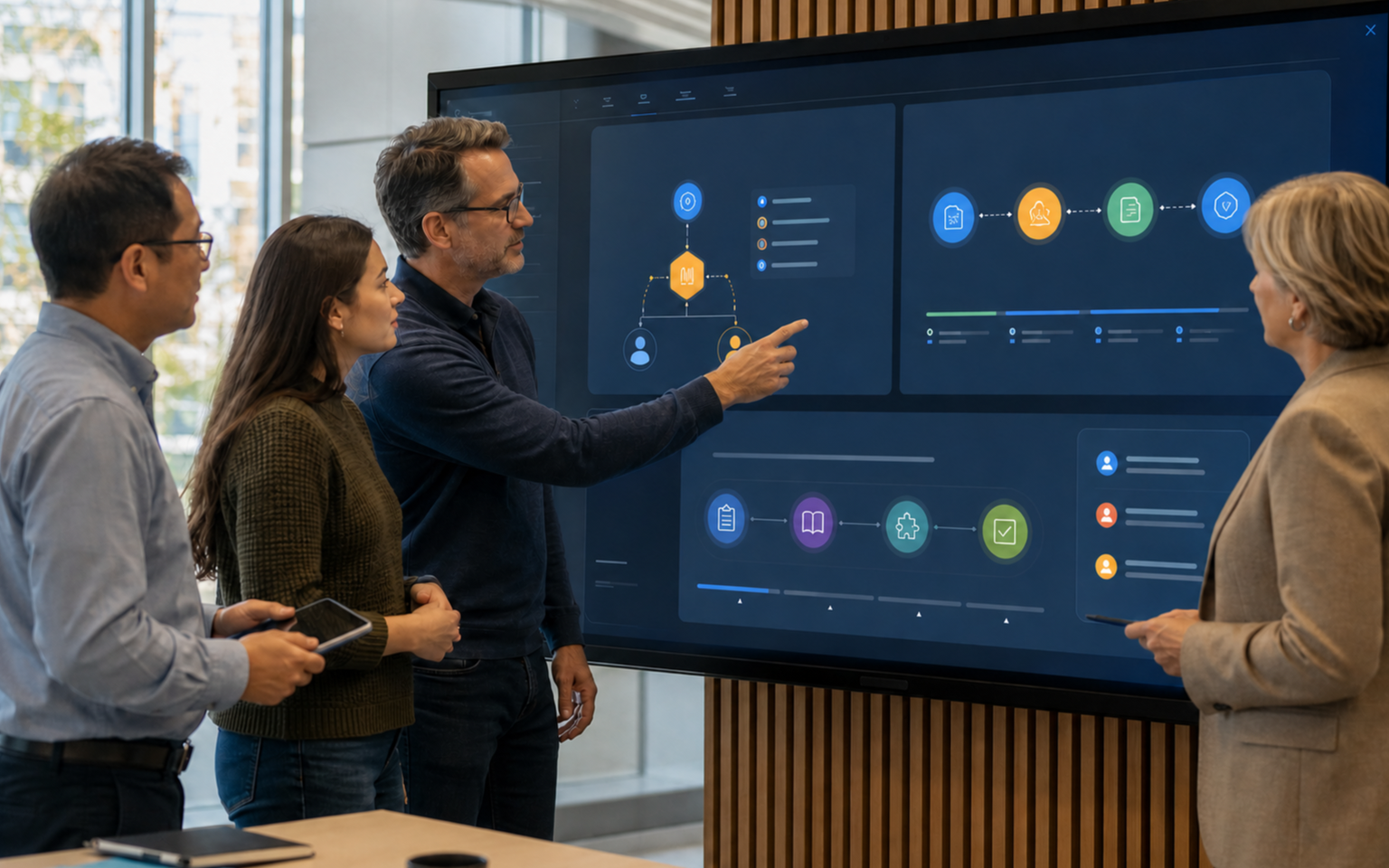
This product-news roundup tracks a common direction across OpenAI, Anthropic, and Google: education products are becoming more scaffolded, context-aware, and connected to a learner's stage or course. OpenAI is adding teen-specific learning and safety controls to ChatGPT. Anthropic and CodePath are putting Claude and Claude Code inside a collegiate computer-science pathway. Google is turning Gemini study notebooks and Classroom connections into course-grounded learning environments. The products differ, but each moves beyond generic chatbot access toward a designed learning pathway.
OpenAI's July 16 update combines learning features with age-aware safeguards. Parents with linked teen accounts can turn on Study Mode so that it is enabled by default in new chats. OpenAI has also added education-focused starter prompts for activities such as breaking down a topic, turning notes into a study guide, creating flashcards or practice questions, and checking evidence. These sit beside age prediction, parental controls, quiet-hour settings, break reminders, and stronger content protections. OpenAI says interactive mathematics and science experiences have expanded to more than 300 topics, but the more important product signal for schools is the attempt to connect guided learning with family-level controls and healthy-use boundaries.
Anthropic's February partnership with CodePath addresses a different transition: learning to build with AI in higher education and early-career preparation. CodePath says Claude and Claude Code will be integrated into courses including Foundations of AI Engineering, Applications of AI Engineering, and an open-source capstone, reaching more than 20,000 students across community colleges, state schools, and historically Black colleges and universities. A prior pilot asked more than 100 students to use Claude Code on real open-source projects. The partnership also includes public research into how AI changes coding education and economic opportunity.
That access focus matters because Anthropic reports that more than 40 percent of CodePath students come from families earning under US$50,000 a year. Yet access to an agentic coding tool is not itself a learning outcome. The curriculum must still make planning, debugging, testing, code reading, provenance, and independent explanation visible. This is especially important because current research distinguishes successful task completion from durable understanding: a learner can produce working code with AI support while learning no more than a peer using conventional resources.
Google's June education releases add a third model. Study notebooks in Gemini are designed as adaptive spaces grounded in a learner's goals and materials. In Google Classroom, students can create study guides, quizzes, and Guided Learning activities; teachers will be able to assign course-grounded study notebooks and review signals about where a class or individual learner may need more help. Google also announced a connected Classroom app in Gemini for educators, using assignments, grades, and materials to support progress analysis and tailored activities. Google says Workspace for Education data is not used to train its AI models, while availability depends on account type, age, language, device, and rollout stage.
For Hong Kong schools and universities, the combined product signal is not that one platform has solved AI-supported education. It is that vendors are competing on the surrounding learning architecture: age protections, guided interaction, curriculum integration, authentic projects, teacher context, and institutional controls. Procurement and pilots should therefore examine more than model capability. They should test whether scaffolds preserve productive struggle, whether teachers can inspect and override outputs, whether connected data are minimized and governed, and whether students can demonstrate understanding without the tool.
These announcements remain vendor news, not independent proof of improved attainment, wellbeing, or equity. A responsible pilot should define a learning purpose, map the data flow, document which tasks may be delegated, and compare product activity with independent evidence of knowledge and transfer. The strongest shared opportunity is to make AI fluency concrete: learners should practice describing goals, evaluating evidence, reviewing code or explanations, and deciding when not to delegate. The risk is that polished pathways make assistance feel educational even when cognition has been outsourced.