Product news: ChatGPT quizzes and Claude Code 2.1.233 sharpen the need for supervised AI learning workflows
OpenAI, Anthropic, Google for Education
AI Product and Learning Report
Резюме на 500 слов

This product-news report connects three current developments around supervised AI learning workflows. OpenAI's August 14 ChatGPT update adds interactive quizzes and more control over project memory. Anthropic's August 14 Claude Code 2.1.233 release improves the reliability, accountability and accessibility of agent work. Google's Gemini for Education provides a managed education environment for teaching, learning and institutional work. The shared question is not whether these systems can complete more tasks, but whether learners and educators can see, challenge and control how the work is done.
OpenAI says users can now ask ChatGPT to quiz them and answer interactive questions directly in a conversation. The feature is available on consumer plans and Edu plans on web and mobile. Eligible unshared projects can also switch between default and project-only memory after creation, while shared projects remain project-only. Free and Go users on the web gain a Think option for harder questions. These changes may support retrieval practice and more deliberate reasoning, but a quiz interface does not establish that questions are accurate, appropriately difficult or aligned with a curriculum. Teachers still need to review the prompts, require explanations for answers and check whether later performance transfers without assistance.
Claude Code 2.1.233 addresses a different layer of supervision. It adds GitLab merge-request support to worktree workflows and an opt-in gateway setting that can forward signed-in user identity so a proxy can attribute spending. Linux administrators can set memory limits for Bash commands, reducing the chance that a runaway build stalls a session. The release also fixes cloud sessions being marked lost while awaiting permission, repeated MCP reconnections against serverless services, and missing notification hooks for permission prompts in desktop and editor environments. Screen-reader interaction with the effort selector is improved, and argument substitution is hardened against unintended template expansion.
For programming education and research labs, these details matter because an agent's output is only one part of the evidence. A sound workflow should preserve who initiated the task, which branch or merge request was used, what resource limits applied, which permission was requested and where a person reviewed the result. Reliability improvements do not prove code correctness or learning; they make it more feasible to maintain an auditable process.
Gemini for Education offers the explicit institutional comparison. Google describes a no-cost service for qualifying institutions that supports teaching, learning and work, with administrator controls and reporting. Learners can create quizzes, practice tests, study guides and prototypes in Gemini Canvas, while the service is covered by education terms and Google says data is not human reviewed or used to train AI models. Those are product boundaries, not independent evidence of educational benefit.
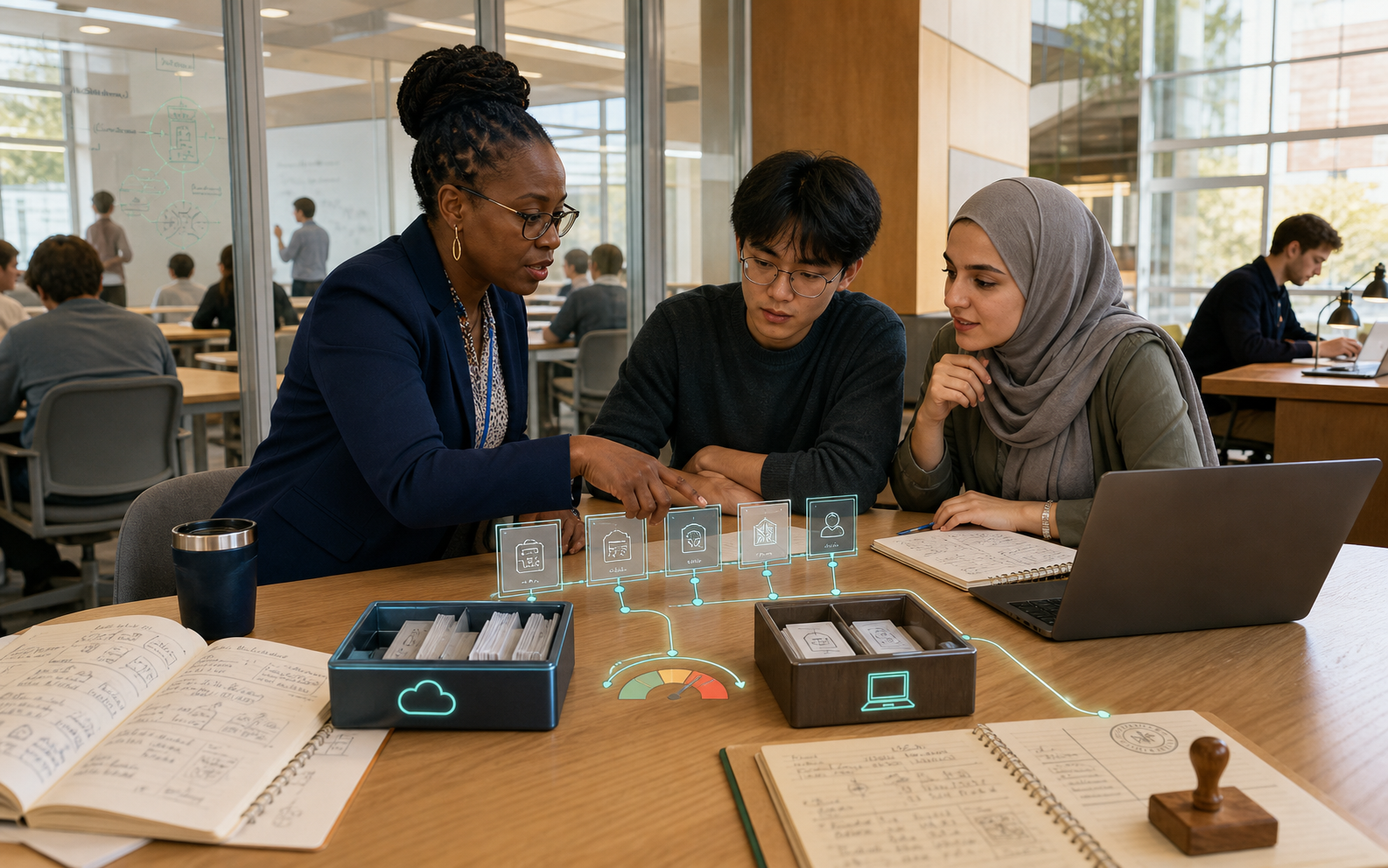
For Hong Kong schools and universities, the practical response is to pair every AI workflow with a supervision record. Students can save quiz questions, corrections and unaided follow-up performance. Coding teams can record identity, permissions, resource limits, branches and human approvals. Administrators can document which managed service and data rules apply. The opportunity is richer practice and more dependable agent work; the safeguard is making judgment, provenance and independent mastery visible.