Unscaffolded GenAI use in teacher education showed no instructional-design advantage
Jun Zhang, Yuting Peng, Xinyue Deng, Qin Zeng, Kai Wang
Behavioral Sciences
Resumo de 500 palavras
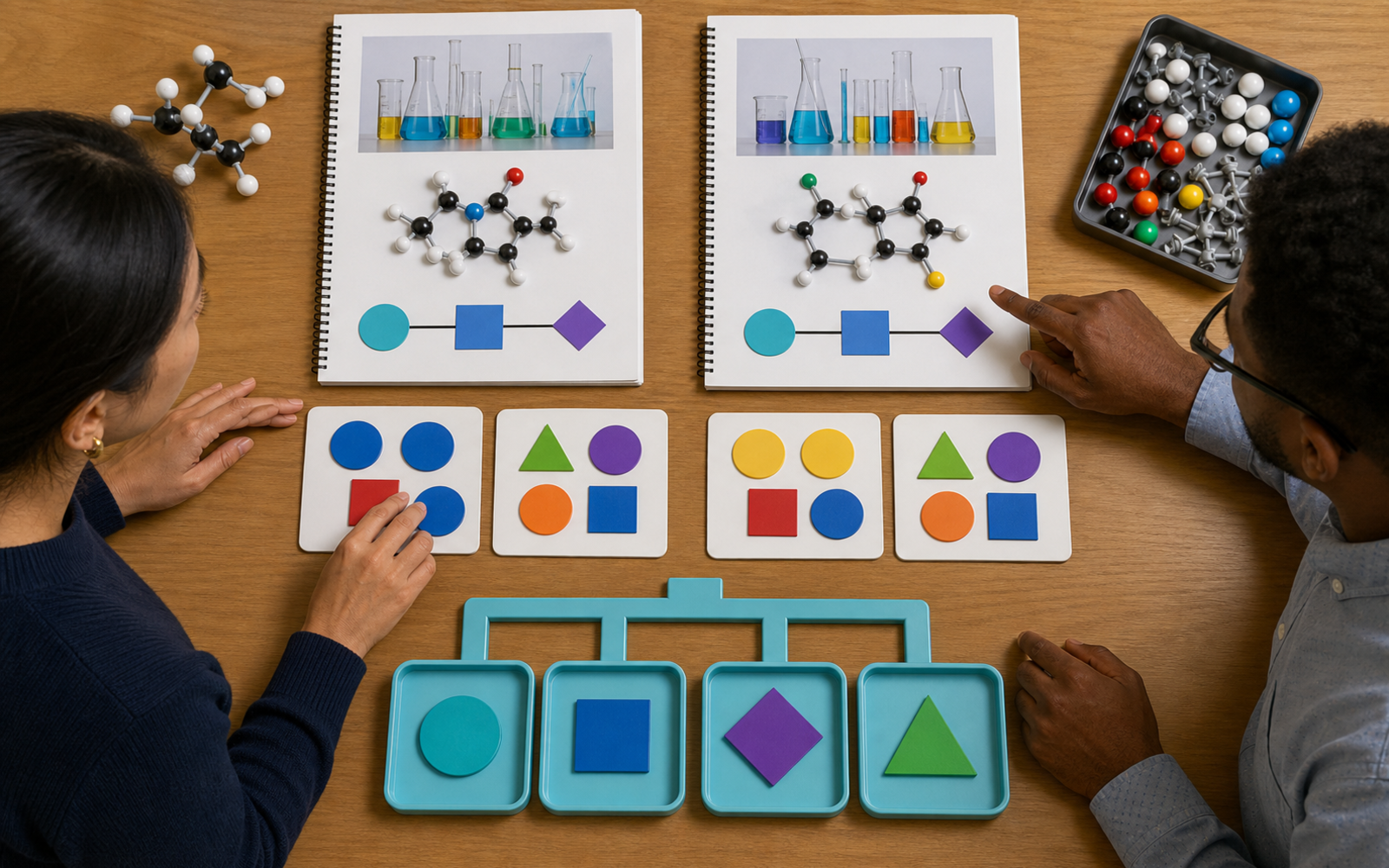
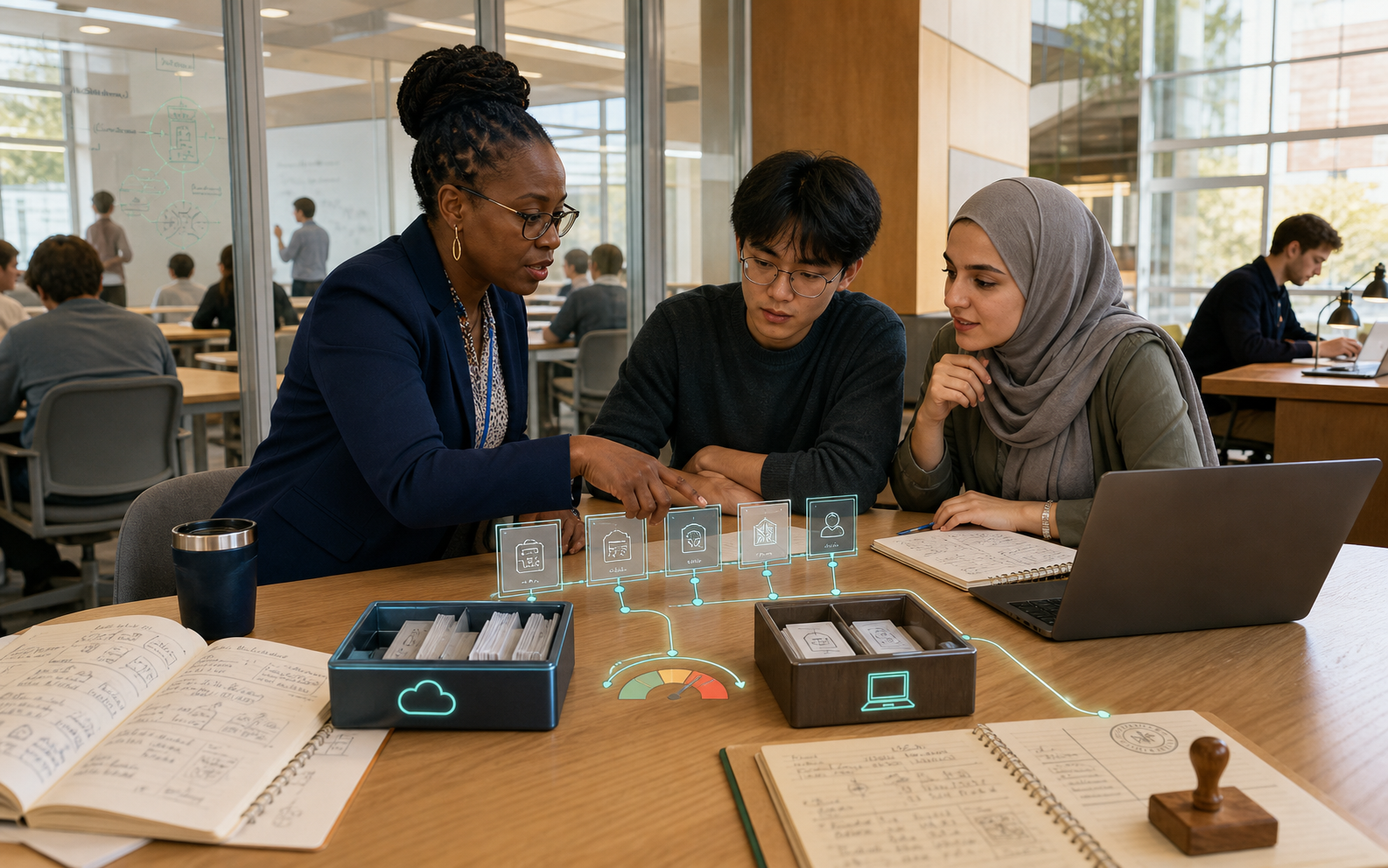
Zhang and colleagues examine a question that is often hidden inside claims about generative AI in teacher education: what happens when learners are allowed to use GenAI but receive no guidance for using it well? Their 2026 open-access quasi-experimental study followed 52 pre-service chemistry teachers during an eleven-week instructional design course at a university in Chongqing, China. It compared permitted but unscaffolded GenAI access with a condition in which GenAI use was not permitted.
The researchers used two intact sophomore classes rather than randomly assigning individual students. One class formed the experimental group and the other the control group, with 26 participants in each. Both groups had the same instructor, materials, learning time, and instructional design tasks. The experimental group could use GenAI tools but received no GenAI-specific training, prompt templates, or instructional guidance. The study therefore represents a realistic access-policy comparison rather than a carefully designed AI-supported intervention.
Before and after the course, the researchers measured AI readiness, self-regulated learning, critical thinking, and instructional design performance. The first three constructs were assessed with scales, while instructional designs were scored with a rubric. Paired-sample tests examined change within each group, and analysis of covariance compared post-test results while controlling for pre-test scores. This combination separates improvement over time from the stronger question of whether the two conditions differed after accounting for their starting points.
Both groups improved significantly in AI readiness and instructional design performance. Neither group showed a significant pre-post improvement in self-regulated learning or critical thinking. After adjustment, the groups did not differ significantly in AI readiness, self-regulated learning, or critical thinking. The clearest between-group result went against a simple access-equals-benefit story: adjusted instructional-design performance was 81.87 in the GenAI-permitted group and 86.54 in the control group. The reported ANCOVA result was F = 8.348, p = .006, with eta-squared of .146, which the authors interpret as a large effect.
This finding does not show that GenAI inherently harms teacher preparation. It shows that, in this course and comparison, permission without structured support did not produce the hoped-for advantage and was associated with weaker design performance. Learners may have accepted plausible outputs without sufficiently evaluating pedagogical fit, offloaded parts of the design process, or lacked criteria for integrating AI suggestions. The study did not capture detailed interaction logs, so these explanations remain plausible mechanisms rather than directly observed causes.
The boundaries are important. The sample was small, came from one university and one course, and used intact classes. Some outcomes relied on self-report. The residuals for the self-regulated-learning ANCOVA did not satisfy the reported normality test, so that null comparison deserves additional caution. The study compared unscaffolded access with no access; it did not test a well-scaffolded GenAI condition against both alternatives. The results therefore should not be generalized to every discipline, teacher programme, or guided AI design.
For Hong Kong teacher education, the practical implication is to evaluate instructional design quality, not merely confidence or usage. A course can provide task-specific prompting guidance, worked examples, source checks, peer critique, and explicit criteria for curriculum alignment while preserving independent reasoning. Researchers should collect process evidence and include an independently completed transfer task. The paper's central contribution is a disciplined warning: giving future teachers access to GenAI is not the same as designing support that helps them learn with it.