Product news: An accessibility specialist uses ChatGPT to adapt reading tools, without shifting responsibility to users
OpenAI Academy
AI Product and Learning Report
500語要約
A September 4 OpenAI Academy profile describes how accessibility specialist James Warnken used ChatGPT to create browser shortcuts that change difficult-to-read text and a tool for generating visible keyboard-focus indicators. This September 5 report treats the story as a practical account of user-directed adaptation. It is not a new universal accessibility feature, nor an evaluation showing that the tools work for every learner or website.
The important starting point is Warnken's knowledge of the problem. He could describe which parts of a page were hard to read and what change would help him. That expertise gave the coding assistant a concrete purpose. In education, the same principle argues for listening to the learner's experience before proposing a technological fix. A person who finds a page difficult may need clearer structure, different presentation, or an alternative route through the activity.
A personal adaptation can also reveal a defect in the original material. If a student needs a custom shortcut simply to see a button, the institution should examine the button, not celebrate the workaround and move on. The student's initiative is valuable, but it should not become an expectation that every learner build and maintain their own repair. Teachers and web teams can use such experiences to prioritise changes that help more people.
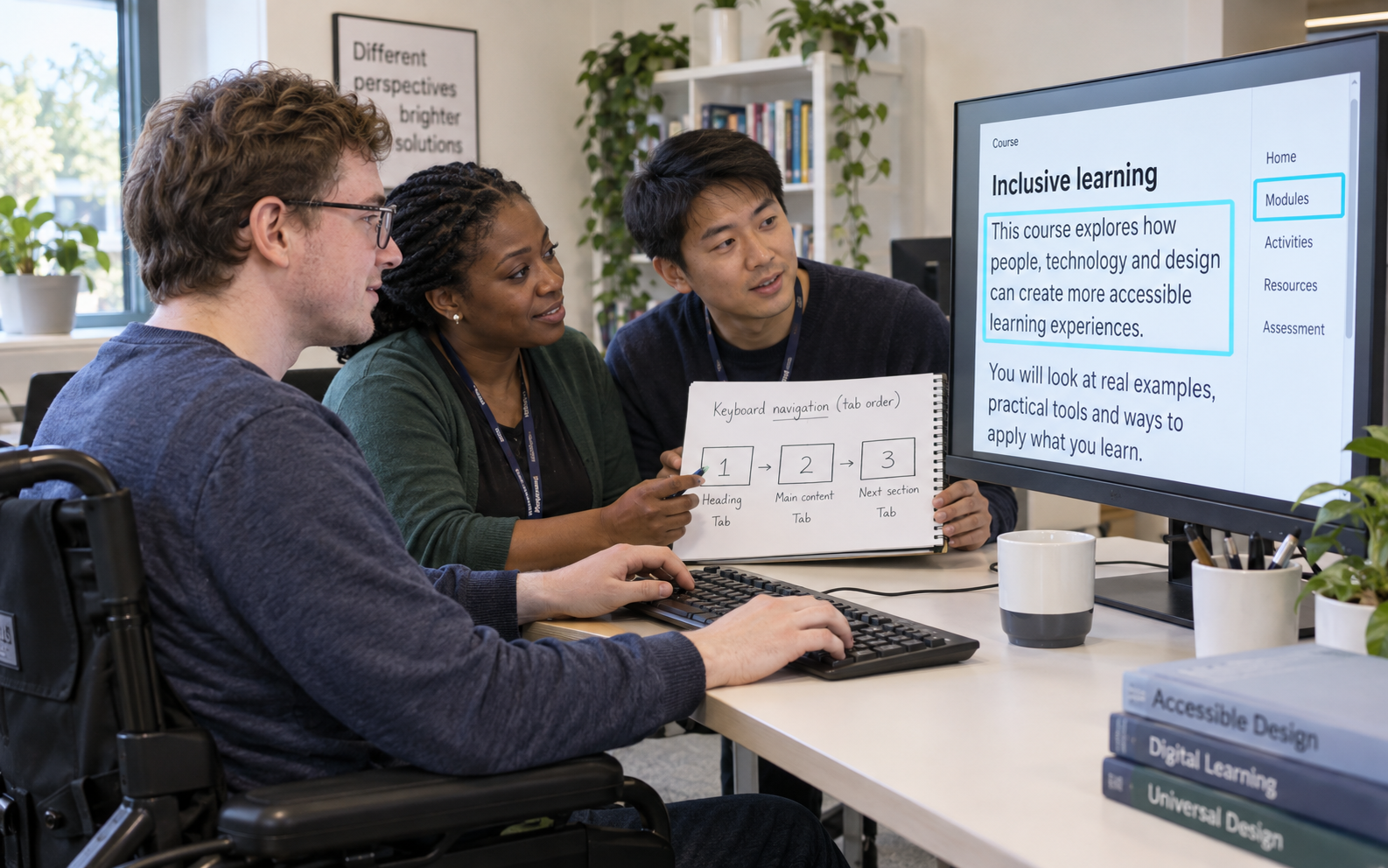
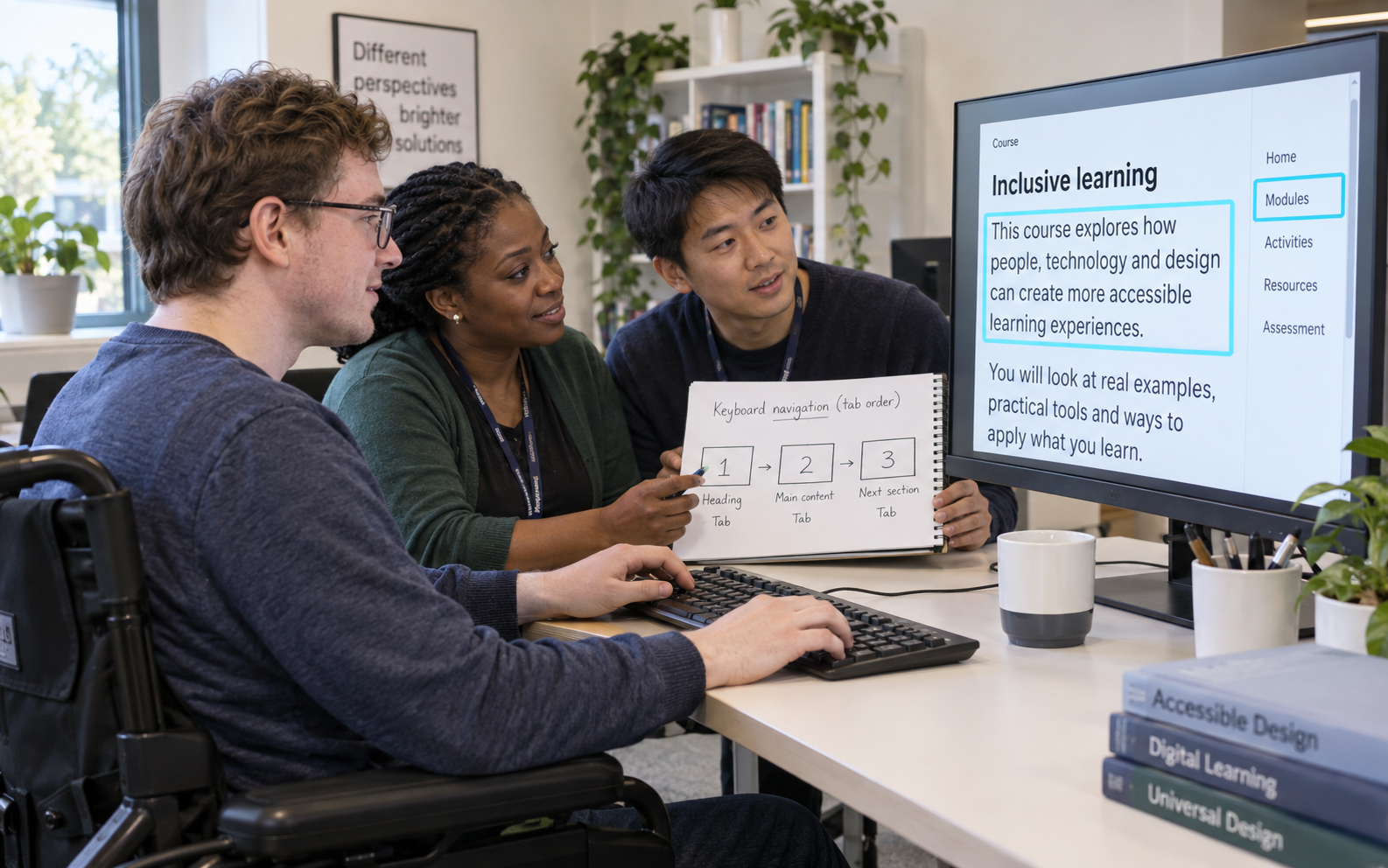
A useful design lesson would begin with a deliberately simple course page and a clearly described task. Students could try completing it with a keyboard, with enlarged text, and with different visual settings. They would record where navigation or meaning becomes unclear, then propose a change and check the task again. This activity assesses whether a design works in use, rather than whether its source code contains an accessibility-related attribute.
Anthropic's August account of Claude Academy emphasises human agency and intentional delegation. Google's September 3 AI Educator Series update provides practical training around Gemini and classroom work. OpenAI's case adds a concrete example of someone using assistance to build a narrowly defined tool. Together, these resources can support discussion about who identifies the problem, who evaluates the result, and who remains responsible for maintaining the shared environment.
AI-generated adjustments require thoughtful testing too. Changing every text colour may make some content easier to read while obscuring information on another background. A visible focus outline must remain understandable as a person moves between links, fields, and buttons. Learners could document both the situations where an adaptation helps and the situations where it fails. That record is more useful than presenting the first working demonstration as a complete solution.
For a school or university, the case suggests a constructive relationship between personal agency and institutional improvement. Staff can invite concrete reports of barriers, offer assistance without requiring disclosure of unnecessary personal details, and show what changed in response. Students can contribute as knowledgeable partners rather than passive recipients of a tool. The lasting educational outcome would be a more usable course environment and a clearer habit of testing design decisions with the people who depend on them.