Deliberate Practice
Why expertise grows through specific goals, demanding focused rehearsal, high-quality feedback, and repeated adjustment rather than experience or repetition alone.
स्रोत
पूरा पाठ सारांश
Deliberate practice is structured activity designed specifically to improve a defined aspect of performance. It differs from simply repeating a familiar task, accumulating hours, completing routine exercises, or performing for an audience. A deliberate-practice task has a clear target just beyond the learner's current reliable performance. It demands focused attention, produces evidence about a weakness, and allows another attempt after feedback. The purpose is improvement rather than enjoyment, completion, or immediate success, although motivation and a supportive learning climate help people sustain the effort.
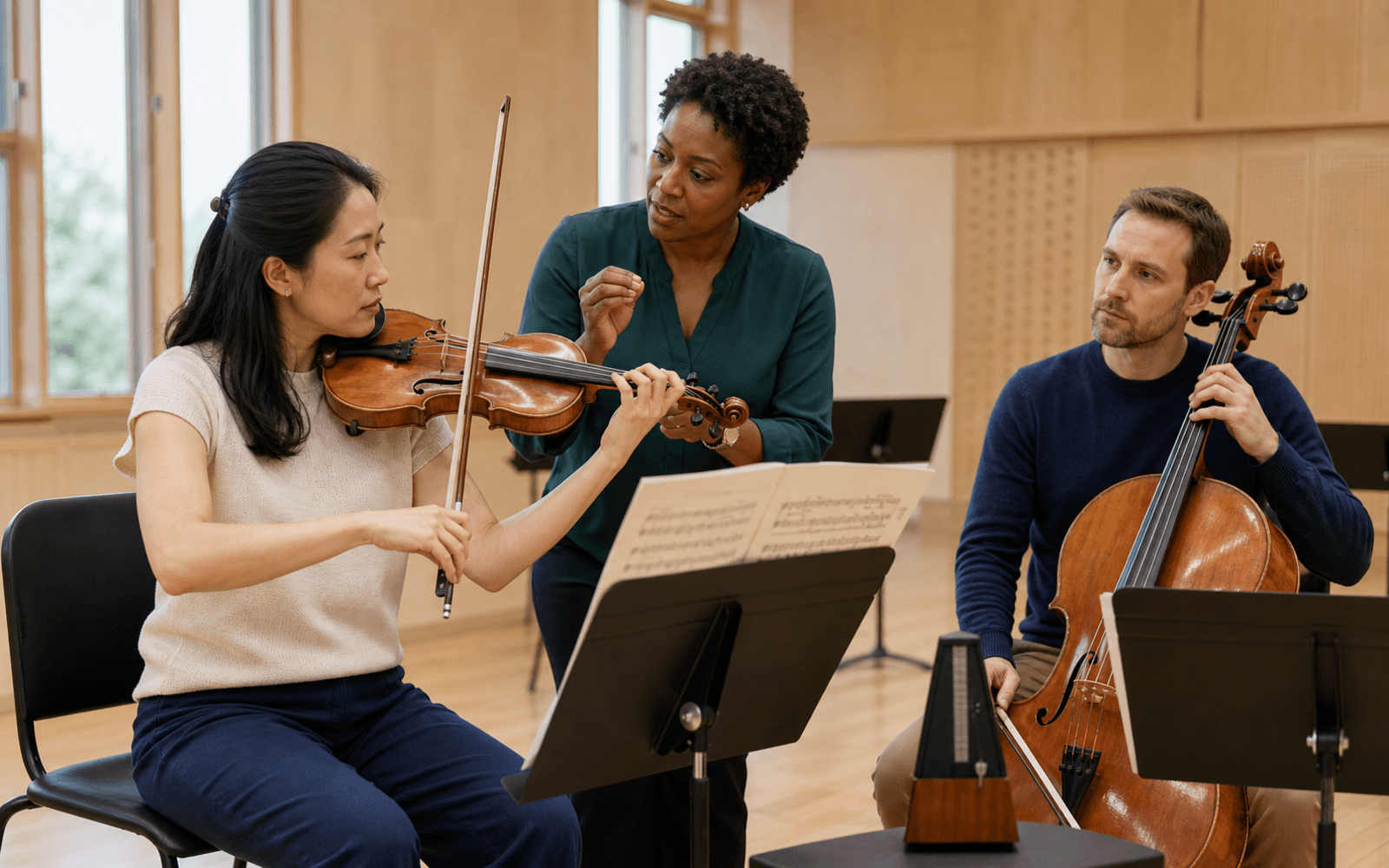
The cycle begins by identifying a specific component of a complex skill. A musician might isolate one transition, a writer might revise the logic of one paragraph, and a teacher candidate might rehearse how to elicit reasoning after an incorrect answer. The learner attempts the component under conditions that make relevant differences visible. A knowledgeable teacher, coach, peer, recording, rubric, or well-designed task then provides information connected to the goal. The learner interprets that evidence, changes a strategy or action, and tries again. Repetition matters only when each attempt is informed by what happened before.
Expert guidance is valuable because novices may not yet recognize the most important error, an effective practice sequence, or a useful model of high-quality performance. Feedback should be timely and precise enough to guide change without taking over the task. Difficulty should rise as control improves, and practice should include variation and later tests of transfer so that success is not tied to one cue or routine. Rest also matters. Sustained concentration is demanding, and exhausted repetition can stabilize mistakes rather than improve skill. Deliberate practice develops domain-specific representations and control, not a general shortcut to expertise.
Research supports an association between structured practice and performance, but strong popular claims require caution. The original expertise research emphasized activities designed by teachers and methods that permit repeated correction. Later reviews found that measured deliberate practice explains only part of the variation in performance, with effects differing across music, games, sports, education, and professions. Prior knowledge, opportunity, instruction, health, motivation, resources, and the quality of measurement also matter. A fixed number of hours cannot guarantee expertise, and unequal access to coaching or protected practice time should not be mistaken for differences in potential.
In education, a teacher can select one high-value move, show a credible model, and define observable success criteria. Learners rehearse briefly, receive one prioritized piece of evidence, explain the adjustment they will make, and immediately try a parallel version. A record of attempts helps them notice progress and decide when to increase difficulty, vary the context, or return to prerequisite knowledge. The same structure can strengthen academic problem solving, artistic performance, laboratory technique, language production, and teacher preparation. Deliberate practice is most educationally responsible when goals are meaningful, feedback is trustworthy, access is equitable, and focused rehearsal remains connected to flexible performance in authentic settings.