News: OpenAI and Anthropic turn AI assistants into governed workbenches
OpenAI, Anthropic
AI Product
ملخص 500 كلمة

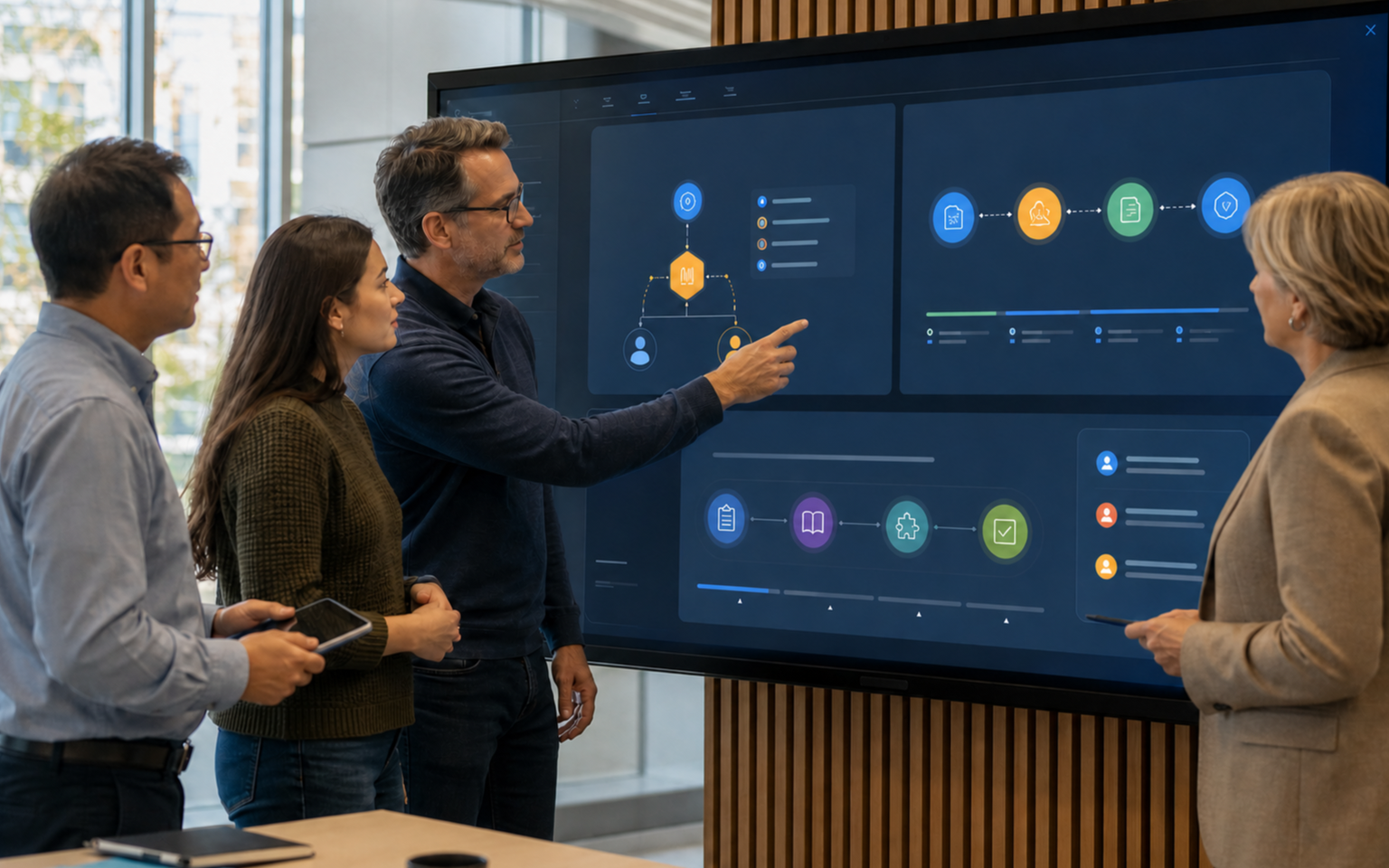
This product-news roundup is useful for AIEDHK because OpenAI and Anthropic are both moving AI assistants away from simple chat and toward governed workbenches for extended tasks. OpenAI's current GPT-5.6 guidance describes Sol as a model for complex work across coding, knowledge work, research, cybersecurity, science, computer use, and design. It also says GPT-5.6 availability now spans Work in ChatGPT, Codex, and the OpenAI API. Anthropic's June 30 launch of Claude Science uses similar workbench language for scientific research: a coordinated environment that can integrate tools, produce auditable artifacts, manage compute, and preserve enough history for validation and reproduction. Together, these updates mark a practical product shift that education leaders should track closely.
The OpenAI side matters because GPT-5.6 is not only a stronger answer generator. In managed workspaces, Work in ChatGPT can use Sol, Terra, and Luna, while Codex connects the model family to coding and software workflows. That changes how students, teachers, researchers, and administrators may experience AI. A learner may ask for help with a project plan, data analysis, literature search, code review, or presentation, and the system may increasingly coordinate multiple steps rather than return a single response. For education, that makes process evidence more important: what sources were used, which files changed, which commands ran, and what the human user accepted or rejected.
The Anthropic side makes the same direction visible in research and software. Claude Science is presented as an AI workbench for scientists that integrates common research tools, generates figures and manuscripts with code-backed artifacts, accesses local or remote compute, and uses reviewer agents to check citations, calculations, and traceability. Claude Code is positioned for work directly in a codebase through terminal, IDE, Slack, web, and other surfaces. These products are not education tools in the narrow classroom sense, but they are likely to shape research training, programming education, graduate supervision, and project-based learning because they model how expert work can be delegated, checked, and revised with agents.
The caution is that product capability is not the same as learning impact. A workbench that can complete a workflow can also hide the planning, debugging, reading, and judgment that students need to practice. Stronger agentic systems may make final artifacts look more polished while weakening understanding if educators do not require explanation, version history, source review, and oral defense. They also raise governance questions about connected tools, data residency, institutional permissions, code execution, sensitive research files, and accountability when an agent's output is wrong but persuasive.
For Hong Kong schools and universities, the practical response is to teach workbench literacy, not only prompt literacy. Students need to learn how to define tasks, constrain tools, inspect intermediate outputs, verify citations, review code diffs, and document human decisions. Teachers need assessment formats that reward process records and reflective critique. Institutions need policies for managed workspaces, local data, research compute, and acceptable delegation. The important news signal is therefore not simply that OpenAI and Anthropic have new products. It is that mainstream AI products are becoming environments for delegated action, and AIED practice must make human oversight, reproducibility, and learning evidence central from the start.