Possible Selves
Possible selves connect imagined futures to current identity and action. Their educational value depends on plausible strategies, available support, and room to revise goals.
المصادر
الملخص الكامل
Possible selves are ideas about who a person might become, hopes to become, or wants to avoid becoming. They give future-oriented meaning to present choices. A learner might imagine becoming a confident laboratory technician, a reliable community organizer, or someone who keeps postponing an important qualification. These images can matter for motivation, but merely picturing success does not supply the knowledge, resources, or actions needed to reach it.
Research by Oyserman and colleagues distinguishes having an academic possible self from connecting that self to workable strategies. A future identity is more actionable when the learner can see its relationship to current life and identify plausible next steps. Social context also shapes which futures seem available. Encouragement to 'dream bigger' may feel hollow when a learner lacks information about entry requirements, financial support, or a route through the next assessment.
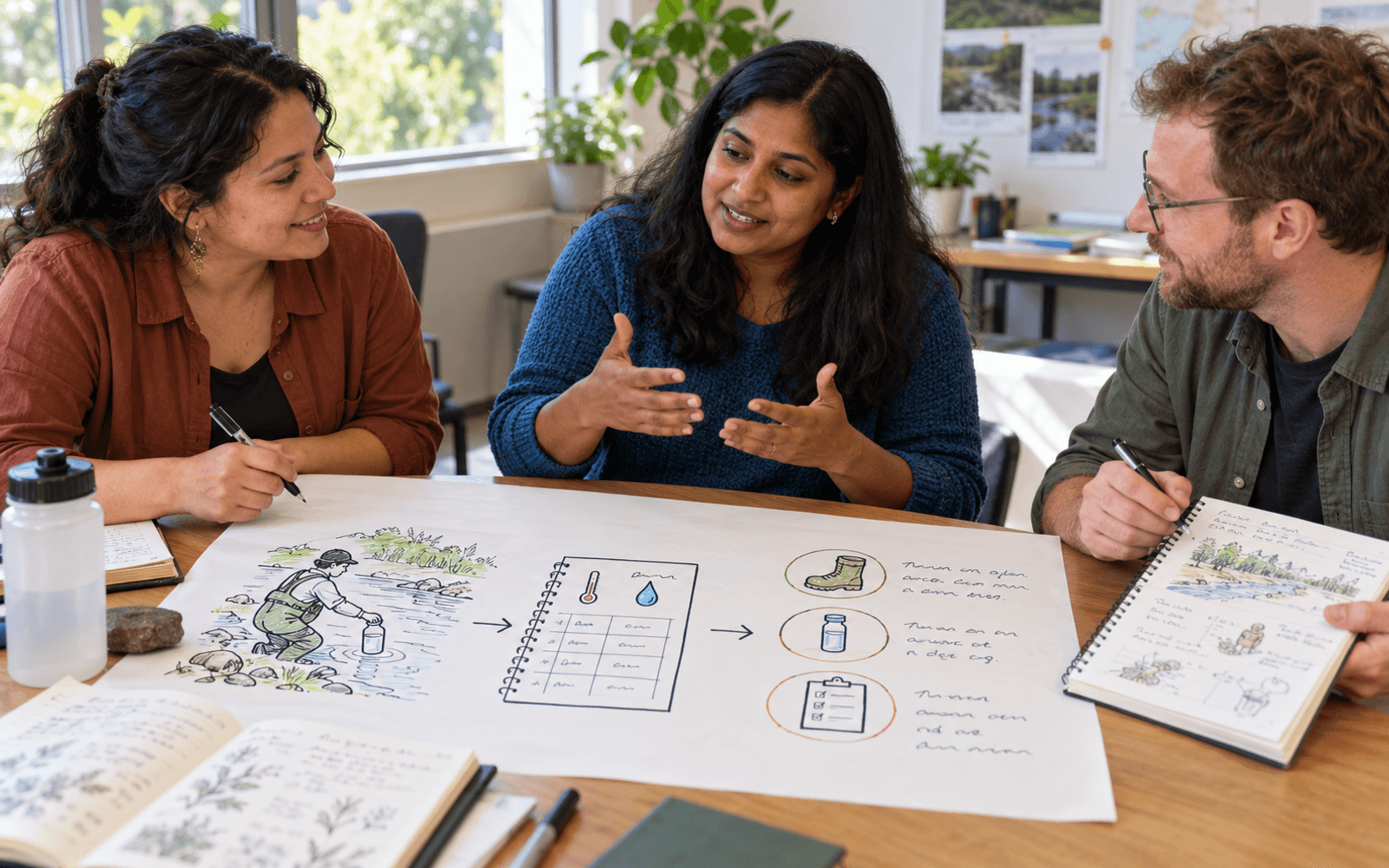
Consider an adult learner who hopes to work in environmental monitoring. A useful conversation moves from the job image to a near-term activity: interpreting measurements in a spreadsheet and explaining uncertainty in a short report. The learner identifies a current strength, such as careful observation, and an area requiring practice. Together with a tutor, they plan two manageable practice sessions and a way to obtain feedback. The distant identity now connects to an action that can happen this week.
The plan also needs a response to difficulty. A poor first graph could be interpreted as proof that 'people like me cannot do science', or as information about a skill that still needs practice. Teachers can make ordinary learning obstacles visible and connect them to strategies without pretending every barrier is minor. A missed session caused by paid work may require a different timetable or support, rather than a lecture about commitment. Structural constraints remain real even when motivation improves.
A classroom activity can invite learners to map a hoped-for future, an obstacle, one helpful resource, and a next action. Participation should allow private reflection and more than one possible future. Students should not have to disclose family circumstances, fears, or career ambitions publicly. Educators can offer examples of diverse routes while avoiding the suggestion that one prestigious occupation is the proper destination for everyone. Revising a future goal can reflect informed learning rather than failure.
Possible-selves interventions have been studied in particular populations and instructional settings. Findings do not justify assuming that a brief visualization exercise will improve every learner's attainment. Evaluate both whether students develop usable plans and whether relevant behavior or learning changes. A more ambitious statement on a worksheet is not itself evidence of progress. Follow-up should consider opportunities supplied by the institution as well as actions taken by the learner.
The idea is most useful when future imagination becomes a resource for present navigation. Teachers can help learners connect identity, strategies, support, and feedback while keeping alternative pathways open. Such work complements subject teaching and practical guidance. It asks not only 'Who might I become?' but also what the next step requires, who can help, and how the plan can change as new experience arrives.