Multimodal AI
How AI connects text, images, audio, and other signals, where cross-modal evidence helps, and why educational use requires careful evaluation, access, and consent.
المصادر
الملخص الكامل
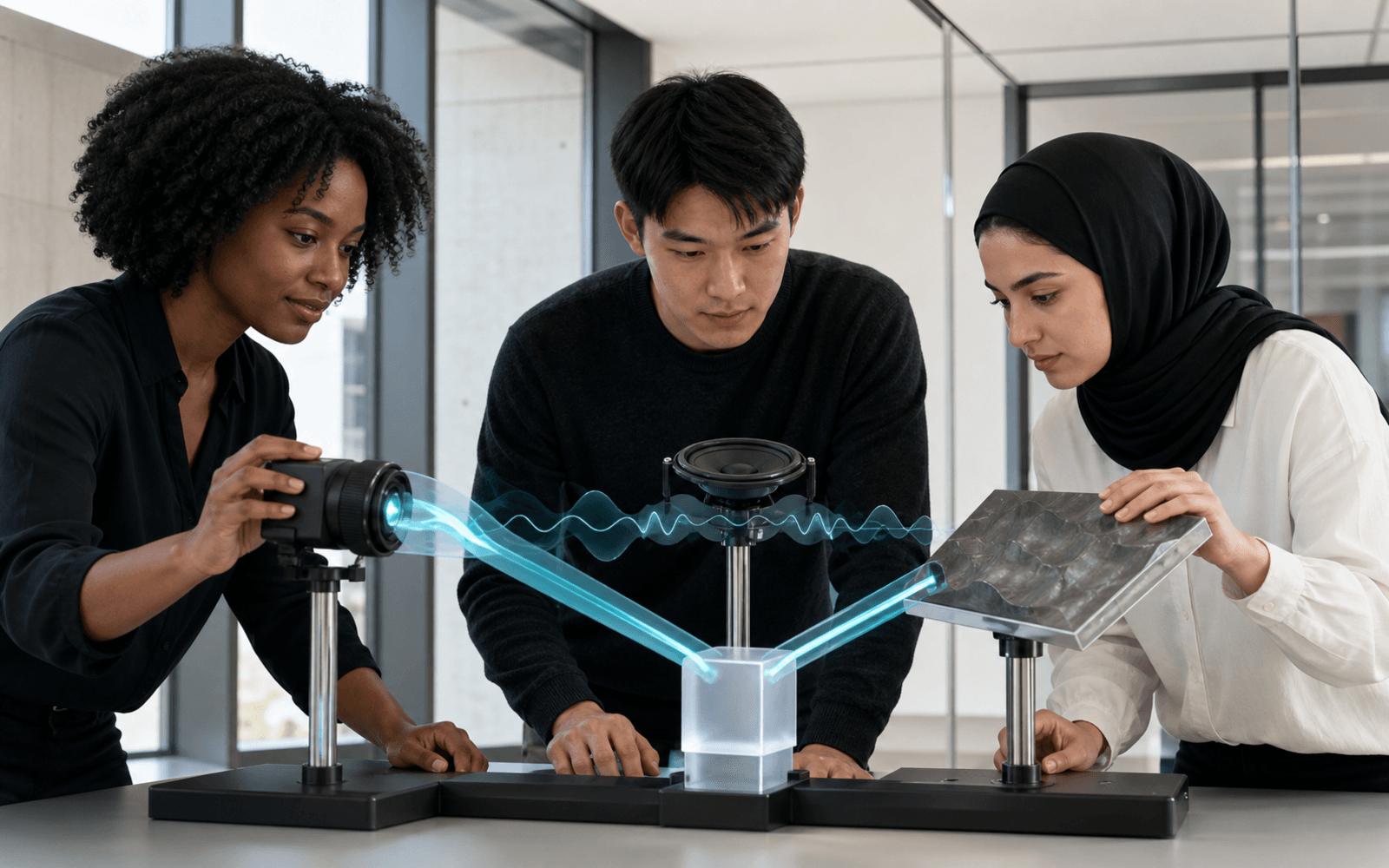
Multimodal AI processes and relates information from more than one modality, such as text, images, audio, video, sensor readings, or action. A modality is a way information is represented or sensed. A system may accept several modalities as inputs, produce one or more modalities as outputs, or learn connections among them. An image captioner, for example, receives pixels and produces language. A speech-enabled tutor may hear words, inspect a diagram, and answer in text or voice. Calling a system multimodal does not mean that it understands every channel equally well or combines them reliably.
To connect modalities, a model usually converts each kind of input into numerical representations. Different encoders may process words, pixels, or sound before an alignment or fusion mechanism relates their representations. CLIP learned from image-caption pairs so that related images and language could be located near one another in a shared space. ImageBind showed how image-paired data could connect six modalities in one embedding space. Other systems, including language-image models such as PaLI, combine visual and textual components so that a model can answer questions, describe scenes, or interpret text visible in images. These architectures differ, so the label multimodal describes a family of designs rather than one technique.
Combining channels can provide complementary evidence. Tone may change the interpretation of words, a diagram may clarify a verbal explanation, and depth may distinguish objects that look similar in a flat image. Yet more inputs do not guarantee better answers. A system may ignore one modality, over-rely on an easy cue, align events at the wrong time, or invent a connection between unrelated signals. Missing audio, ambiguous images, background noise, unfamiliar accents, and conflicting cues can expose weaknesses. Evaluation should therefore test each modality separately, meaningful combinations, missing-input conditions, and examples where the channels disagree.
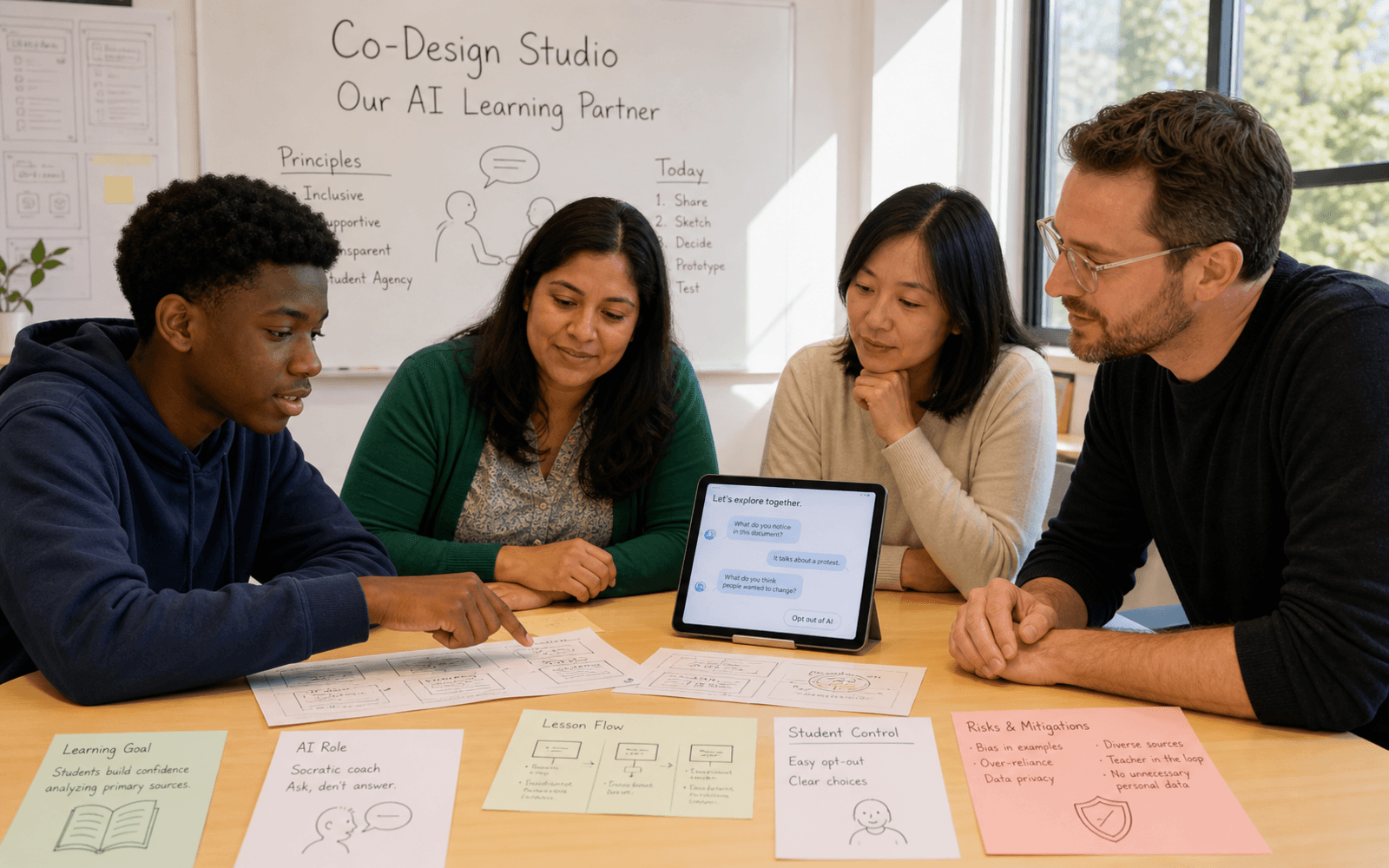
In education, multimodal systems can support activities that are difficult to represent through text alone. A learner might explain a science model aloud while pointing to a diagram, record a physical procedure, or receive a spoken description of a visual resource. Teachers can ask whether feedback refers to evidence the learner actually provided. Accessibility requires options rather than assumptions: captions, transcripts, image descriptions, keyboard control, and alternatives to speech or camera input should remain available. Voice, face, classroom video, and behavioral traces can be sensitive personal data, so collection needs a clear purpose, informed consent, limited retention, and appropriate human oversight.
A productive learning task makes the modalities visible. Ask learners to identify what information came from the image, sound, text, or sensor; explain how the pieces support or contradict one another; and verify the system's claim against the original evidence. Start with bounded, low-stakes uses and compare performance across languages, devices, environments, and learner groups. Multimodal AI can widen how people express understanding, but it should not turn every activity into surveillance or replace teacher judgment. Its educational value comes from preserving learner agency while using several forms of evidence carefully.