Dual Coding and Multimedia Learning
How words and meaningful visuals can support coordinated mental models when instructional media manages attention, load, and accessibility.
المصادر
الملخص الكامل
Dual coding theory proposes that people can represent information through partly distinct verbal and nonverbal systems. Multimedia learning research examines how learners build understanding from words and pictures while working memory is limited and prior knowledge varies. Together, these traditions support a careful claim: relevant verbal and visual representations can complement one another when learners select, organize, and connect them. They do not support decorating every explanation with pictures or assigning students to fixed visual and verbal learning styles.
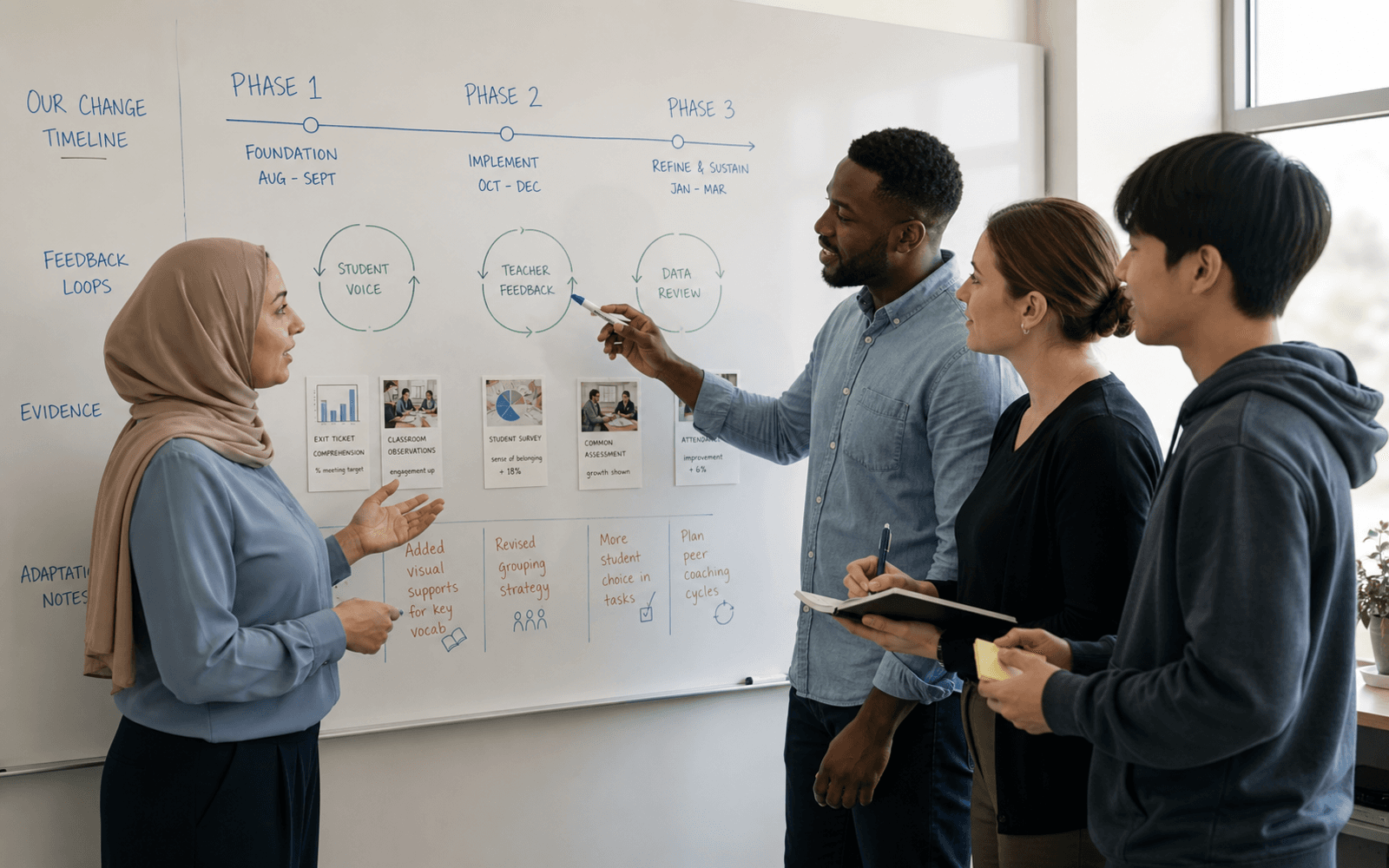
Words can be spoken or written. Visuals can include diagrams, photographs, graphs, animation, or demonstrations. Their educational value depends on what each representation contributes. A diagram may make spatial relations visible, while narration explains a causal sequence. A graph may show a pattern that a paragraph then interprets. Learning requires coordination across representations, not mere exposure to two formats. If the picture and words communicate unrelated ideas, compete for attention, or require excessive searching, adding media can make understanding harder.
Several multimedia design principles address this risk. Coherence means removing material that does not support the learning goal. Signaling highlights the organization of essential information without turning the page into decoration. Spatial and temporal contiguity place corresponding words and visuals near one another and present related events at useful times. Segmenting gives learners manageable units and control over pace. Redundancy needs careful treatment: narrating an explanation while displaying the same full paragraph can overload visual and verbal processing, while concise labels or accessible transcripts may still be necessary.
The design should follow the task. A realistic image can establish context, but a simplified diagram may better reveal hidden structure. An animation can show change over time, yet learners may need controls, pauses, and a static reference for review. Teachers can ask learners to explain how a visual maps to the verbal account, complete a partially worked diagram, or create their own representation and justify it. These activities make integration visible instead of assuming that students automatically connect the parts.
Accessibility is part of multimedia quality. Images need meaningful alternatives, audio needs captions or transcripts, color cannot carry the only distinction, and controls must work with keyboards and assistive technology. AI tools can draft diagrams, narration, and alternative text, but generated media requires review for factual correspondence, unnecessary detail, bias, and accessibility. Learners should have time to inspect the relationship, control the pace, and return to a representation when an explanation depends on it. The medium should serve the idea rather than become the lesson's main attraction. The goal is not maximum stimulation. It is representational fit: choose words and visuals that each do useful work, reduce avoidable load, and help learners build one coherent mental model they can explain and apply.