← 返回研究新聞

#source evaluation

source evaluation

3 篇論文

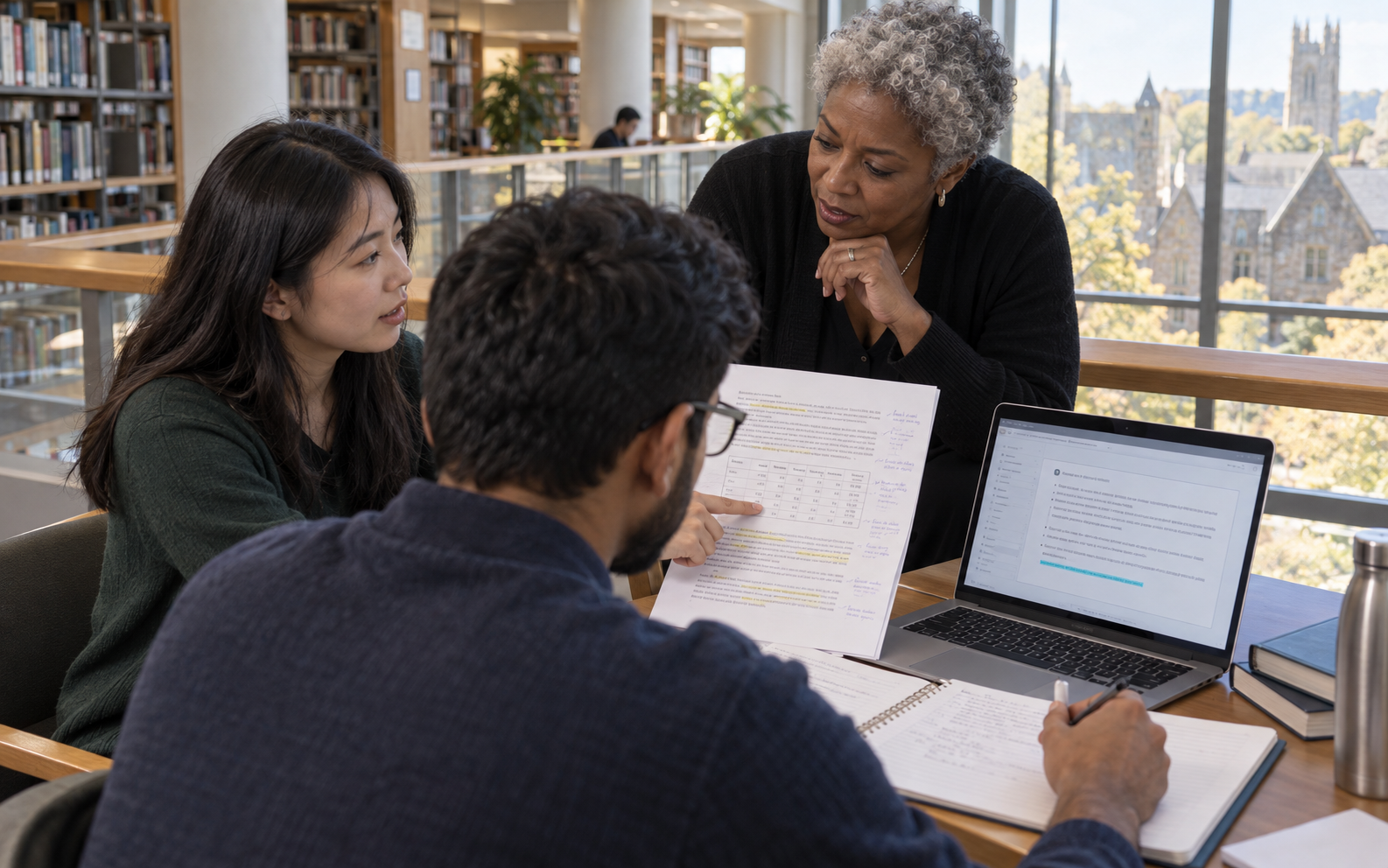
Graduate readers and a supervisor compare an annotated article's results table with a laptop critique while recording evidence checks.
期刊論文2026
期刊論文 188

Postgraduate readers used AI critiques in different ways, with original-source checking remaining essential

Haoming Lin, Wei Wei, Bin Zou, Ying Zheng

Discover Computing

An observational study followed 53 postgraduate readers as they revised critiques of academic articles using generated reviews, a chatbot and the original paper. Screen recordings and interviews revealed different patterns of reliance, re-reading and dialogue that varied with the perceived difficulty of the task. The study explains how AI-supported reading can unfold, but without a non-AI comparison or independent transfer assessment it does not establish that the tool improved critical-reading ability.

academic readingcritical AI literacymetacognition
閱讀 500 字摘要 →
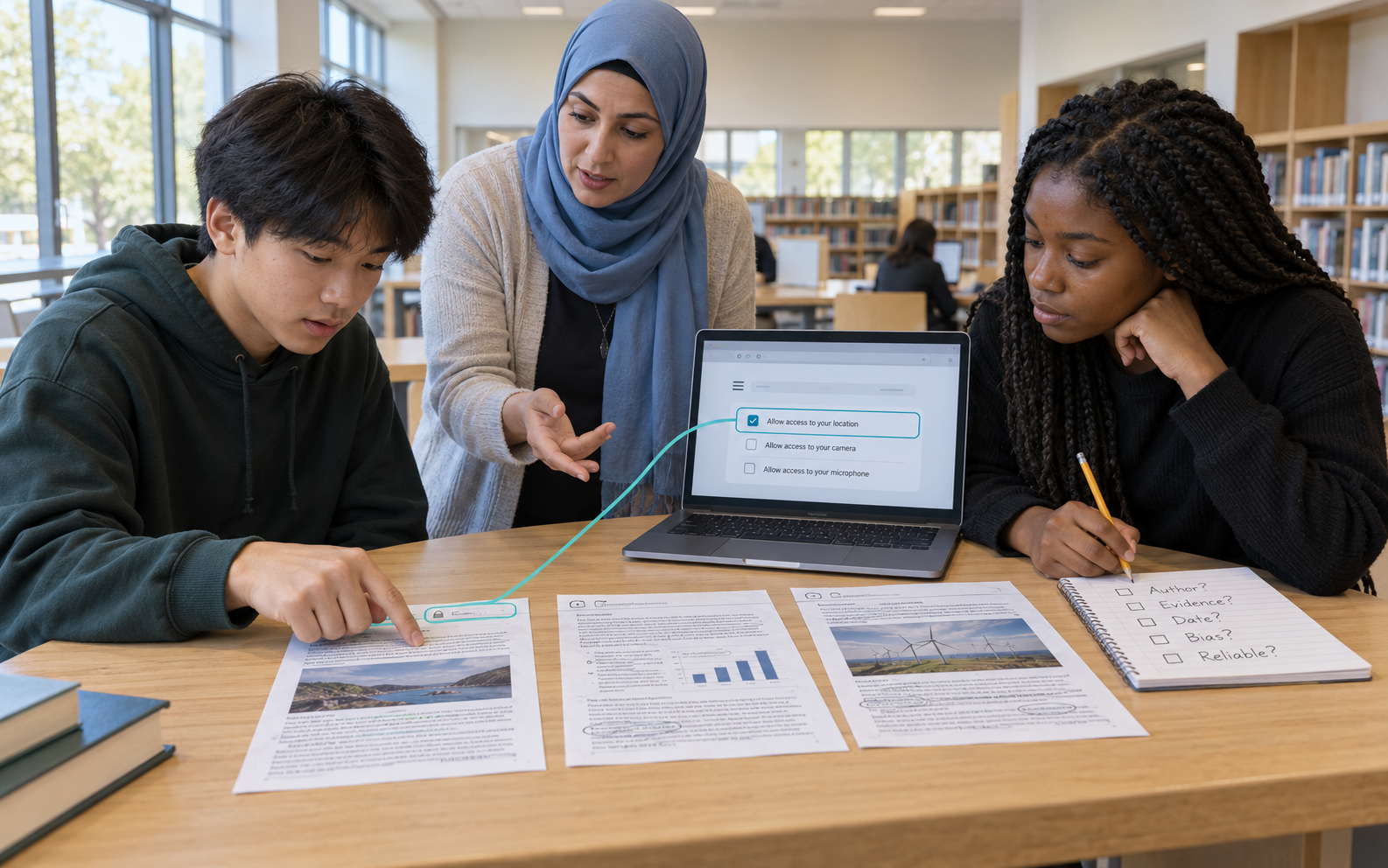

A librarian guides two students as they compare printed webpages, a source-checking notebook, and a laptop displaying browser permission options.
政策 / 倫理2026年8月27日
政策 / 倫理 121

Product news: Claude in Chrome leaves pilot status, making browser authority a practical AI-literacy topic

Anthropic

AI Product and Learning Report

Anthropic made Claude in Chrome generally available on paid plans on August 26. The browser assistant can use existing sessions to read and act on websites, with automated action checks and optional manual approvals. Reported here on August 27, the change makes source evaluation and permission boundaries tangible for educators. OpenAI's learning-use report and Gemini's study features offer a contrasting reminder that web access and understanding are different capabilities.

product newsClaude in Chromebrowser agents
閱讀 500 字摘要 →
Four diverse university students practise prompting and source checking with an instructor at a library learning table
期刊論文2026
期刊論文 52

A 90-minute GenAI literacy course improved knowledge, prompting, source checking and self-efficacy across 65 university sections

Allison E. Connell Pensky, Lydia E. Eckstein, Michael C. Melville, Laura O. Pottmeyer, Zach Mineroff, Avi Chawla, Judy Brooks, Chad Hershock, Marsha C. Lovett

Computers & Education

In a large experiment involving 1,368 undergraduate and graduate students across 65 university course sections, a 90-minute asynchronous GenAI learning module improved knowledge of how the technology works, prompt-engineering performance, fact- and source-checking, and self-efficacy. It did not improve critical evaluation of bias, showing that short foundational training needs deeper practice for responsible judgment.

generative AI literacyrandomized experimenthigher education
閱讀 500 字摘要 →