← 返回研究新聞

#assessment

assessment

10 篇論文

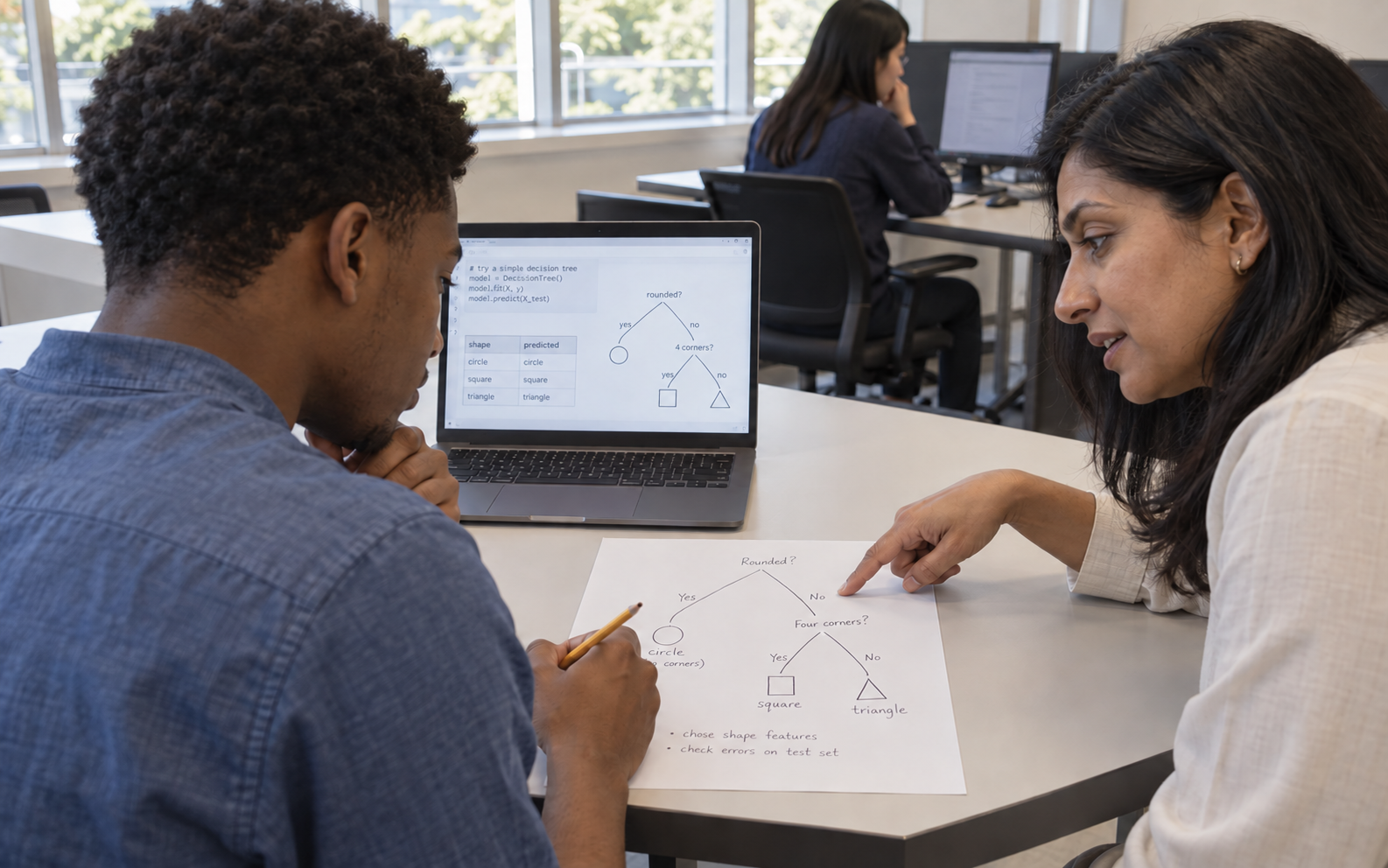
A university student explains a simple shape-classification decision tree to a lecturer during a supportive coding assessment conversation.
政策 / 倫理2026年10月13日
政策 / 倫理 213

Teacher case: A Malaysian lecturer uses oral defence to assess students' judgment in Gemini-assisted coding

Google

AI Product and Learning Report

An October 5 teacher account from Universiti Putra Malaysia describes students using Gemini in Colab while defending their modelling choices in verbal interviews. This October 13 report considers the assessment design, not a proven improvement in attainment. OpenAI's software-testing cases and Anthropic's project coordination provide context: when AI can produce working code, educators need evidence of what students understand, can troubleshoot, and can justify in a changed situation.

product newsGemini in Colabassessment
閱讀 500 字摘要 →


A university student revises an essay using an evidence-to-claim sketch while a lecturer and peer discuss the feedback.
期刊論文2025
期刊論文 190

Teacher, peer, or AI? Comparing effects of feedback sources in higher education

Joshua Weidlich, Flurin Gotsch, Kai Schudel, Claudia Marusic-Würscher, Jennifer Mazzarella, Hannah Bolten, Dario Bütler, Simon Luger, Bettina Wohlfender, Katharina Maag Merki

Computers and Education Open

Students can welcome feedback without producing stronger revisions. A randomized university study compared teacher, peer, and language-model feedback while concealing its source from recipients. AI and peer comments were perceived as fairer than teacher comments, but teacher feedback supported better scientific argumentation than AI feedback. The findings separate the experience of receiving comments from the quality of the work that follows, with implications for evaluating automated feedback tools.

Higher EducationAI FeedbackPeer Learning
閱讀 500 字摘要 →
A professor and teaching assistant compare a short-answer rubric, annotated responses and a laptop feedback draft while recording a justification.
期刊論文2025
期刊論文 174

AI-assisted short-answer grading broadly resembled instructor grading, without testing learning gains

Tobias Heinrich, Spencer Baily, Kuan-Wu Chen, Jack DeOliveira, Sanghoon Park, Navida Chun-Han Wang

PLOS ONE

Randomized grading comparisons across political-science courses analyzed 3,080 short-answer responses from 271 students. Instructor-guided GPT-4 prompts broadly resembled human grading on selected evaluation measures, with small and context-dependent differences. Human feedback was slightly more likely to be rated helpful overall. The study evaluates grading and feedback workflows, not student learning or critical-thinking gains, and low regrade-request rates cannot establish that all errors or biases were absent.

assessmentshort-answer questionsAI-assisted grading
閱讀 500 字摘要 →
Participants in a university AI workshop compare a lesson activity, software workflow and reading notes while a student records questions.
政策 / 倫理2026年9月21日
政策 / 倫理 169

Industry news: OpenAI Academy adds learning paths for educators, students, developers, and leaders

OpenAI

AI Product and Learning Report

OpenAI expanded its Academy on September 21 with courses for educators, college students, developers, and leaders, alongside its existing workplace pathway. Course badges depend on passing an assessment. Anthropic's learning approach and Google's Gemini-related training provide useful comparisons, but the new portfolio is not evidence that all roles need the same skills. Institutions can choose tasks and assessments that reflect what each group actually needs to decide and do.

product newsOpenAI AcademyAI for Educators
閱讀 500 字摘要 →
大學生向教師解釋幾何作圖,同學在旁思考,桌上的電腦展示相關數碼圖解
政策 / 倫理2026年9月7日
政策 / 倫理 112

評論:Astra 的 AGI 主張,讓教育更需要看見人的真實學習

AIED.HK Editorial

AI Product News Commentary

OpenAI 於 2026 年 9 月 3 日發布 GPT-6 Astra,並引發關於 AGI 是否已經到來的討論。本文將這一說法視為需要歸屬的主張,而非已確立的共識。教育眼前的挑戰,是分清 AI 能產出甚麼,以及學習者能獨立解釋、質疑和遷移甚麼,再以更強的代理能力支援真正的學習。

產品新聞評論GPT-6 Astra
閱讀 500 字摘要 →
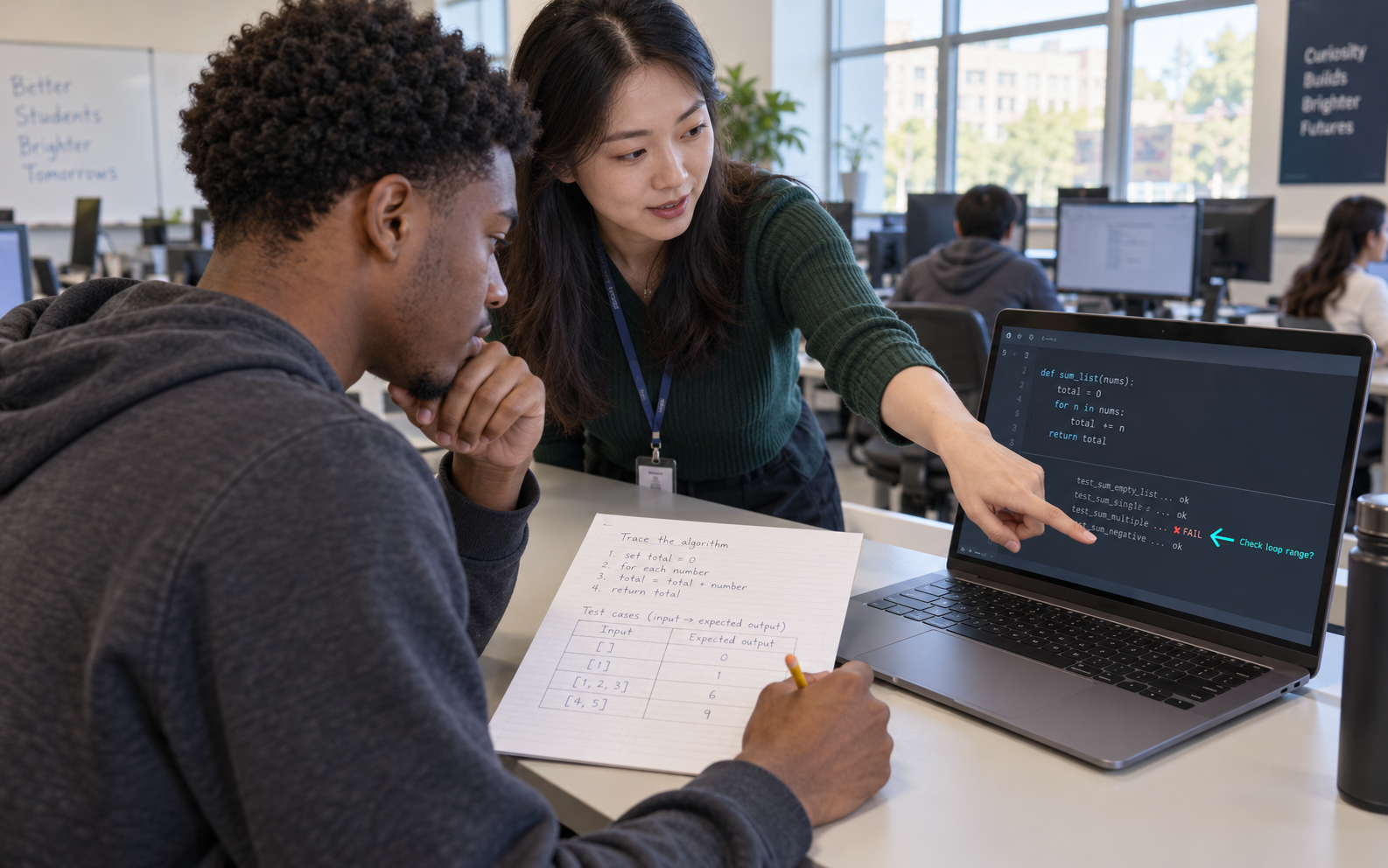
A programming student traces an algorithm and test cases on paper while a tutor points to a test report beside code on a laptop.
期刊論文2025
期刊論文 134

Students valued AI coding help while exam evidence exposed difficulties in correcting generated code

Dan Kohen-Vacs, Maya Usher, Marc Jansen

International Journal of Artificial Intelligence in Education

Two studies examined student attitudes to generative AI and performance on code-correction tasks. A survey found favorable perceptions, while exam analyses found lower performance on AI-generated debugging tasks in several cohorts. The studies involved different students and compared debugging with code construction, so they do not establish that positive attitudes caused weak verification or that AI origin alone made the tasks harder. They identify a specific skill worth teaching and assessing.

programming educationdebuggingassessment
閱讀 500 字摘要 →
An educator demonstrates a paper-reading tool on a large screen while university students watch, take notes, and hold an annotated expectations card.
期刊論文2025
期刊論文 128

Students rated AI tools differently after demonstrations, but expected support was not tested learning

Joana Heil, Dirk Ifenthaler, Martin Cooper, Maria Lidia Mascia, Rachele Conti, Maria Pietronilla Penna

Smart Learning Environments

A survey of 223 students at universities in Australia, Germany, and Italy compared expectations about six AI tools after short demonstrations. Perceived support varied by tool, and students reporting greater AI competence tended to give more positive ratings. Participants did not use the tools during the study. The results therefore inform questions about expectations and training needs, not claims about actual learning improvements or a current product ranking.

AI competencestudent expectationshigher education
閱讀 500 字摘要 →
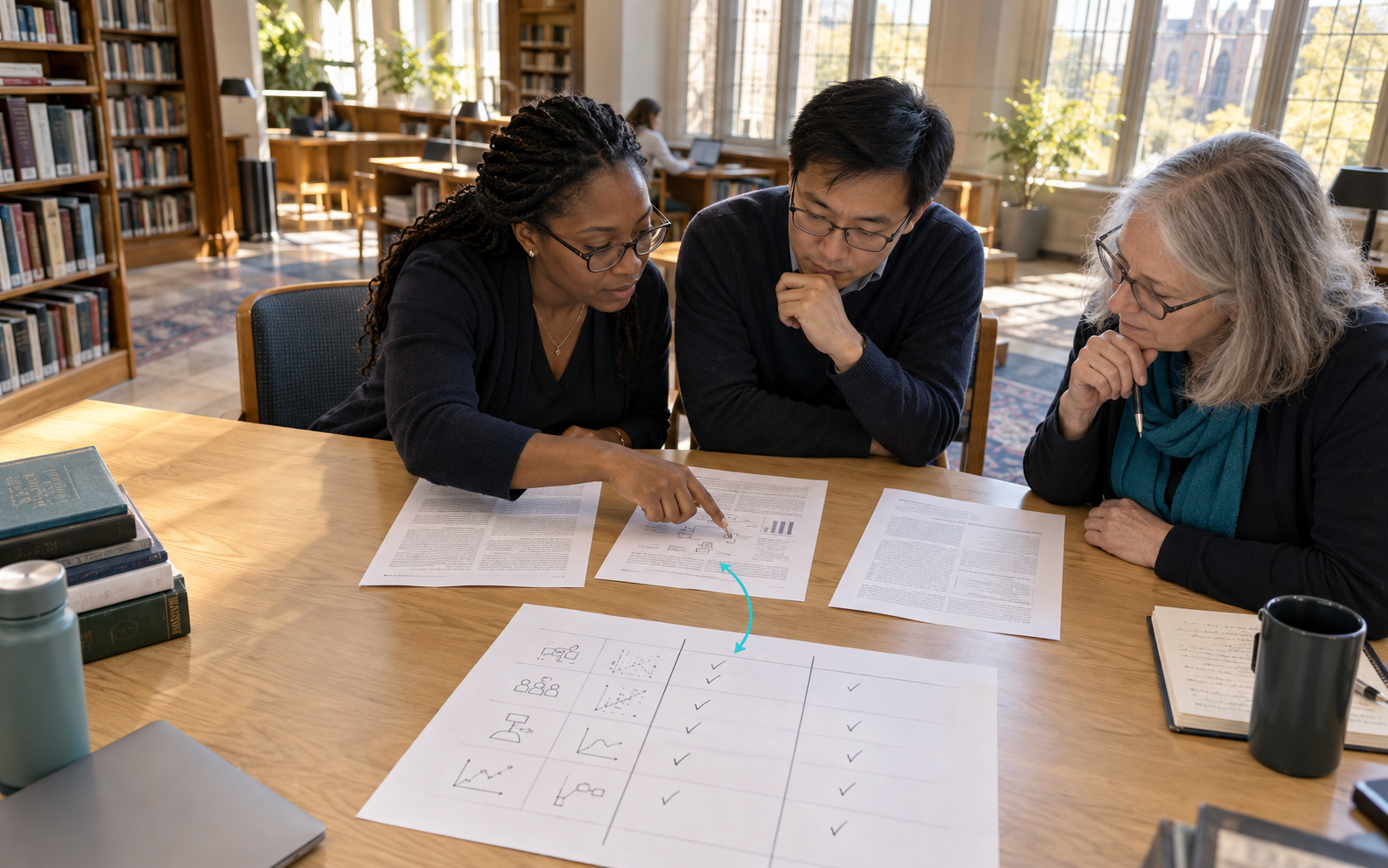
Three researchers compare printed studies and a hand-drawn evidence matrix at a sunlit library table, with a subtle cyan arrow linking the papers.
綜述2025
綜述 118

A review of early ChatGPT research separates model performance from evidence about student learning

Qian Liu, Anjin Hu, Tehmina Gladman, Steve Gallagher

Innovative Higher Education

A scoping review published in 2025 maps 39 studies from ChatGPT’s first eight months in higher education. It finds varied model performance, promising classroom uses, and repeated concerns about accuracy and assessment. Much of the evidence evaluated what the model could produce or what users believed. The review calls for stronger explanations of learning and should be read as an early baseline, not an evaluation of current models.

research reviewhigher educationassessment
閱讀 500 字摘要 →