Teacher Professional Learning
Why sustained, content-focused, collaborative, active, feedback-rich inquiry connected to student evidence is more likely to change teaching than isolated workshops, and how implementation conditions shape results.
來源
完整課程摘要
Effective, sustained teacher professional learning is the continuing development of knowledge, practice, judgment, identity, and collective capacity across a career. It includes formal courses and workshops, but also coaching, lesson study, collaborative planning, observation, inquiry, reading, rehearsal, and analysis of student work. Professional learning is stronger when it addresses a real instructional purpose and treats teachers as knowledgeable participants rather than passive recipients of techniques.
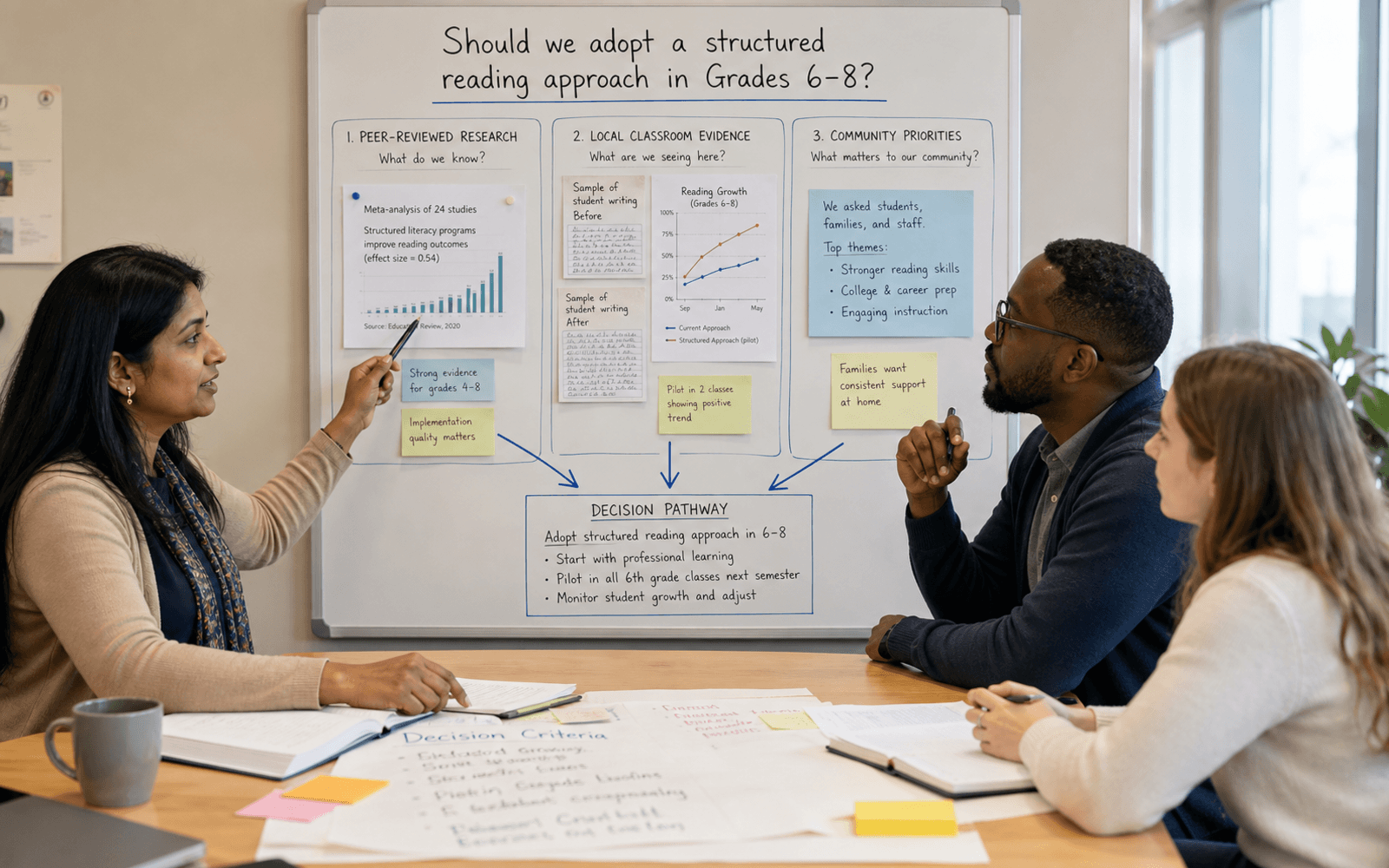
Research reviews identify recurring features of effective professional development. It is often content-focused, incorporates active learning, supports collaboration, models effective practice, provides coaching or expert support, offers feedback and reflection, and continues long enough for experimentation and revision. These features are not a guaranteed recipe. Their value depends on coherence with curriculum, leadership, time, teacher needs, learner populations, and the quality of implementation.
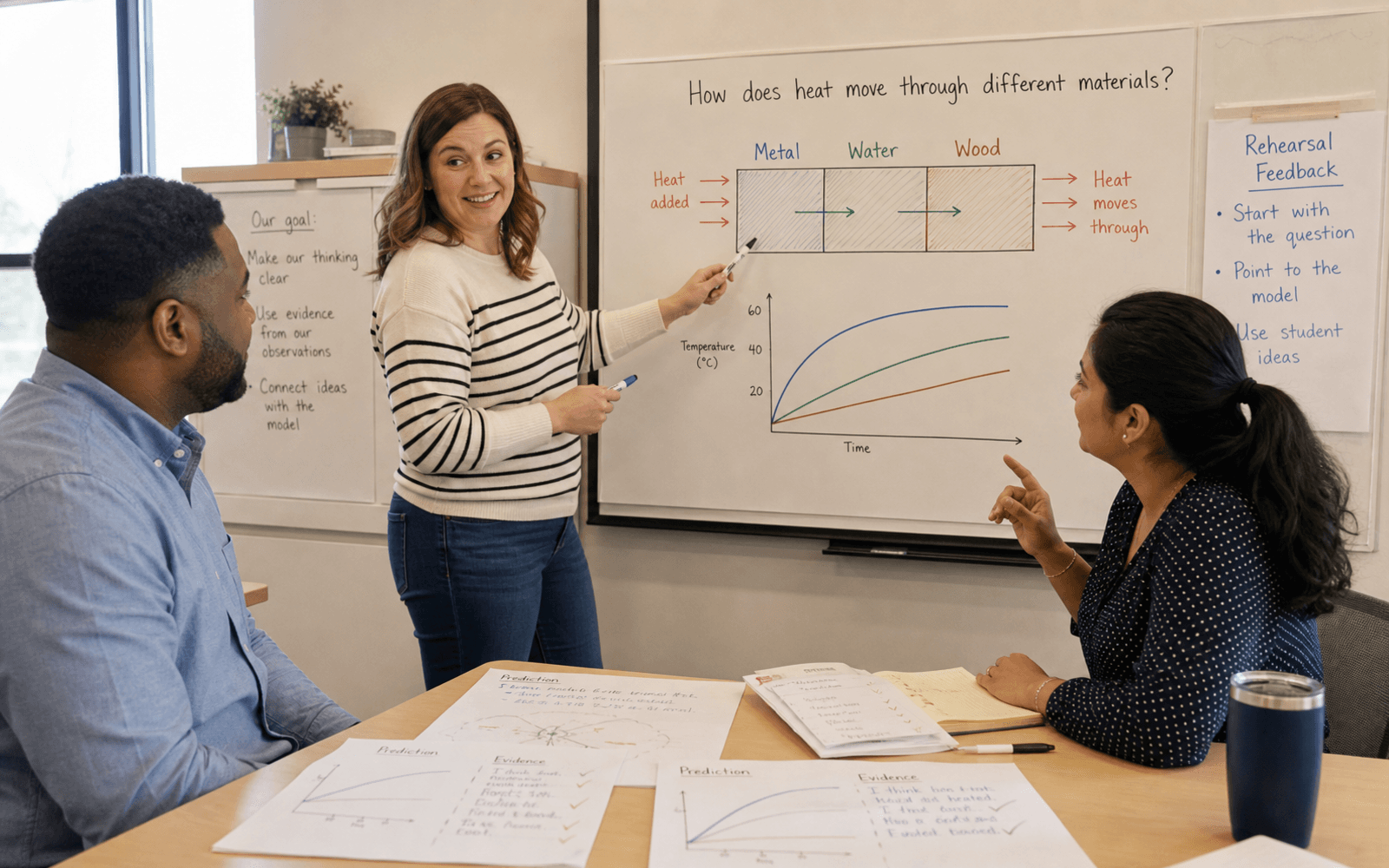
Learning must connect new ideas with classroom evidence. A teacher can study an approach, rehearse it with colleagues, adapt it for a class, observe what learners do, and revise. Student work and discussion reveal whether the intended reasoning appeared. Coaching can focus attention without turning observation into surveillance. Collaborative inquiry helps teachers compare interpretations and make tacit choices visible, while psychological safety allows uncertainty and unsuccessful trials to become sources of learning.
One-off workshops often fail because teachers return to unchanged schedules, materials, assessment pressures, and support. Institutions need protected time, relevant resources, leadership participation, access to expertise, and opportunities to revisit practice. Accountability should distinguish participation from learning and learning from classroom impact. Attendance certificates do not show that instruction changed, and a short-term student score cannot by itself explain why it changed.
AI can support professional learning by generating rehearsal cases, helping locate research, suggesting questions, or organizing evidence. It can also produce generic advice, fabricate sources, or standardize practice without context. Teachers should verify claims, protect student data, and retain ownership of instructional decisions. An AI-produced lesson is not professional learning unless educators examine its assumptions, adapt it, test it, and learn from the result.
In education, a teacher team can select one recurring misconception, study relevant evidence, design and rehearse a response, teach it, and bring anonymized work to the next meeting. Colleagues compare what learners understood, not whether the teacher followed a script perfectly. They document revisions and decide what evidence would justify wider use. This cycle makes professional learning an inquiry into teaching and learning rather than an event. Sustained improvement grows when individual expertise, collective responsibility, supportive conditions, and honest evidence reinforce one another. Leaders should monitor whose voices shape the programme, whose classrooms receive coaching, and whether workload or temporary contracts prevent some teachers from participating fully. Professional learning should itself model the inclusive, collaborative, evidence-responsive teaching it asks educators to provide in practice.