Conference paper: Playing Bias uses image comparison to make AI stereotypes debatable
Amalia Foka
iLRN 2026, accepted paper; open author version
500 字摘要
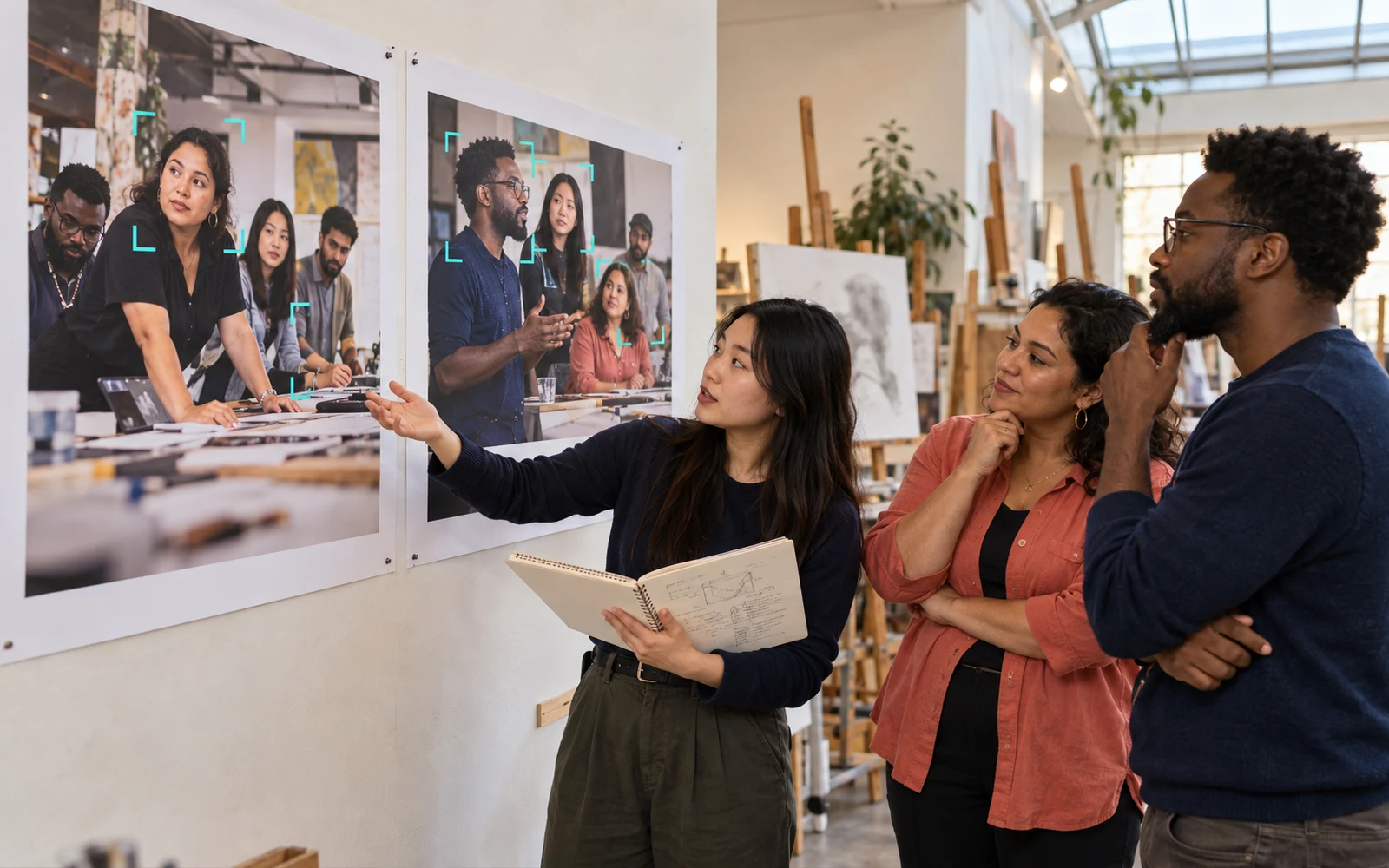
Amalia Foka's Playing Bias, listed as accepted at iLRN 2026 and posted to arXiv on October 23, describes three games for interpreting generated imagery. Its pilot involved 15 fine-arts undergraduates in Greece across six three-hour classes. Students examined images, varied prompts and documented visual claims. The author reports more disciplined discussion in their artifacts and 22 group memos. This was an author-taught descriptive pilot without a controlled comparison; coding used one rater without inter-rater reliability. It offers a teaching design rather than a demonstrated general improvement in AI literacy.
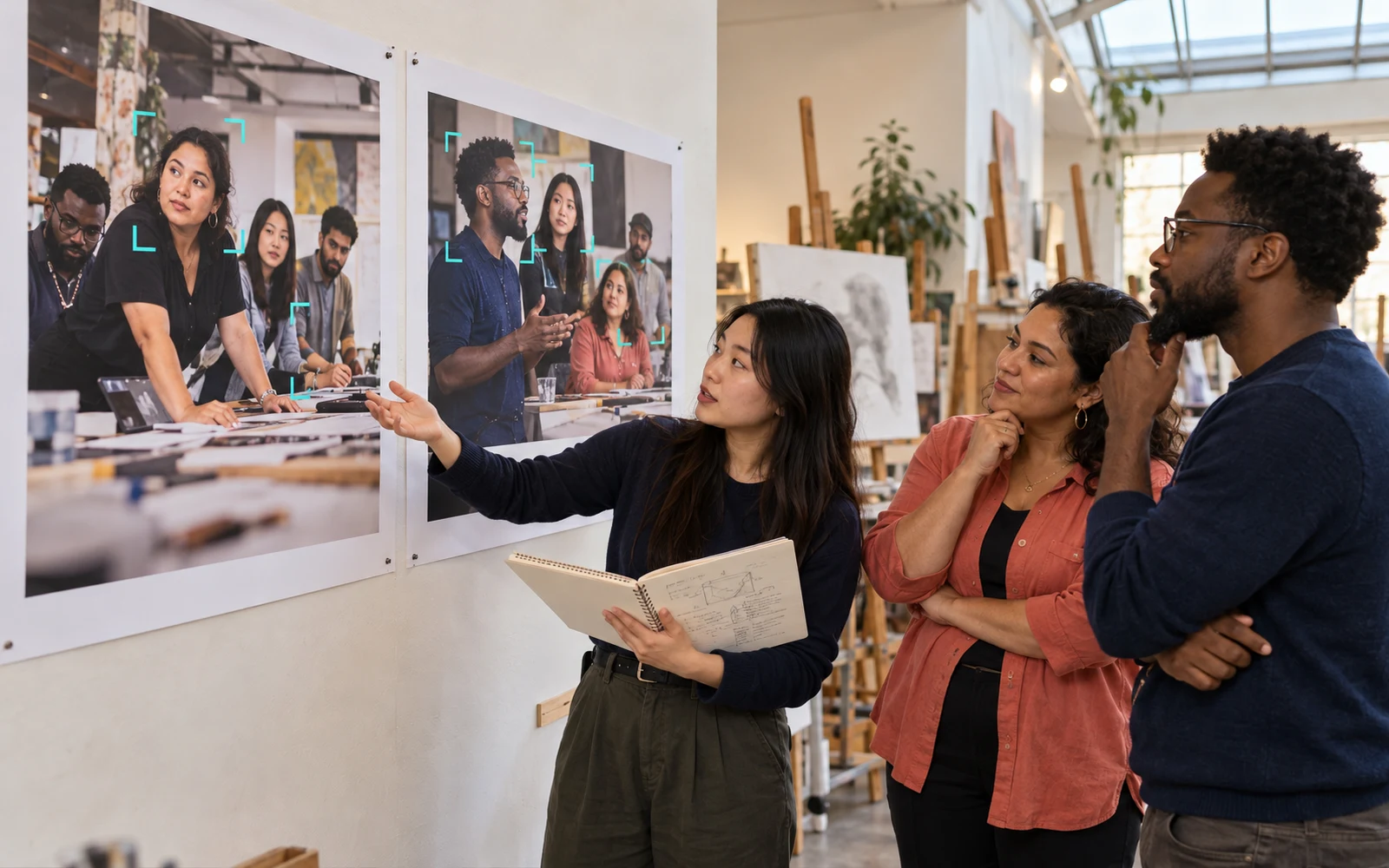
For AIEDHK, an accessible follow-up could begin with a familiar public-facing image, such as a school club poster. The following workshop example is an editorial proposal. Learners could first describe what is visible before discussing what it suggests: who is shown handling equipment, who appears to lead the activity and whose contribution is difficult to see. This would give the group shared evidence to discuss instead of asking everyone to agree immediately on whether an image is fair.
A teacher could invite two plausible interpretations of the same detail. A person standing at the centre might appear authoritative, but another participant could be directing the work from the edge of the scene. Learners would identify which visible features support each interpretation and what the image leaves uncertain. The exercise could help distinguish observation from inference without assuming that every representational question has one mechanically correct answer.
The class could then plan a small comparison using approved, non-sensitive prompts. Before generating anything, each group would state what it expects to change and what evidence would challenge that expectation. It could retain all outputs from the comparison, including awkward or inconclusive ones, so the discussion does not depend on selecting a dramatic example. Any claims would remain about that documented set of outputs and settings rather than about every image the model could produce.
A local teaching team would also need to consider the experience of participants. Learners should not be required to speak for an ethnic group, gender or disability category, and they should be able to discuss a prepared example instead of generating one about themselves. The teacher could introduce respectful language for disagreeing with a representation while avoiding assumptions about the people shown. These choices would keep the focus on the image and the reasoning used to interpret it.
Assessment could ask for a short account linking one claim to visible evidence and one unresolved question. A later task could use an unfamiliar image and ask the learner to explain a new judgment independently. Teachers might compare those accounts with earlier work while documenting the limitations of the activity. Enjoyable discussion and attractive outputs would remain useful observations, but they would not replace a direct examination of how students justify their conclusions.
The proposed workshop could end with a practical editorial decision: keep, revise or replace a draft poster, with reasons that another group can inspect. This connects critical discussion to an ordinary choice that schools already make. It also gives students a way to disagree constructively and revise their judgment when new evidence appears, while leaving broader claims about model behaviour open to more systematic investigation.