Fostering machine learning literacy in senior primary education: Evaluating a structured pedagogical course design
Siu Cheung Kong, Qiaoyi Wang
Computers and Education: Artificial Intelligence
500 字摘要
Kong and Wang address a basic weakness in much school AI literacy: students may learn to operate an AI tool without understanding how or why a machine-learning system changes its behaviour. Their 2026 article in Computers and Education: Artificial Intelligence evaluates whether fundamental machine-learning concepts can be taught to senior primary learners through a short, deliberately structured course. The study is especially relevant to AIEDHK because it was conducted across seven Hong Kong primary schools and led by researchers at The Education University of Hong Kong.
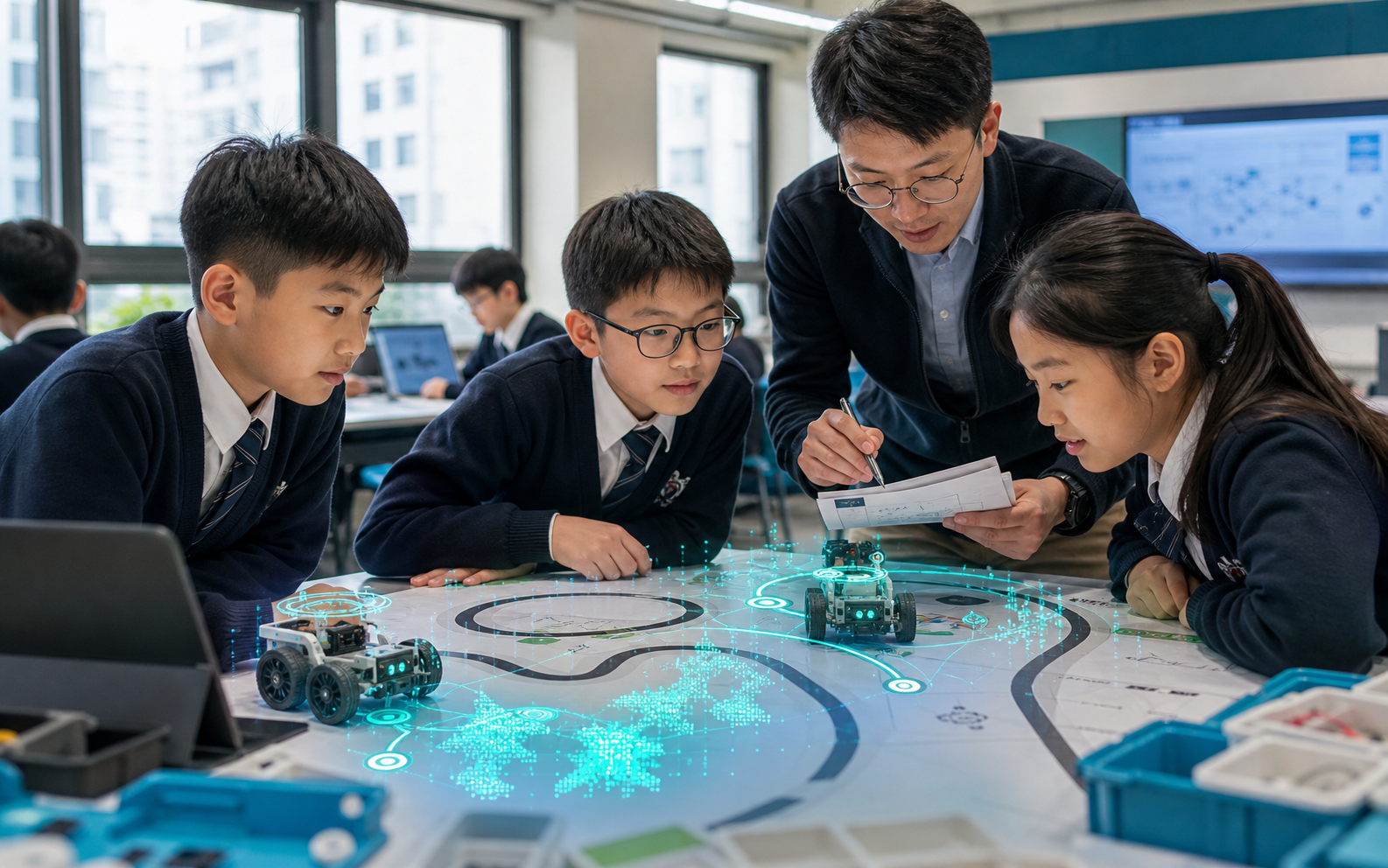
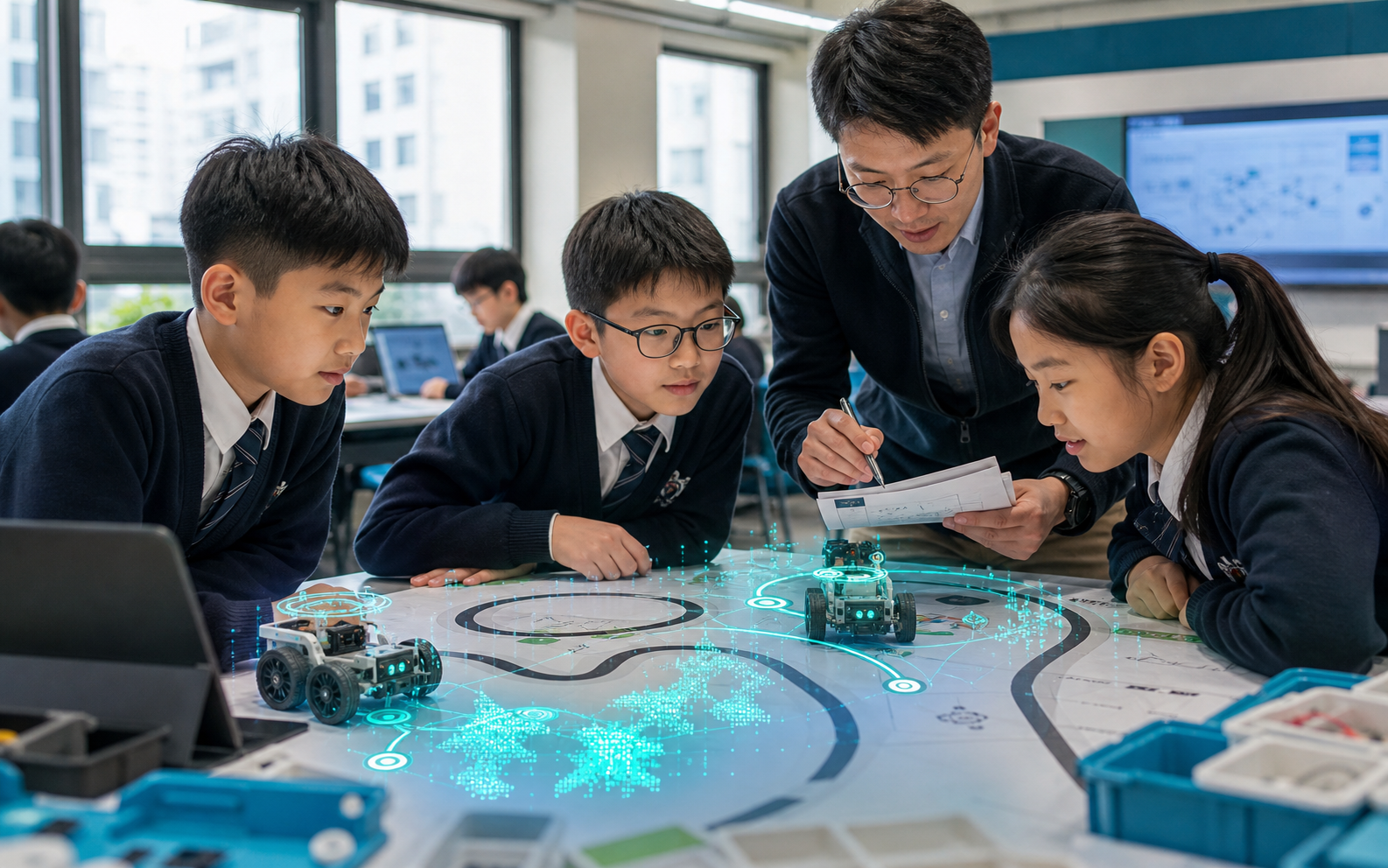
The course involved 752 students with an average age of 11.36 years. It lasted between six and eight hours, making it closer to a feasible school module than a full computing qualification. Instead of beginning with mathematical notation or open-ended programming, the design combined guided worksheets, hands-on robot activities, competitive circuit tasks, and real-time visualizations of algorithms. Students repeatedly worked with data processing, parameter adjustment, and model training inside the robots' software. This let them observe how changes to data or settings affected behaviour and then refine the system.
The content went beyond a general definition of artificial intelligence. Students encountered supervised learning and reinforcement learning and worked with ideas connected to k-nearest neighbours and artificial neural networks. The robot tasks made those abstract ideas inspectable: learners could train a system, test it on a circuit, observe its performance, and adjust the model. The worksheets and teacher-guided sequence provided conceptual scaffolding around that activity so that trial and error was tied to an explanation of what the machine was learning.
The researchers used pre- and post-course tests to examine changes in machine-learning understanding. Scores improved significantly, with a reported Wilcoxon effect size of 0.55. The public article abstract characterizes this as evidence that students comprehended the targeted forms of machine learning and their associated algorithms. The study also used student interviews and thematic analysis. Students described the combination of structured guidance, practical interaction, and iterative refinement as supporting both engagement and conceptual learning.
One notable qualitative finding was that some learners began to distinguish machine learning from human learning. That reflection matters because AI literacy is not simply technical vocabulary. Understanding that an algorithm learns from data, objectives, feedback, and parameter updates can help children question what a system knows, where errors come from, and why human learning cannot be reduced to the same process. The course therefore connects computational understanding with an early form of critical AI literacy.
The findings should still be interpreted within the study's boundaries. The reported evaluation concerns a short course in seven Hong Kong schools and relies on before-and-after measures plus interviews rather than a randomized comparison with another curriculum. It establishes promising near-term conceptual change, but it does not by itself show long-term retention, transfer to unfamiliar AI systems, effects on later tool use, or equal benefit across learner groups. Robot hardware, software, preparation time, and teacher expertise may also affect whether other schools can reproduce the course.
For AIEDHK, the practical lesson is to teach the mechanism beneath the interface. A school does not need to turn every child into a machine-learning engineer, but learners should have repeated opportunities to collect or inspect data, train a model, observe failure, adjust parameters, and explain the resulting behaviour. Guided worksheets and visual feedback can keep hands-on activity conceptually focused. A careful local rollout would add delayed assessment, compare alternative teaching designs, monitor accessibility and subgroup outcomes, and document teacher development and resource requirements. The study's strongest contribution is showing that primary learners can engage with real machine-learning ideas when pedagogy makes the learning process visible.