AI-generated art examples were associated with greater engagement in a small primary-school painting study
Cunling Bian, Xiaofang Wang, Yingxue Huang, Shan Zhou, Weigang Lu
Humanities and Social Sciences Communications
500 字摘要
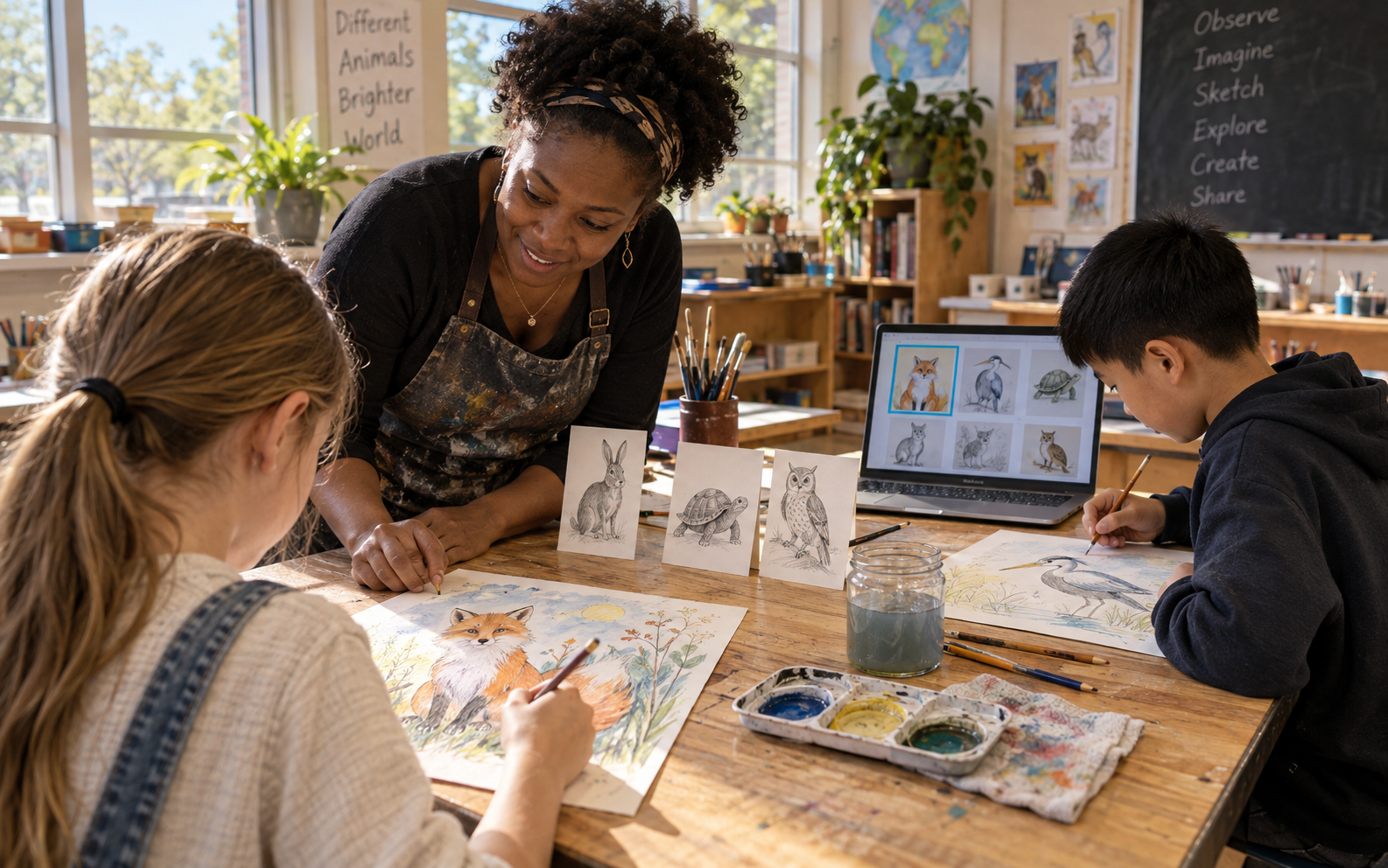
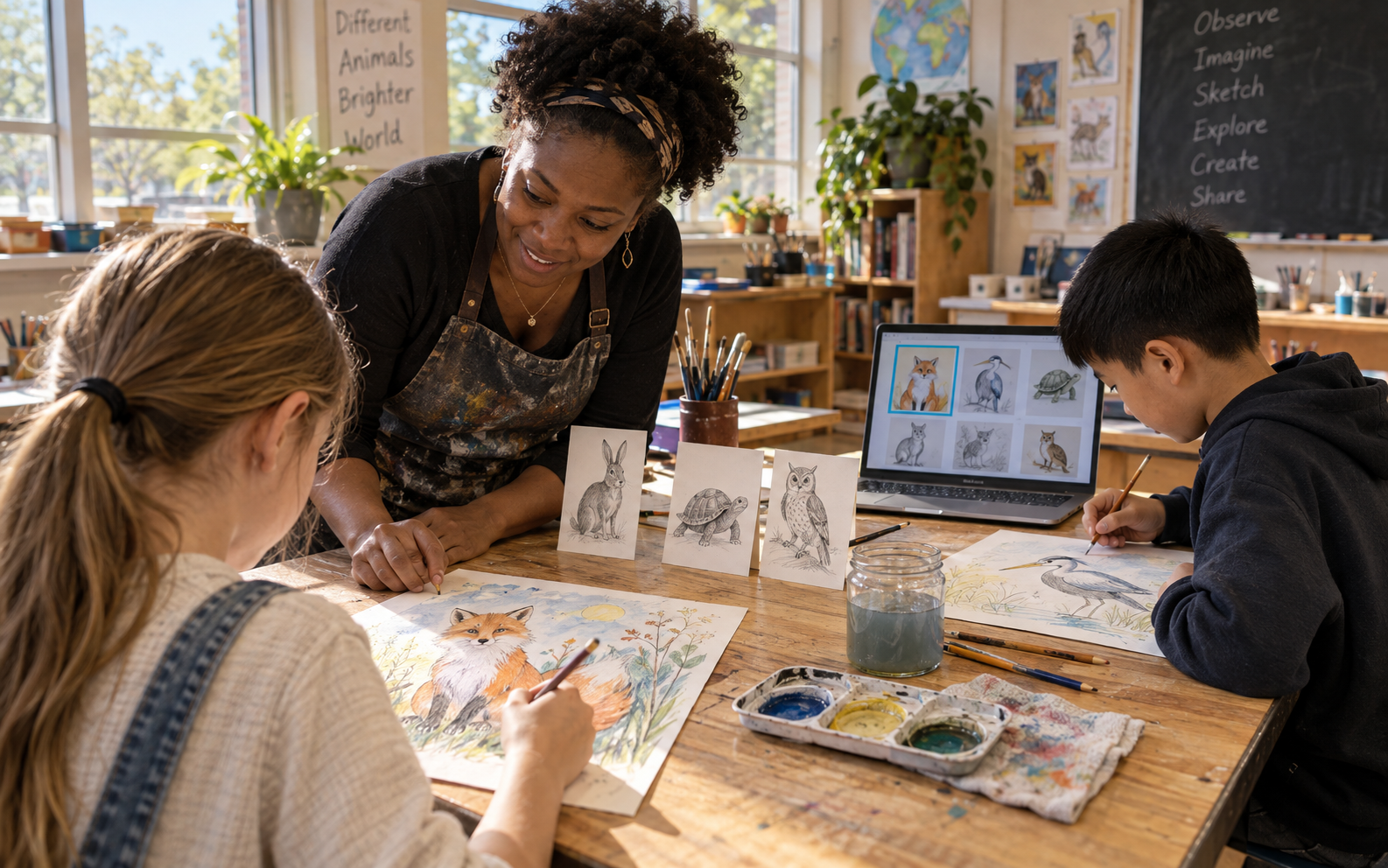
Can an AI-generated example help a child learn to make their own artwork? Cunling Bian and colleagues explored that question by changing the visual examples used in primary-school art instruction. Their study concerned images prepared for teaching, while pupils continued to paint with conventional materials. That distinction matters: a child producing a picture through a generator is a different activity from studying a generated example, applying a technique and creating a personal response on paper.
The classroom study involved 78 fifth-grade pupils at one school in Shandong Province, with 39 in each group. Both groups first completed conventional art instruction and an initial painting task. The subsequent task introduced teacher-curated Stable Diffusion images to one group while the other continued with examples drawn from established artworks. The teacher, core lesson structure and physical art materials were held similar across conditions. The second task asked pupils to apply anthropomorphism when designing a distinctive cartoon character, giving the comparison a specific artistic purpose.
Researchers gathered questionnaires on classroom engagement, self-efficacy and cognitive load, and assessed pupils' paintings. Three art teachers scored anonymized work without knowing the pupils' group assignments. Their rubric covered technical skill, adherence to the theme, composition, creativity and effort. Using both learner reports and artwork ratings is stronger than relying on enthusiasm alone, although neither measure necessarily captures the development of artistic judgment across time or across different genres and materials.
The AI-image group showed higher reported engagement and self-efficacy, and its paintings received more favorable ratings across the assessed dimensions. Cognitive load did not differ significantly between groups. These results suggest that well-chosen generated examples may be worth studying as instructional resources. They do not show that generated imagery is universally easier to learn from, or that an unchanged cognitive-load rating proves the two approaches impose identical demands. Novelty, the particular examples selected and the short activity may all influence pupils' responses.
The evidence should remain bounded to this setting. The paper describes a small, short comparison in one age group and one school, using a narrow type of cartoon-image task. Its reporting alternates between randomized assignment and a quasi-experimental label, so the design deserves cautious interpretation rather than an expansive causal headline. There was no delayed assessment of independent creativity or a comparison across image generators. The authors also stress the importance of teachers evaluating the suitability of generated examples, rather than presenting outputs automatically as good art instruction.
For AIEDHK, a practical application would be a carefully documented materials pilot. An art teacher could select examples that illustrate the same specific technique, explain why each image is useful and preserve pupils' own sketches and revisions. Evaluation could combine blinded artwork assessment with a later task using a different theme, and ask children to explain choices about shape, composition or expression. Those are proposed next steps, not outcomes reported here. The educational target should remain the child's interpretation and making: generated examples are resources whose value depends on what learners subsequently notice, try and justify.