← Назад к новостям исследований

#physics education

physics education

2 статей

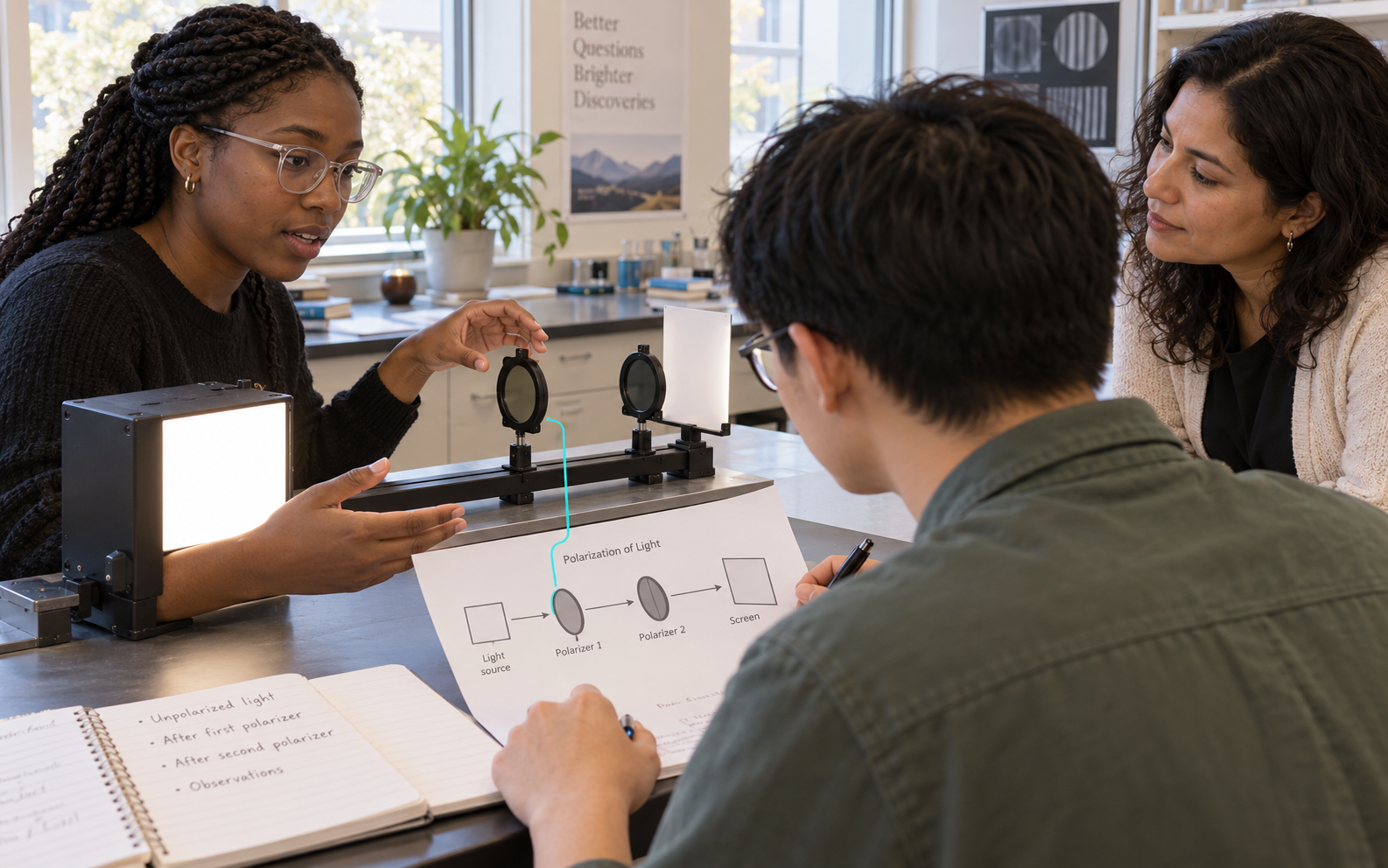
Two students and an instructor inspect polarizer components while comparing an annotated light-path diagram in an optics teaching laboratory.
Журнальная статья2025
Журнальная статья 172

AI feedback improved answers during an augmented-reality physics lab, while independent transfer was not assessed

Atakan Coban, David Dzsotjan, Stefan Küchemann, Jürgen Durst, Jochen Kuhn, Christoph Hoyer

EPJ Quantum Technology

A physics laboratory study compared feedback and no-feedback questions within an augmented-reality quantum-cryptography activity involving 21 student groups. GPT-4 feedback helped groups improve their immediate explanations, while gaze records suggested changes in attention to relevant representations and equipment. The measured outcome was answer improvement during supported discussion. A small voluntary sample, exploratory gaze analyses and no independent delayed test limit broader claims about learning and the value of the combined technology.

physics educationaugmented realityformative feedback
Читать резюме на 500 слов →
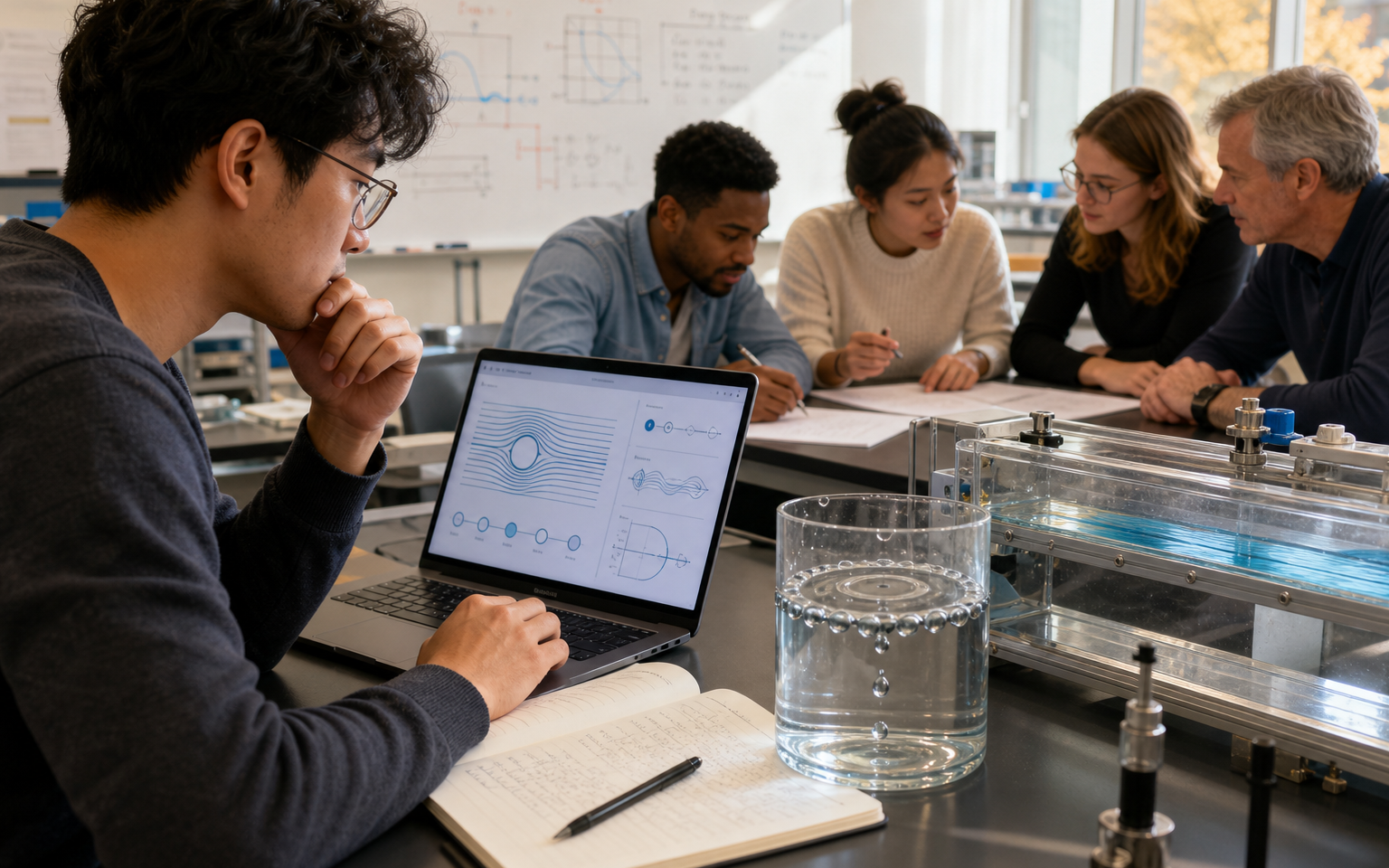
Editorial cover for a randomized comparison of structured AI tutoring and active-learning physics classes
Журнальная статья2025
Журнальная статья 28

AI tutoring outperforms in-class active learning: an RCT introducing a novel research-based design in an authentic educational setting

Greg Kestin, Kelly Miller, Anna Klales, Timothy Milbourne, Gregorio Ponti

Scientific Reports

A crossover randomized trial with 194 Harvard undergraduates found that a carefully structured AI physics tutor produced larger immediate learning gains in less time than in-class active learning, while students also reported stronger engagement and motivation.

structured AI tutoringactive learningphysics education
Читать резюме на 500 слов →