
← Назад к новостям исследований

#ChatGPT

ChatGPT

6 статей

Five diverse K-12 teachers compare AI-supported lesson drafts with curriculum notes and peer feedback during a professional learning session
Журнальная статья2026
Журнальная статья 64

Teachers used generative AI as a self-directed professional-learning scaffold, but the evidence remains self-reported

Zixi Li, Chaoran Wang, Curtis J. Bonk

TechTrends

A mixed-methods study surveyed 298 U.S. K-12 teachers who already used ChatGPT for teaching or professional development and interviewed five. Participants described using generative AI for lesson ideas, structure, quizzes and explanations, but the study did not measure teaching quality, actual time savings or student outcomes.

teacher professional developmentself-directed learningChatGPT
Читать резюме на 500 слов →
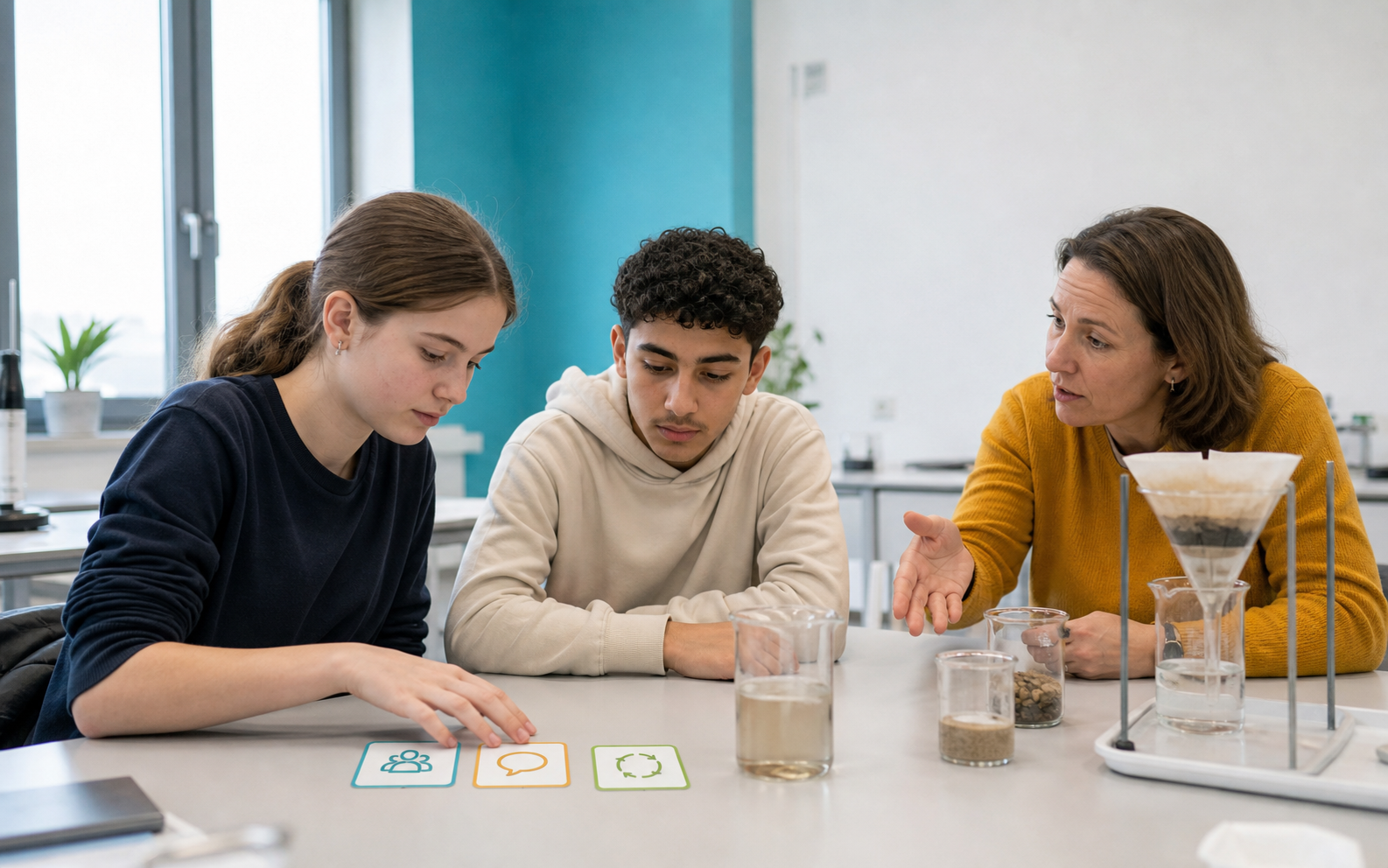
German secondary students refine AI questions with prompt cards while a researcher observes their inquiry process in a small learning lab
Журнальная статья2025
Журнальная статья 60

A brief prompt scaffold changed how secondary students used ChatGPT but did not improve knowledge gain

Maria Klar

Smart Learning Environments

In an experiment with 106 German Grade 9–10 students, a 2.5-minute instruction and interface suggestions more than doubled adaptation prompts during a 20-minute ChatGPT research task. The support changed interaction behaviour but did not significantly improve knowledge gain or cognitive load.

K-12ChatGPTprompt scaffolding
Читать резюме на 500 слов →
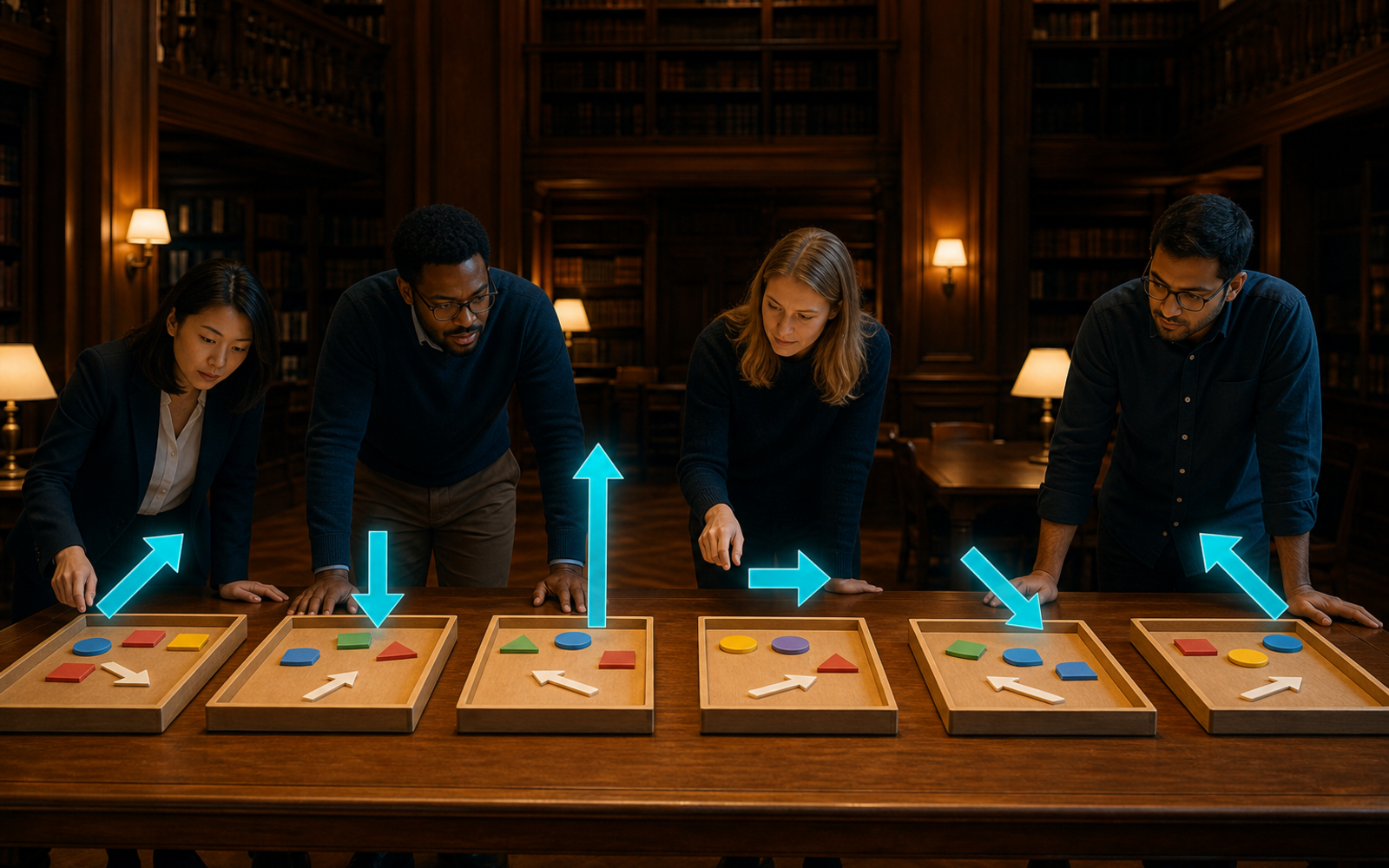
Four diverse researchers compare six separate geometric evidence trays beneath six cyan arrows pointing in different directions
Обзор2026
Обзор 46

ChatGPT's impact on student learning outcomes: a meta-analysis of 35 experimental studies

Xinning Wu, Pei Zhu, Jinliang Zhang, Mengwei Yin, Yingxi Wang

Humanities and Social Sciences Communications

A 2026 meta-analysis of 35 experimental studies and 4,193 participants reported a moderate average positive effect of ChatGPT on learning outcomes, but very high heterogeneity means the pooled result should guide conditional design questions rather than a universal effectiveness claim.

ChatGPTmeta-analysislearning outcomes
Читать резюме на 500 слов →
Editorial cover for ethical and behavioral factors in students' ChatGPT adoption
Журнальная статья2026
Журнальная статья 20

Generative AI in higher education: ethical and behavioral factors influencing students' intentions to use ChatGPT

Nina Rizun, Ovidiu Niculae Bordean, Anastasija Nikiforova, Ioana Natalia Beleiu, Aleksandra Revina

Computers and Education Open

A 2026 open-access study of 344 European students connects ChatGPT adoption in higher education with explainability, privacy, trust, social influence, and perceived control.

ChatGPTAI ethicshigher education
Читать резюме на 500 слов →
Editorial cover for ChatGPT-supported EFL writing and AI literacy
Журнальная статья2026
Журнальная статья 15

AI literacy and mediated learner autonomy in ChatGPT-supported EFL writing: a qualitative study at a Palestinian university

Bilal Hamamra, Asma Abdullah, Sanadil Alawi

International Journal of Educational Technology in Higher Education

A 2026 qualitative study follows Palestinian undergraduates using ChatGPT in EFL writing, showing how AI literacy, teacher mediation, and learner autonomy develop together.

AI literacyChatGPTEFL writing
Читать резюме на 500 слов →
Student and teacher balancing learning support with privacy risks while reviewing large-language-model output
Обзор2023
Обзор 02

ChatGPT for good? On opportunities and challenges of large language models for education

Enkelejda Kasneci, Kathrin Sessler, Stefan Kuechemann, Maria Bannert, Daryna Dementieva, Frank Fischer, Urs Gasser, Georg Groh, Stephan Guennemann, Eyke Huellermeier, Stephan Krusche, Gitta Kutyniok, Tilman Michaeli, Claudia Nerdel, Juergen Pfeffer, Oleksandra Poquet, Michael Sailer, Albrecht Schmidt, Tina Seidel, Matthias Stadler, Jochen Weller, Jochen Kuehn, Gjergji Kasneci

Learning and Individual Differences

A widely cited position paper that balances the educational opportunities of large language models with risks around bias, privacy, assessment, and teacher guidance.

large language modelsChatGPTteacher support
Читать резюме на 500 слов →