Direct questions to a source-grounded AI helped essay revision, while lasting learning remained untested
Yixin Cheng, Yizhou Fan, Xinyu Li, Guanliang Chen, Dragan Gašević, Zachari Swiecki
Computers and Education: Artificial Intelligence
Резюме на 500 слов
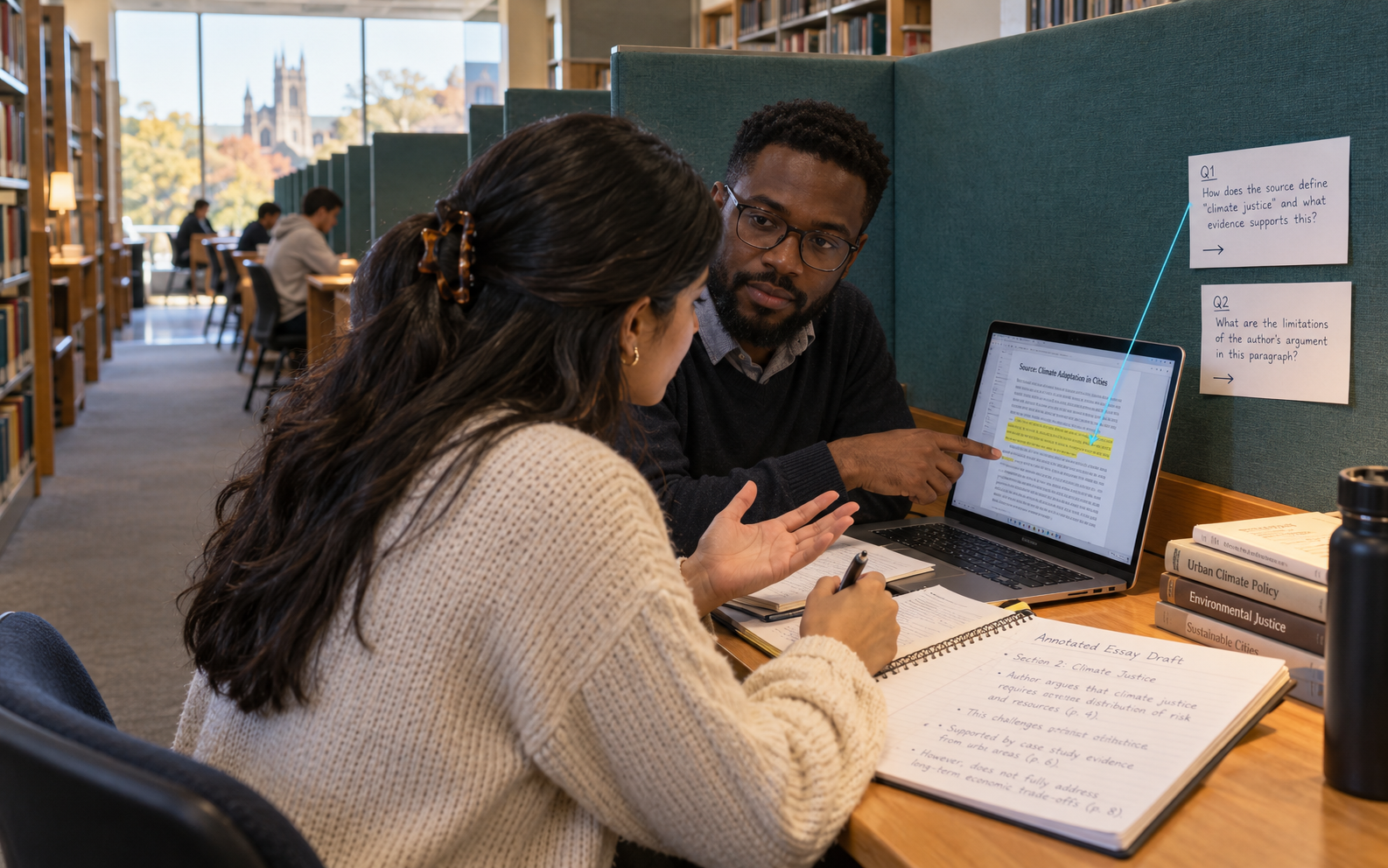
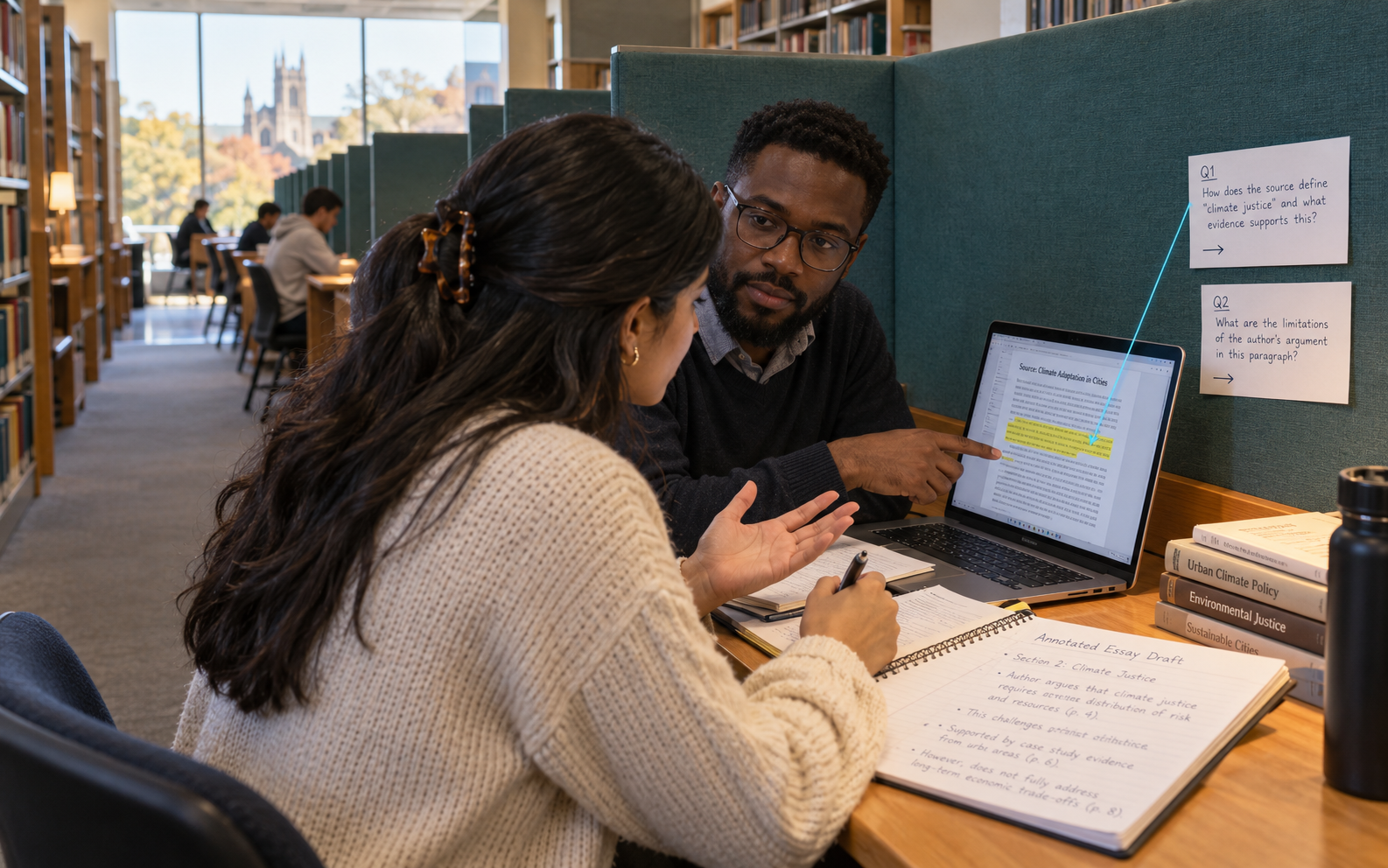
The educational value of an AI writing assistant may depend on the questions a learner brings to it. Yixin Cheng and colleagues examined how students sought help while revising an essay, comparing GPT-4 with a human tutor through similar chat interfaces. Their interest was not simply whether the finished text looked better. They studied the pattern of requests, the knowledge gaps those requests revealed and how different forms of questioning related to performance. This makes help seeking itself an observable part of AI-supported writing.
The experiment involved 59 students at a Chinese public university, all writing in English as a second language. After a two-hour task combining several source texts, participants were randomly assigned to a one-hour revision condition: 33 could consult GPT-4 and 26 could consult an experienced writing tutor. The AI received relevant source passages, the essay, the rubric and related conversation history. It was instructed to suggest revisions without writing or summarizing the entire essay, so the results concern a configured learning environment rather than unrestricted chatbot use.
Researchers coded students' questions and analyzed both their frequencies and connections. Compared with tutor users, AI users asked more questions and tended to make direct, relatively isolated requests for conceptual or procedural information. Human-tutor exchanges more often involved indirect requests for judgment and longer negotiation of shared understanding. The revised essays in the AI condition scored better after adjustment for baseline writing and other covariates. These findings describe how a particular source of help changed the immediate revision process.
Epistemic network analysis added an important distinction. A network measure capturing relationships among question types statistically mediated the connection between condition and revised-essay score. Principal-component measures based on question frequencies did not show equivalent mediation. The implication is that counting prompts may miss how learners combine requests across a conversation. However, a statistical mediation model does not prove that making questions more direct will independently cause better learning: question style was observed, not separately randomized, and other features of the responses may contribute.
The authors explicitly distinguish performance from durable learning. They did not test whether an advantage remained after the assistant was removed, or whether students understood rather than copied the responses they received. The analysis concentrated on questions rather than the quality and frequency of the answers. A small, single-university sample using a second language also limits generalization. An experienced tutor may pursue broader writing development while a configured AI targets the immediate rubric; the study cannot settle which approach is best across educational purposes.
For AIEDHK, a useful next step is to teach and assess help seeking alongside writing. Students could identify a specific uncertainty, ask a focused question, inspect the response against a source and explain the revision in their own words. Teachers could review a small number of such episodes rather than reward prompt volume. A later unaided writing task would then show whether the process developed transferable understanding. Those are proposed instructional and evaluation steps, not additional findings from the experiment. They connect efficient assistance with evidence of what the learner can subsequently do independently.