← Voltar às notícias de pesquisa

#secondary education

secondary education

5 artigos

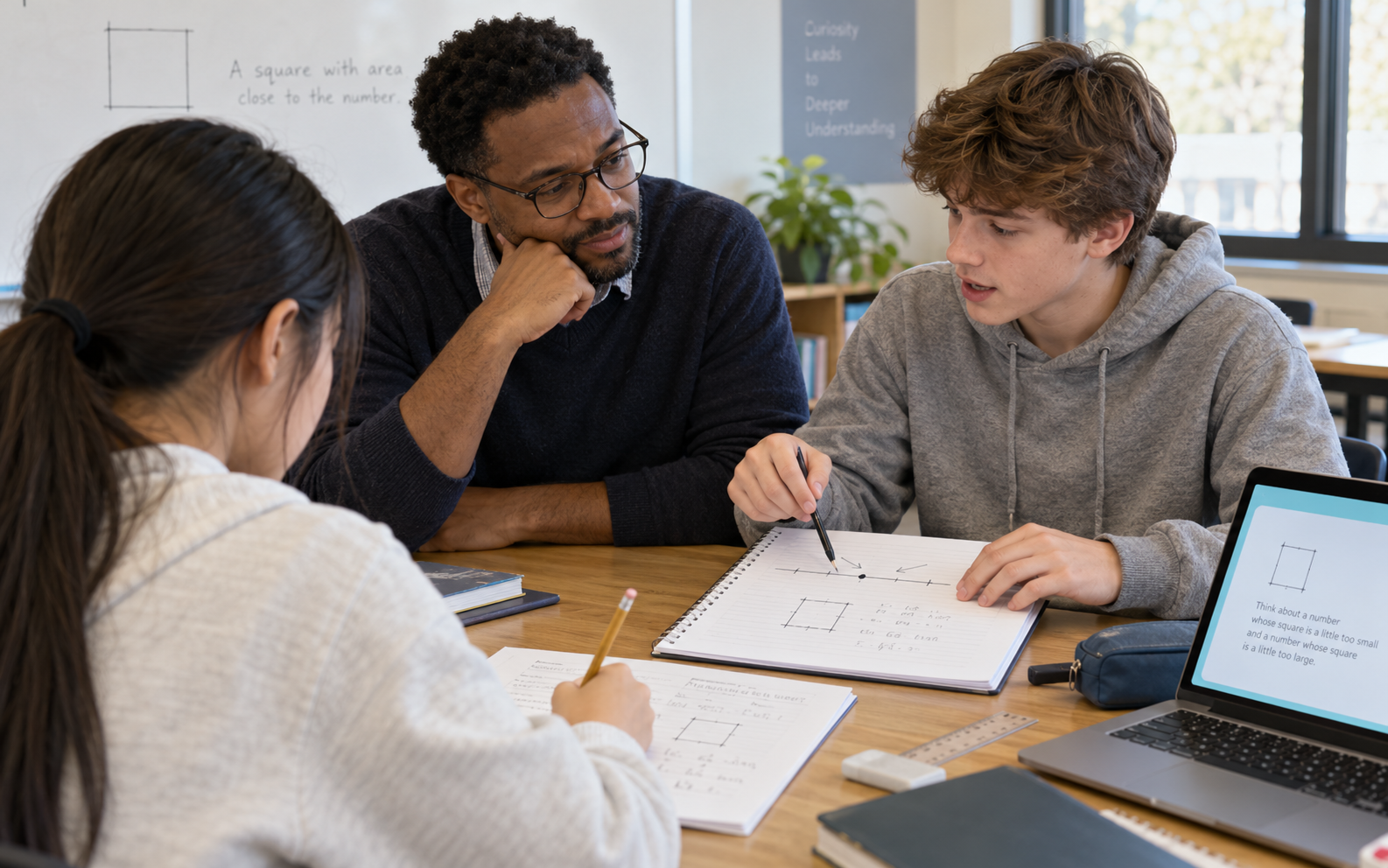
Two students explain square-root estimates using number-line and square-area sketches while a teacher listens beside a laptop hint panel.
Artigo de revista2025
Artigo de revista 166

A tailored mathematics chatbot increased situational interest without a significant overall learning-gain advantage

Cilia Ricarda Rücker, Sebastian Becker-Genschow

Computers and Education Open

A classroom study with 195 ninth-grade pupils compared the tailored ADA chatbot with conventional differentiated materials while learning a square-root method. Pupils using ADA reported stronger situational interest and favorable acceptance. Overall learning gains did not show a significant group-by-time advantage, and cognitive-load differences were also nonsignificant. The result supports studying motivational engagement separately from achievement, particularly when a new tool is introduced for a brief classroom sequence.

mathematics educationsecondary educationdomain-specific chatbots
Ler resumo de 500 palavras →
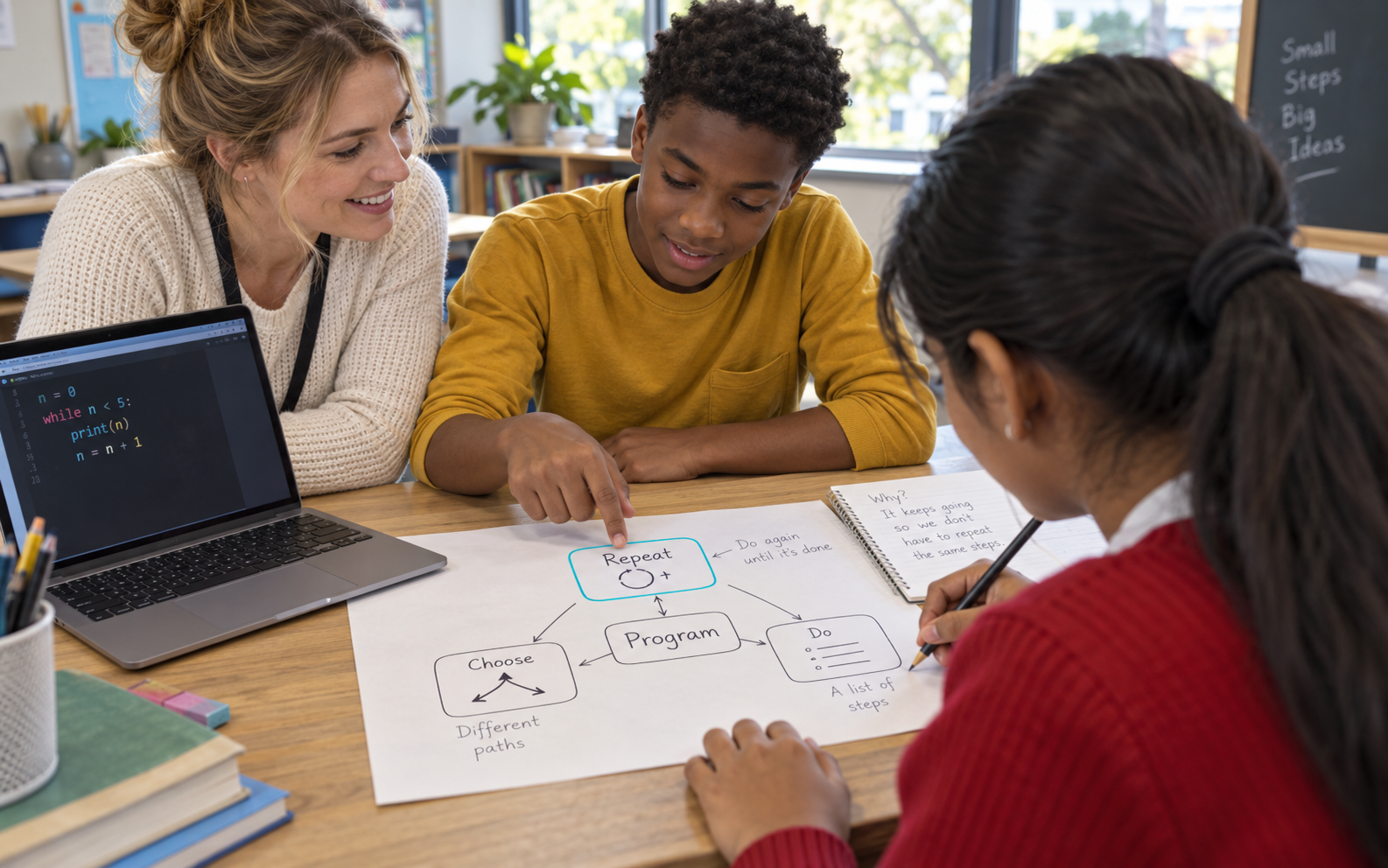
A teacher and two students compare a simple Python loop with a hand-drawn programming concept map while one learner adds explanatory notes.
Artigo de revista2025
Artigo de revista 158

Progressive mind maps strengthened programming performance beyond chatbot assistance alone

Xindong Ye, Wenyu Zhang, Yuxin Zhou, Xiaozhi Li, Qiang Zhou

Humanities and Social Sciences Communications

A study of 111 seventh-grade students compared chatbot-supported Python learning with two forms of mind-map scaffolding. The group progressing from partially completed maps to independent construction achieved the strongest programming-test results. Questionnaire-based computational-thinking outcomes also favored the scaffolded conditions, but post-test programming self-efficacy did not differ significantly between groups. The study supports examining the structure around AI help, while intact-class allocation and limited process data constrain causal and transfer claims.

programming educationmind mappinginstructional scaffolding
Ler resumo de 500 palavras →
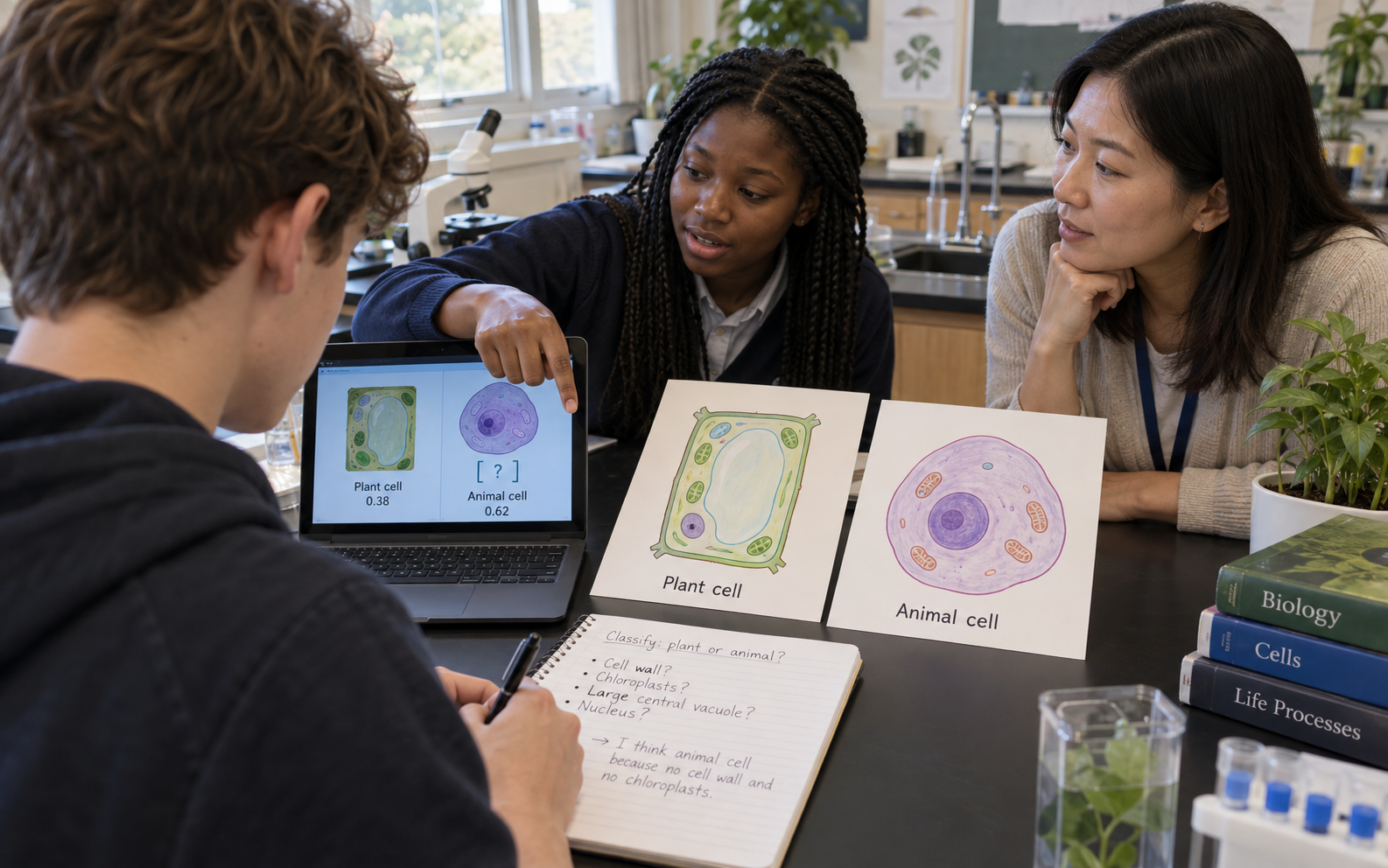
A teacher and two students compare plant and animal cell diagrams with a laptop classification display while one student records reasons in a notebook.
Artigo de revista2025
Artigo de revista 140

Biology lessons provided a concrete route into AI concepts, but gains did not extend clearly to biology knowledge

Shenghua Zha, Marcy Maulucci Bragdon, Na Gong, Jinhui Wang, Silas Leavesley, Rachel Eaton, Erin Bosarge

International Journal of Artificial Intelligence in Education

Researchers integrated four AI lessons into an honors biology course attended by 37 secondary students. Activities linked cell classification, neural networks and biological applications with familiar science content. Among students with paired assessments, AI knowledge improved significantly while biology knowledge did not. Worksheet explanations revealed both useful cross-disciplinary connections and persistent misconceptions. This classroom case supports further curriculum development, but its small sample and lack of a control group preclude a causal effectiveness claim.

AI literacybiology educationsecondary education
Ler resumo de 500 palavras →
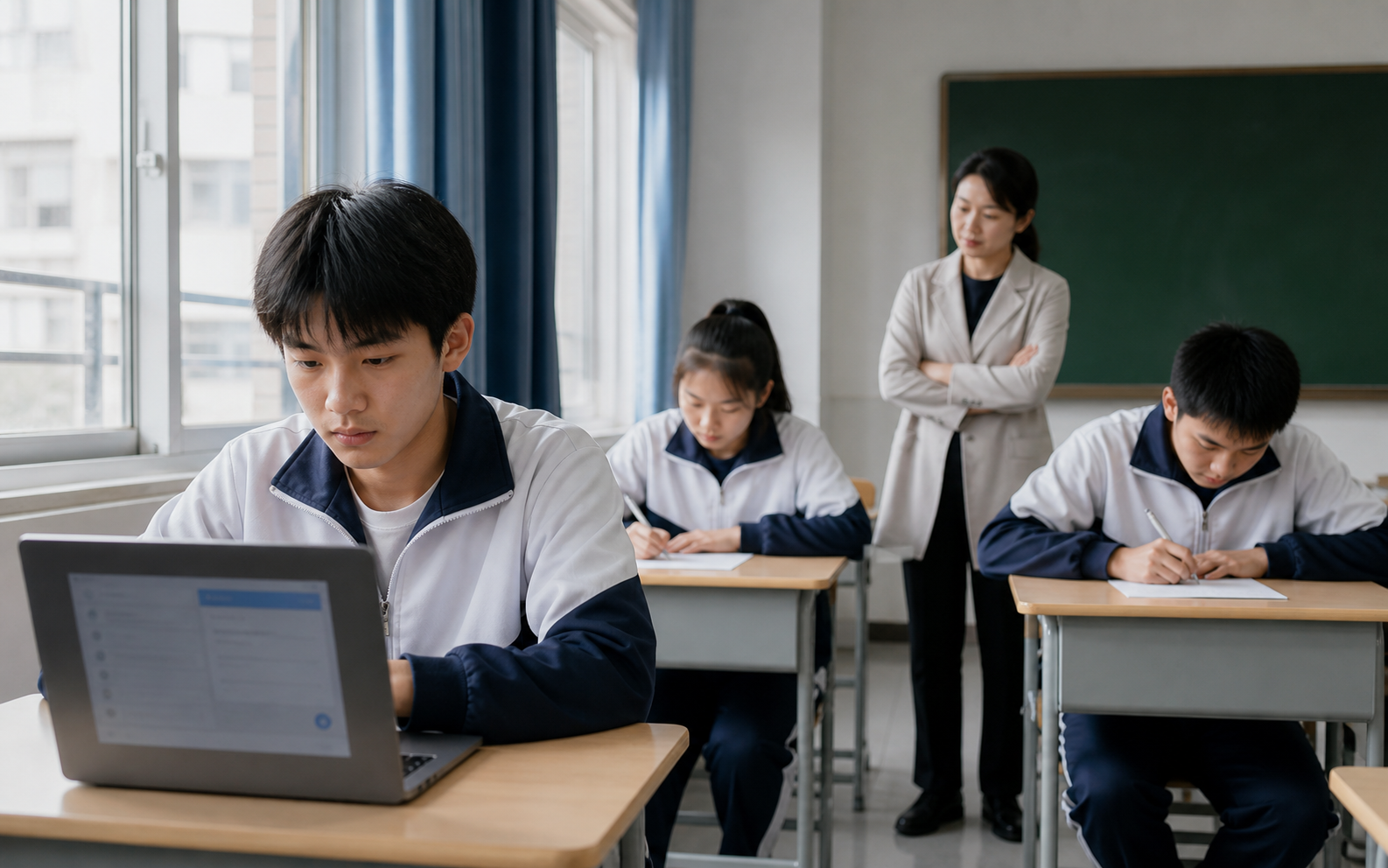
Chinese secondary students complete homework with digital assistance before taking a separate closed-book assessment observed by a teacher
Artigo de revista2026
Artigo de revista 68

Generative AI adoption was linked to higher homework scores but lower unaided exams in a 26,811-student panel

David Strömberg, Victor Lei, Yanhui Wu

CEPR Discussion Paper No. 21577

A CEPR discussion paper analyzes 30 months of records from 26,811 Chinese students in Grades 7–12. Its difference-in-differences estimates associate generative-AI adoption with homework scores 18% higher and completion time 30% lower, but with substantial declines on closed-book and entrance examinations.

generative AIsecondary educationhomework outsourcing
Ler resumo de 500 palavras →
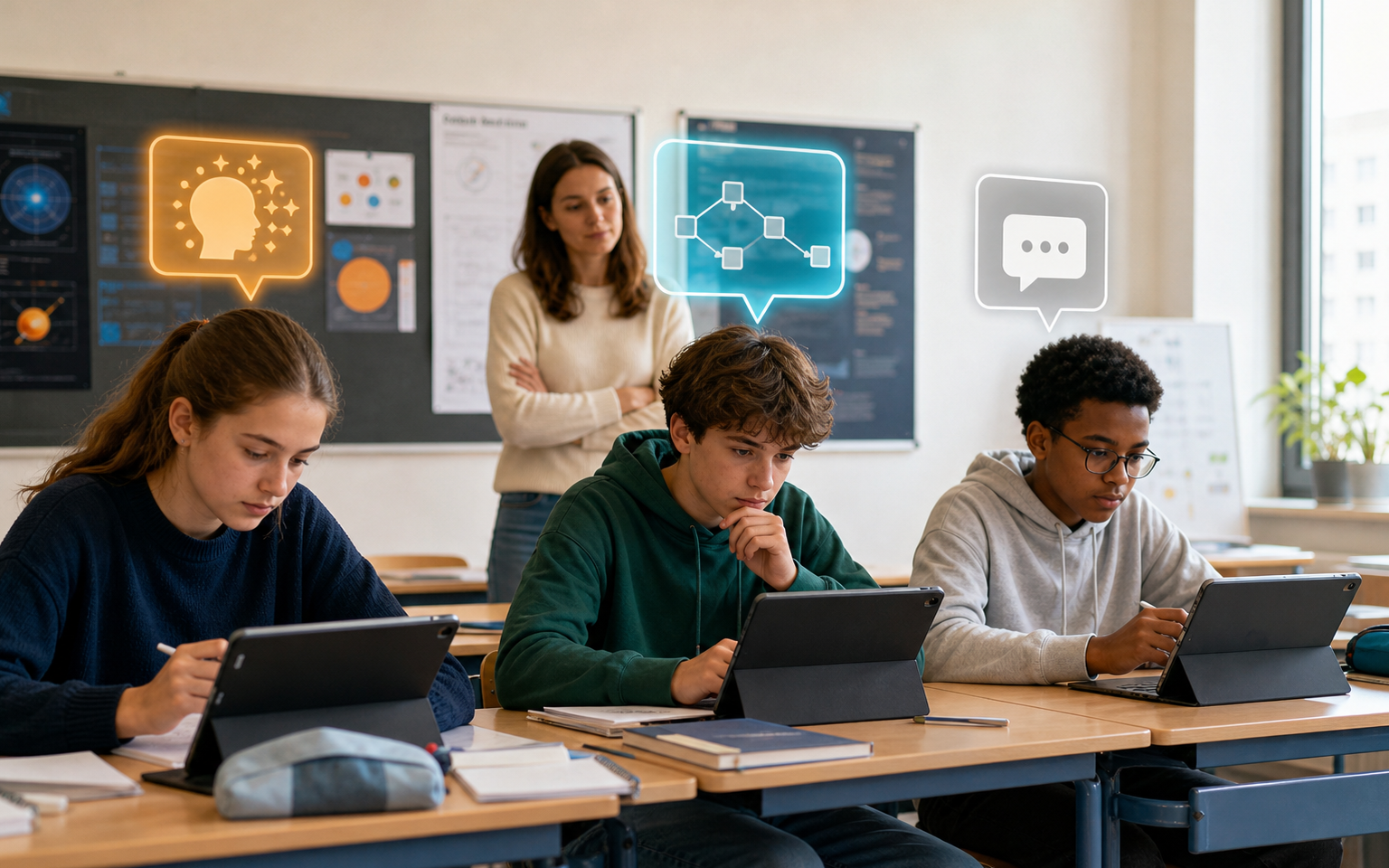
Editorial cover for a secondary-school randomized trial of motivational and cognitive generative-AI learning prompts
Artigo de revista2026
Artigo de revista 32

Enhancing School Students' Self-Regulated Learning through Generative AI Support: A Randomized Controlled Trial

Tim Fütterer, Lisa Bardach, Jochen Kuhn, Stefan Daniel Keller, Peter Gerjets

Educational Psychology Review

A preregistered three-arm trial with 371 German students in Grades 7–9 found limited advantages for theory-informed GPT-4o prompts over standard ChatGPT, highlighting that meaningful engagement and implementation quality matter more than adding prompts alone.

self-regulated learningsecondary educationrandomized controlled trial
Ler resumo de 500 palavras →