← Voltar às notícias de pesquisa

#ChatGPT

ChatGPT

10 artigos

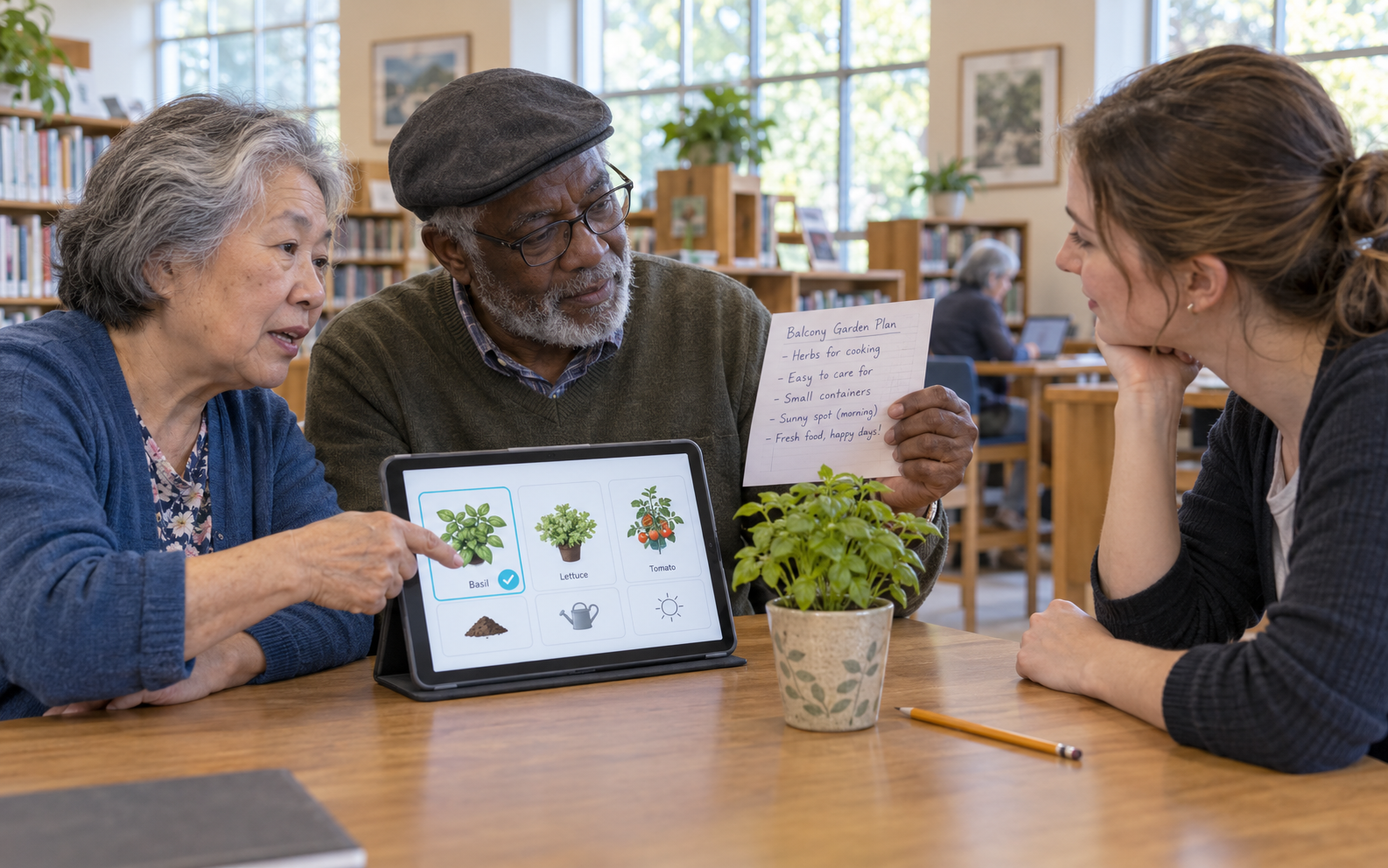
Two older learners explain a balcony-gardening plan and tablet choices to a facilitator during a community-library learning session.
Política / ética20/09/2026
Política / ética 167

Industry news: OpenAI and OATS bring hands-on AI learning to older adults through community partners

OpenAI

AI Product and Learning Report

OpenAI's September 16 announcement describes free, in-person AI workshops with OATS from AARP across ten U.S. communities. This September 20 report examines the lifelong-learning design, rather than claiming completed outcomes. Anthropic's practical AI-learning guidance and Gemini's educator resources offer comparisons. Effective support should begin with a participant's own task, allow different paces and preferences, and help people decide when to question an answer or seek human assistance.

product newslifelong learningolder adults
Ler resumo de 500 palavras →
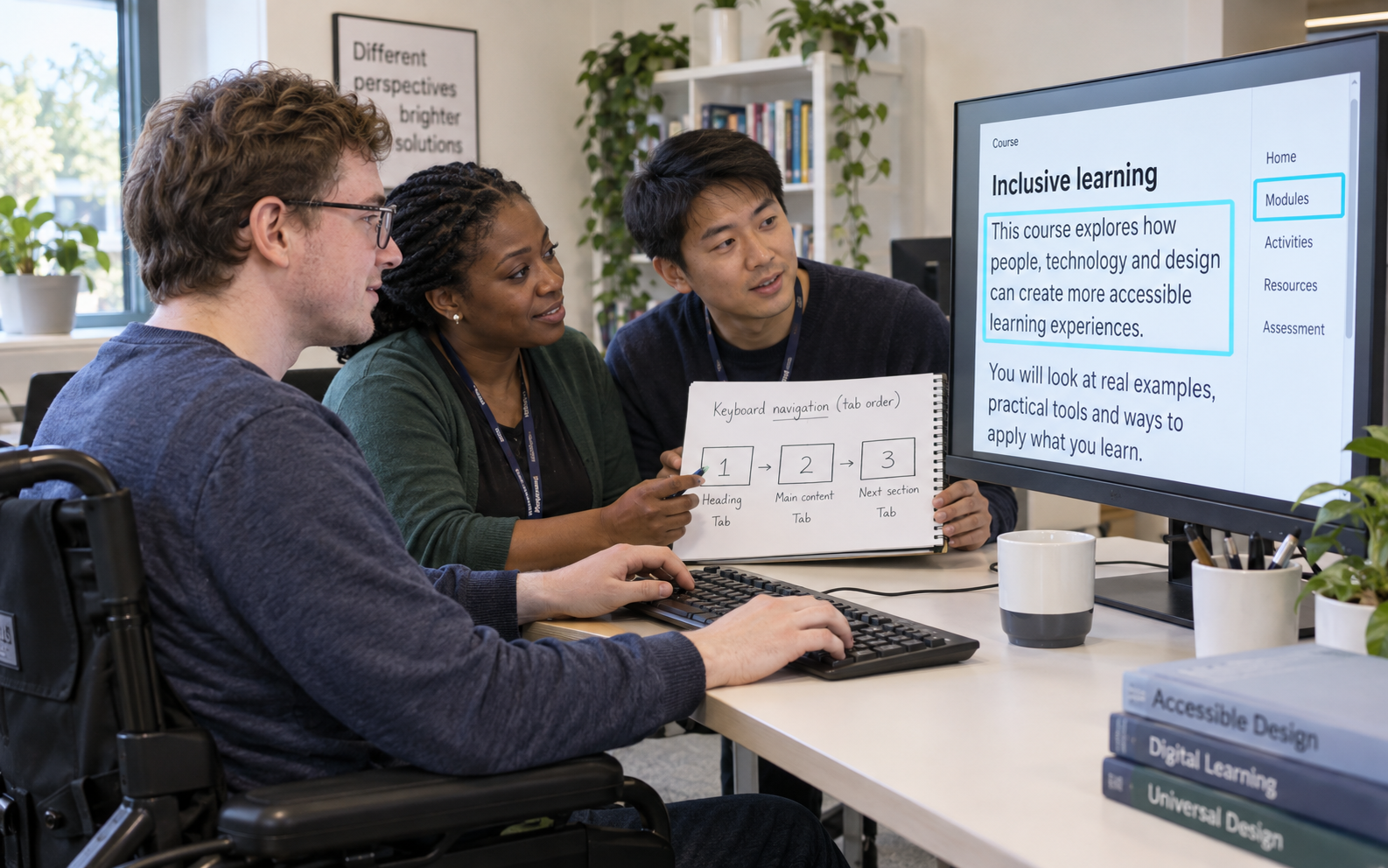
A student using a wheelchair works at a keyboard while two educators compare an enlarged course page with a hand-drawn keyboard-navigation sequence.
Política / ética5/09/2026
Política / ética 139

Product news: An accessibility specialist uses ChatGPT to adapt reading tools, without shifting responsibility to users

OpenAI Academy

AI Product and Learning Report

An OpenAI Academy profile published September 4 describes accessibility specialist James Warnken using ChatGPT to create browser shortcuts and a keyboard-focus styling tool. Reported here on September 5, the case shows a person directing technology around a specific access need. Anthropic's teaching guidance and Gemini's educator training offer related learning opportunities, but personal adaptations do not replace a school's responsibility to provide usable digital materials.

product newsaccessibilityinclusive design
Ler resumo de 500 palavras →
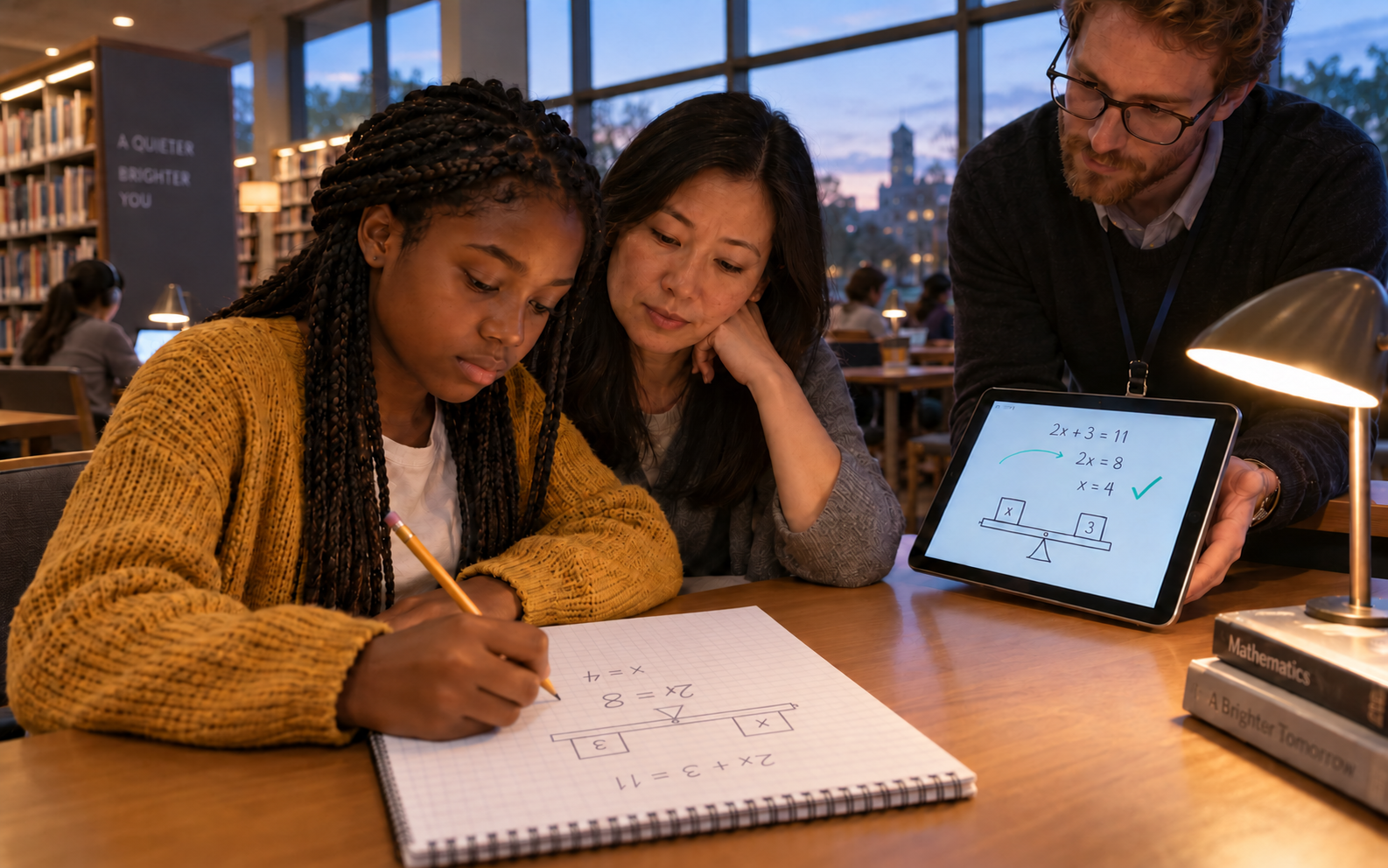
A teenage learner writes algebra in a notebook oriented toward her, while an adult and a librarian review a worked example on a tablet.
Política / ética26/08/2026
Política / ética 119

Product news: OpenAI's learning report shows demand for help beyond the classroom, while outcomes remain an open question

OpenAI

AI Product and Learning Report

OpenAI's August 26 education report describes substantial use of ChatGPT for homework, practice, and checks of understanding outside classroom hours. Its figures concern activity on the platform, not measured learning gains. Read alongside Anthropic's approach to AI education and Gemini's learning tools, the report gives educators a concrete reason to discuss how students ask for help, verify explanations, and return to independent practice.

product newsChatGPTeducation usage
Ler resumo de 500 palavras →
Five diverse K-12 teachers compare AI-supported lesson drafts with curriculum notes and peer feedback during a professional learning session
Artigo de revista2026
Artigo de revista 64

Teachers used generative AI as a self-directed professional-learning scaffold, but the evidence remains self-reported

Zixi Li, Chaoran Wang, Curtis J. Bonk

TechTrends

A mixed-methods study surveyed 298 U.S. K-12 teachers who already used ChatGPT for teaching or professional development and interviewed five. Participants described using generative AI for lesson ideas, structure, quizzes and explanations, but the study did not measure teaching quality, actual time savings or student outcomes.

teacher professional developmentself-directed learningChatGPT
Ler resumo de 500 palavras →
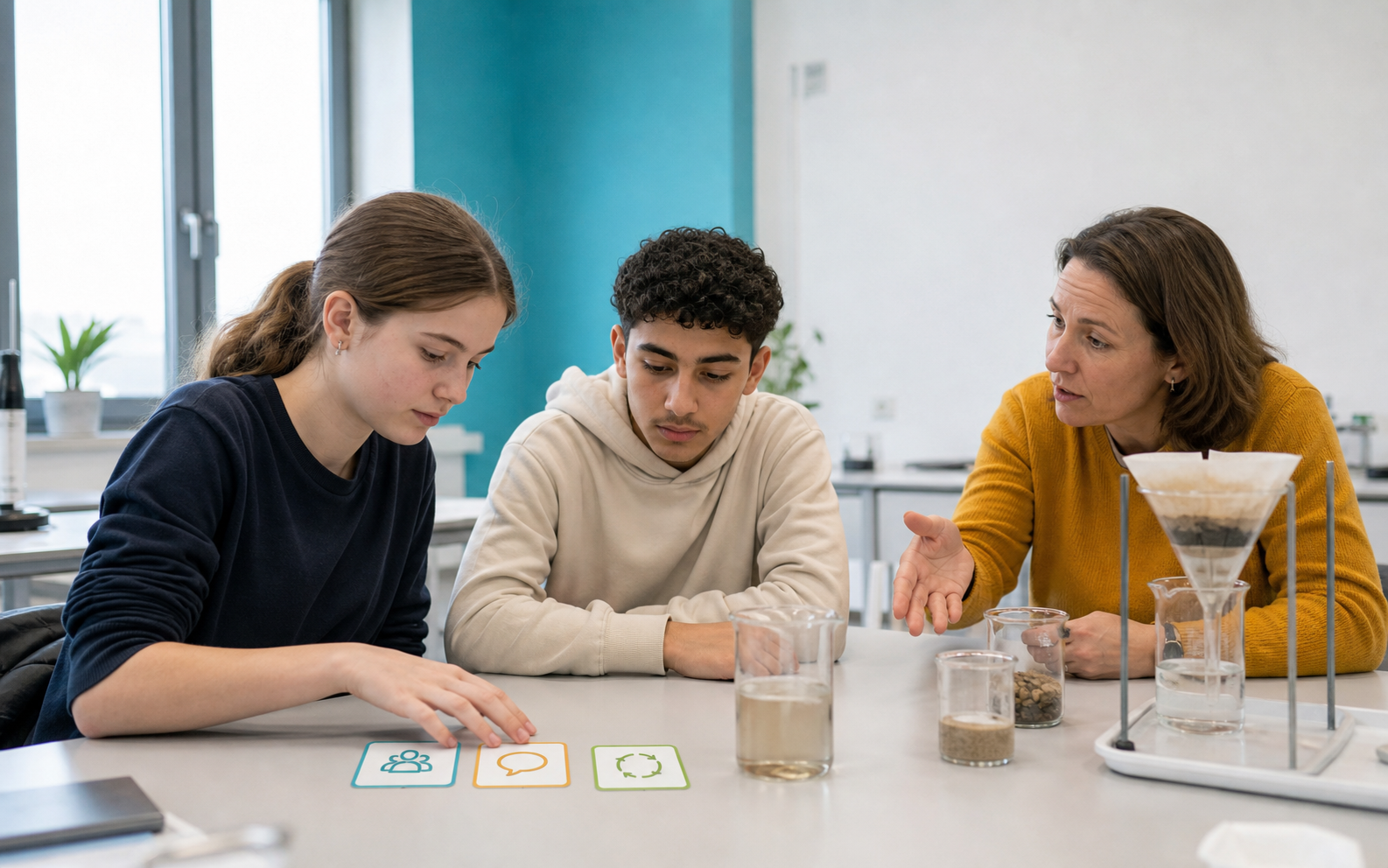
German secondary students refine AI questions with prompt cards while a researcher observes their inquiry process in a small learning lab
Artigo de revista2025
Artigo de revista 60

A brief prompt scaffold changed how secondary students used ChatGPT but did not improve knowledge gain

Maria Klar

Smart Learning Environments

In an experiment with 106 German Grade 9–10 students, a 2.5-minute instruction and interface suggestions more than doubled adaptation prompts during a 20-minute ChatGPT research task. The support changed interaction behaviour but did not significantly improve knowledge gain or cognitive load.

K-12ChatGPTprompt scaffolding
Ler resumo de 500 palavras →
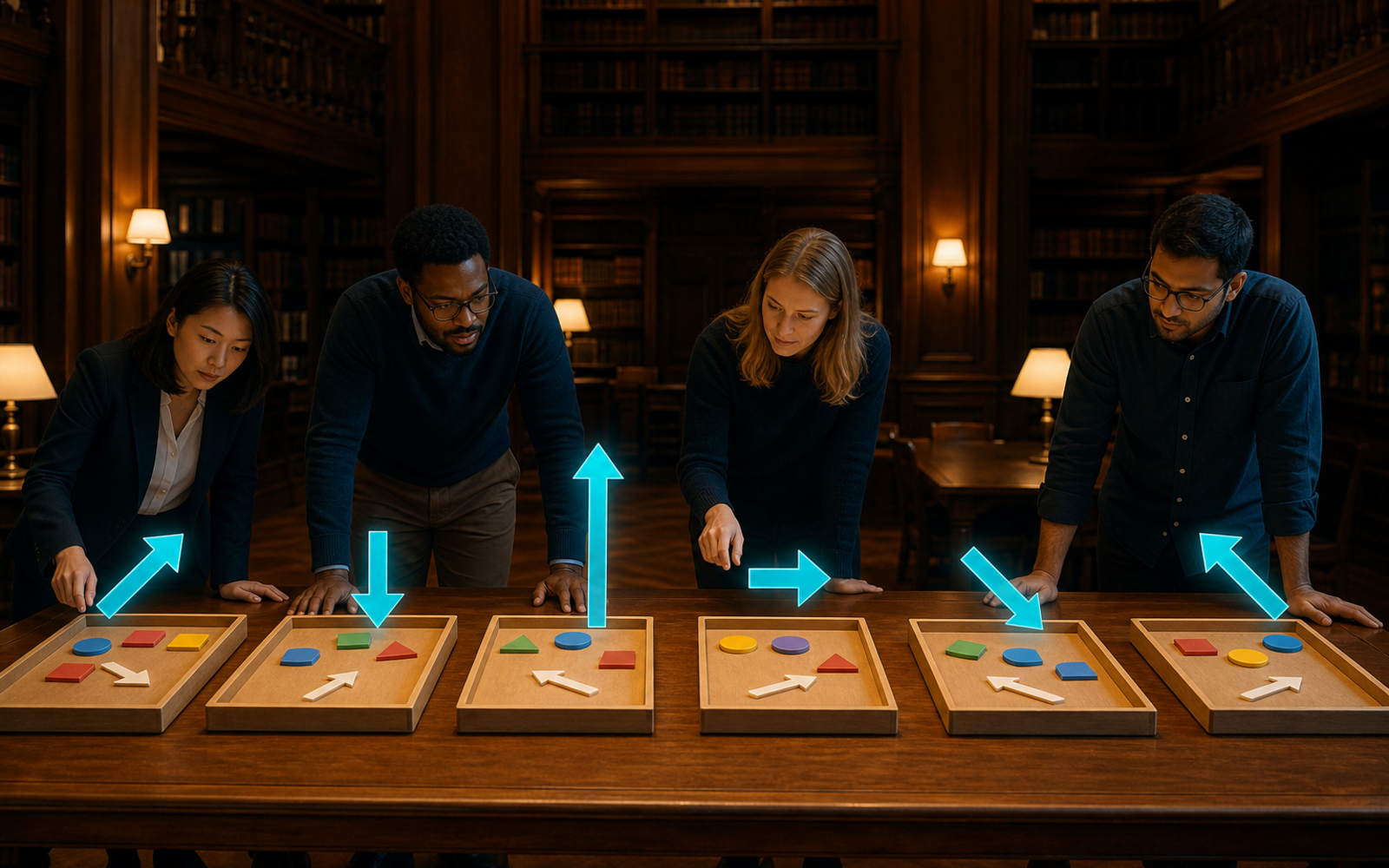
Four diverse researchers compare six separate geometric evidence trays beneath six cyan arrows pointing in different directions
Revisão2026
Revisão 46

ChatGPT's impact on student learning outcomes: a meta-analysis of 35 experimental studies

Xinning Wu, Pei Zhu, Jinliang Zhang, Mengwei Yin, Yingxi Wang

Humanities and Social Sciences Communications

A 2026 meta-analysis of 35 experimental studies and 4,193 participants reported a moderate average positive effect of ChatGPT on learning outcomes, but very high heterogeneity means the pooled result should guide conditional design questions rather than a universal effectiveness claim.

ChatGPTmeta-analysislearning outcomes
Ler resumo de 500 palavras →
Editorial cover for ethical and behavioral factors in students' ChatGPT adoption
Artigo de revista2026
Artigo de revista 20

Generative AI in higher education: ethical and behavioral factors influencing students' intentions to use ChatGPT

Nina Rizun, Ovidiu Niculae Bordean, Anastasija Nikiforova, Ioana Natalia Beleiu, Aleksandra Revina

Computers and Education Open

A 2026 open-access study of 344 European students connects ChatGPT adoption in higher education with explainability, privacy, trust, social influence, and perceived control.

ChatGPTAI ethicshigher education
Ler resumo de 500 palavras →
Editorial cover for ChatGPT-supported EFL writing and AI literacy
Artigo de revista2026
Artigo de revista 15

AI literacy and mediated learner autonomy in ChatGPT-supported EFL writing: a qualitative study at a Palestinian university

Bilal Hamamra, Asma Abdullah, Sanadil Alawi

International Journal of Educational Technology in Higher Education

A 2026 qualitative study follows Palestinian undergraduates using ChatGPT in EFL writing, showing how AI literacy, teacher mediation, and learner autonomy develop together.

AI literacyChatGPTEFL writing
Ler resumo de 500 palavras →
Student and teacher balancing learning support with privacy risks while reviewing large-language-model output
Revisão2023
Revisão 02

ChatGPT for good? On opportunities and challenges of large language models for education

Enkelejda Kasneci, Kathrin Sessler, Stefan Kuechemann, Maria Bannert, Daryna Dementieva, Frank Fischer, Urs Gasser, Georg Groh, Stephan Guennemann, Eyke Huellermeier, Stephan Krusche, Gitta Kutyniok, Tilman Michaeli, Claudia Nerdel, Juergen Pfeffer, Oleksandra Poquet, Michael Sailer, Albrecht Schmidt, Tina Seidel, Matthias Stadler, Jochen Weller, Jochen Kuehn, Gjergji Kasneci

Learning and Individual Differences

A widely cited position paper that balances the educational opportunities of large language models with risks around bias, privacy, assessment, and teacher guidance.

large language modelsChatGPTteacher support
Ler resumo de 500 palavras →