Teachers used AI to develop science lessons, while keeping responsibility for evidence and local relevance
Won Jung Kim
Research in Science Education
Resumo de 500 palavras

What remains the teacher's job when an AI system can draft an entire science lesson? Won Jung Kim's study examines that question through environmental science agency: connecting scientific understanding with students' capacity to investigate issues and participate in consequential action. The focus is the work between an initial AI suggestion and a lesson that a teacher can justify. A polished plan is only one artifact of that process; its scientific credibility, classroom relevance and opportunities for student agency still require professional judgment.
The study followed 23 teachers in a master's-level elementary science methods course at a university in the western United States during spring 2024. Sixteen were student or intern teachers and seven had independent teaching experience. An introductory workshop addressed responsible use and prompting. The researcher analyzed surveys, lesson designs, AI conversations and instructor field notes through constant comparison, with additional coders helping review and refine categories. This design provides a detailed account of practices within one course rather than a controlled comparison of teaching approaches.
Three patterns emerged: teachers used AI to clarify concepts, develop lesson components and explicitly incorporate environmental science agency. Seventeen teachers refined components such as activities, questions and assessment, while eleven intentionally used AI to address agency. These categories can overlap. The distinction matters because a lesson about water, climate or recycling does not automatically give students responsibility for investigating a locally meaningful problem or acting on their findings. That educational purpose has to be designed into what learners actually do.
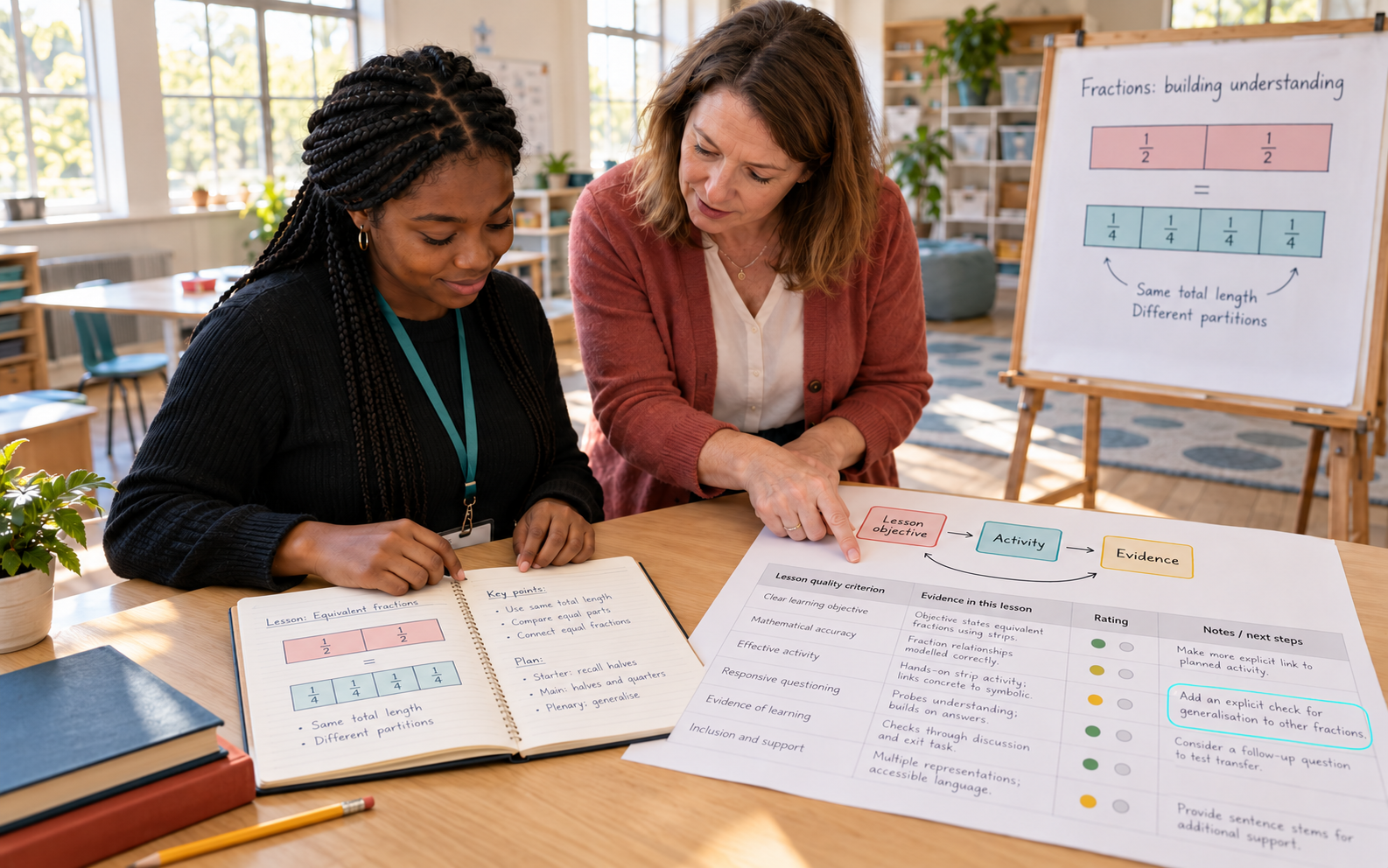
The supplementary coding framework makes the range of work visible: teachers outlined lesson sequences, planned accommodations, drafted prompts, developed materials and checked environmental claims. They also revised suggestions around pupils' cultural experiences, school resources and curriculum schedules. One reported example involved rehearsing a classroom discussion by asking AI to play students. Such rehearsal can generate possibilities for a teacher to inspect, but a simulated response cannot establish how actual children will think or respond.
The challenges are as instructive as the uses. Checking sources, supplying contextual detail and repeatedly correcting broad suggestions required effort. Some teachers questioned whether the additional interaction was worthwhile. This small, exploratory study largely involved early-career teachers with limited AI experience, so its patterns should not be treated as a universal account of teaching. It measured neither comparative preparation-time savings nor effects on pupils' learning or environmental action. The observed work supports a process description, not a causal claim of improved instruction.
For Hong Kong teacher education, an appropriate next step would be a small, documented planning exercise around a local environmental question. Teachers could preserve an initial plan, the AI suggestions they accepted or rejected, the sources used to verify claims and the reasons for each revision. Review should examine whether students will collect evidence, explain a conclusion and make a meaningful choice. A separate classroom evaluation would then test what pupils learn and how much preparation the full workflow requires. These are proposed evaluation steps, not findings from this study. They keep authorship visible and make the educational value of AI assistance inspectable.