Product news: Claude Haiku 5.5 expands fast, small-model options for narrowly defined educational tasks
Anthropic
AI Product and Learning Report
Resumo de 500 palavras

Anthropic released Claude Haiku 5.5 on October 7, 2026, positioning it for quick, repetitive, high-volume tasks. The model adds adjustable effort, and the announcement also lowers Sonnet 5.5 cache-read pricing. This October 9 report examines the implications for educational infrastructure. The company reports substantial efficiency improvements, but the practical value depends on the task, its error costs, and the review needed before an output is used.
A smaller model may be useful for a narrowly specified stage of a larger process. A resource catalogue might need titles, dates, or subject labels extracted from public pages. Those fields can often be checked against the source more directly than an open-ended educational judgment. A team can define the permitted categories, retain the original link, and decide what happens when the source is ambiguous or incomplete.
The boundary is important. Assigning a topic label to a public document is different from deciding which student needs an intervention or whether an answer deserves a grade. Similar-looking classification tasks can have very different consequences. Educational developers should not move a consequential decision to a cheaper model simply because the interface accepts the same input format.
A proposed pilot could use a small catalogue that staff have already reviewed. The model would extract specified fields, mark uncertainty, and leave missing information blank rather than invent it. Reviewers would examine omissions and false matches, including documents with similar titles or mixed languages. The result would show whether the task is sufficiently bounded for the model, not whether the model is universally reliable. For example, a missing publication date should remain distinct from a page update date, since substituting one for the other can distort a resource's apparent currency.
OpenAI's October 2 model guide likewise recommends matching capability and effort to the workload. Gemini's course-context features illustrate a different concern: even a simple study interaction depends on supplying the right material. Compared with these approaches, Haiku 5.5 broadens the available building blocks. The application still needs a clear account of which information each stage receives and which decisions its output is allowed to influence.
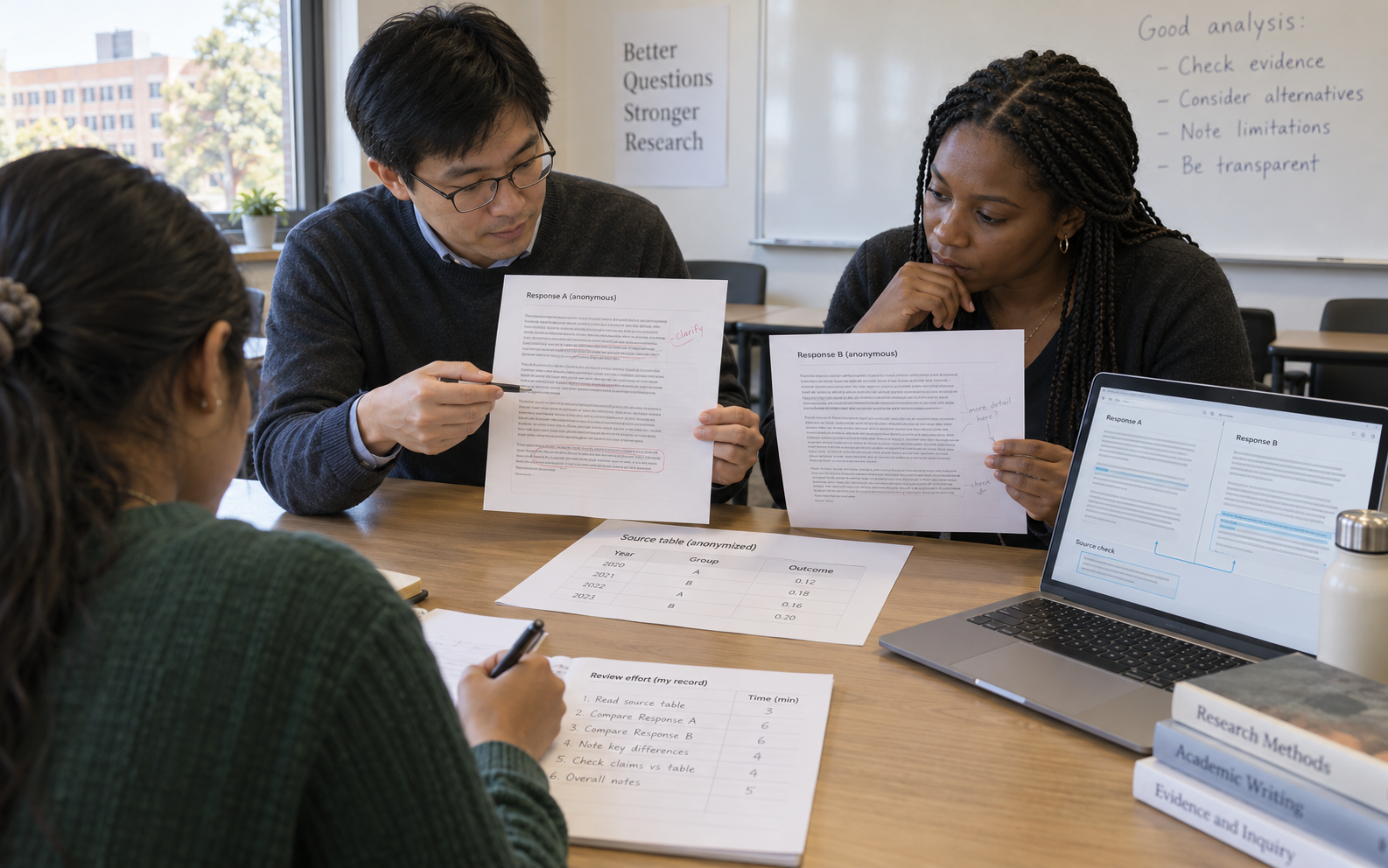
Efficiency should be measured across the whole process. A fast extraction that requires extensive correction may save little time. A well-defined task with a reliable uncertainty route may be more useful even if it returns fewer completed fields. Developers can compare total review effort, successful cases, and the treatment of unfamiliar inputs. They should also record the model and effort setting so later changes can be examined.
For teaching, this provides a practical lesson in decomposing a problem. Students can identify which stages are mechanical, which require interpretation, and where they would retain human judgment. They can then test their proposed division against realistic examples. Haiku 5.5's release makes more low-cost experimentation possible according to Anthropic's account. A sound educational use would make the boundaries of that experimentation clearer, rather than encourage every task to be automated because it has become cheaper.