Simulated counseling practice benefited from structured AI feedback, with the clearest group difference in empathy
Ryan Louie, Raj Sanjay Shah, Ifdita Hasan Orney, Juan Pablo Pacheco, Emma Brunskill, Diyi Yang
CHI 2026
500단어 요약
Providing a realistic practice partner is only one part of professional learning. In a CHI 2026 paper, Ryan Louie and colleagues evaluated CARE, a system combining AI-simulated counseling conversations with optional feedback. Their randomized study found a meaningful difference between practicing alone and practicing with structured feedback, most clearly on an automated measure of empathy. The work asks whether simulation can help novices develop particular conversational skills, while leaving transfer to real clients and established training programmes unresolved.
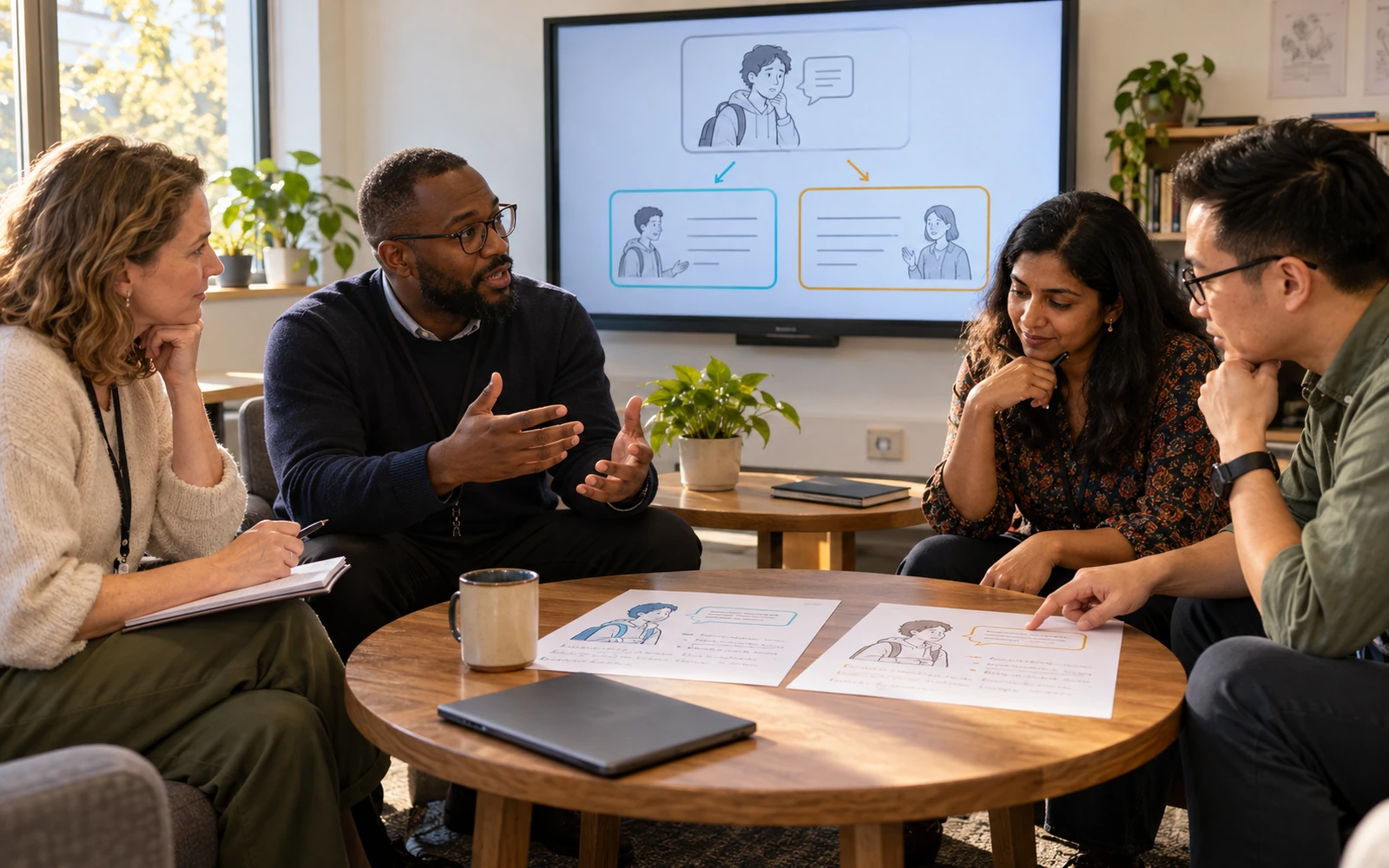
The researchers recruited 94 participants with limited counseling education and less than a year of related experience. In an online laboratory session, everyone received a brief tutorial and completed an initial conversation with a simulated client. Participants were then randomly assigned to a practice period either with an AI client alone or with access to AI-generated feedback on their responses. A later conversation with another simulated client assessed immediate performance after practice. This design compared two versions of AI-supported training rather than AI training against human supervision.
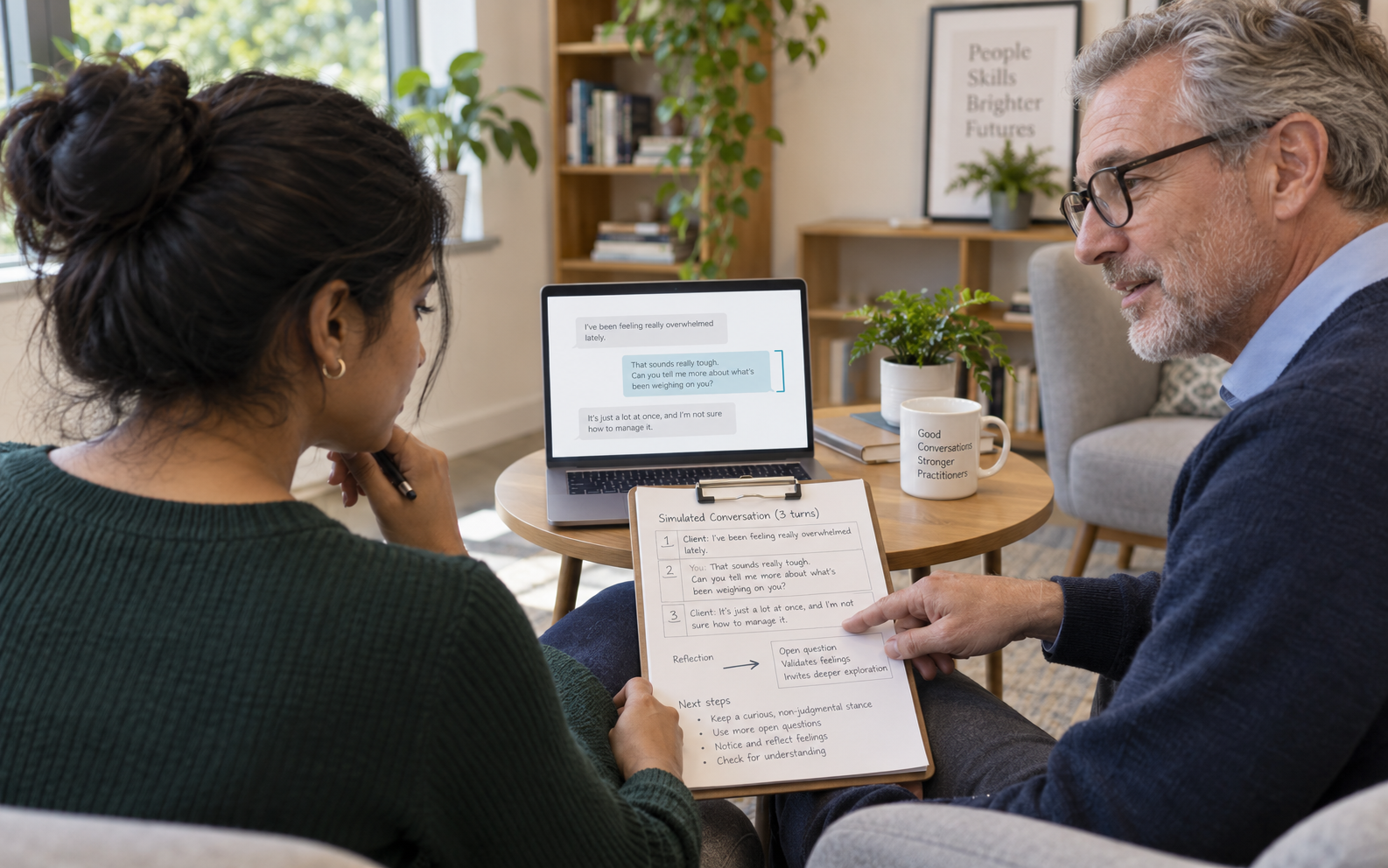
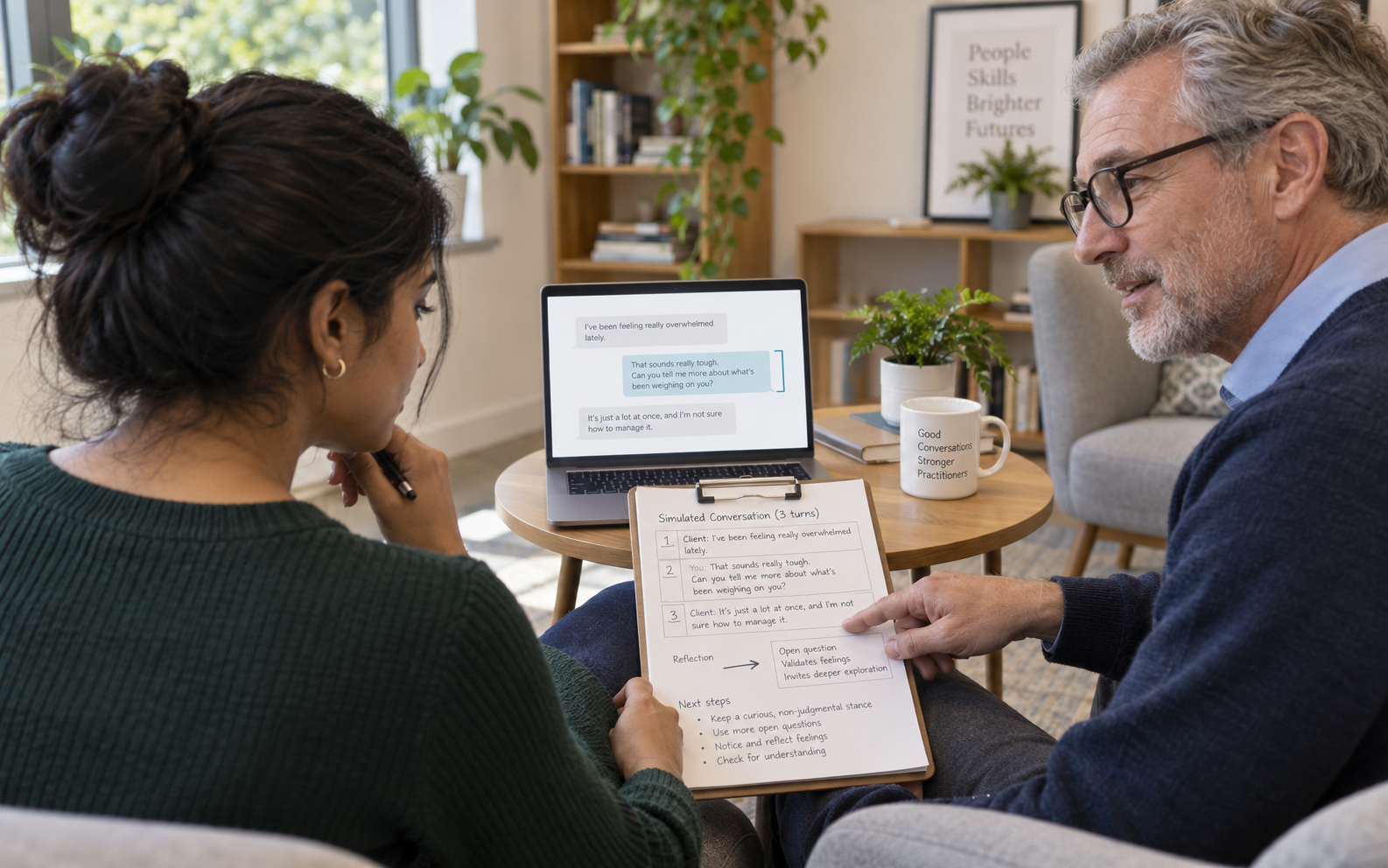
CARE’s feedback identified strengths or areas needing improvement, explained the conversational goal, and offered an alternative response. The system aimed to support basic client-centered skills such as listening, reflection, and asking questions. Researchers evaluated conversation transcripts with automated classifiers, examined self-efficacy ratings, and analyzed participants’ reflections. Domain experts annotated a subset of the data to support classifier development and validation. Those measures provide several views of the training experience, but automated labels remain an approximation of skillful interaction.
The clearest between-group behavioral difference concerned empathy. The practice-only group declined on that measure, while the feedback group maintained it with a nonsignificant upward trend; the difference in change favored feedback. The feedback group also showed within-group improvements in reflections and questions, but corresponding between-group differences were not significant. Practice alone reduced some inappropriate suggestions. These distinctions prevent a broad claim that feedback significantly improved every skill or that simulation without feedback produced no useful change whatsoever.
Participants’ reflections suggested different approaches to helping. Those receiving feedback more often described listening, validation, and supporting the client’s own exploration. Practice-only participants more often remained focused on solutions, while adjusting how much information they gathered first. Confidence also changed in ways that did not consistently track performance, and the feedback condition did not demonstrate a general advantage in self-assessment calibration. A learner’s sense of readiness therefore cannot substitute for observing the relevant behavior against an explicit standard.
The published paper gives substantial attention to limitations. Its classifiers used some study data during development, creating potential overfitting and generalization concerns. Assessment focused on individual conversational microskills in text, not the quality of an entire therapeutic relationship, nonverbal communication, long-term retention, or real clinical outcomes. Participants trained in a laboratory session rather than a full educational programme. The simulated scenarios also reflected particular professional and cultural perspectives. These boundaries are integral to interpreting the result as preliminary training evidence.
For AIEDHK, the transferable educational idea is to combine deliberate practice with specific feedback and a separate performance check. Similar design questions arise in teacher questioning, professional communication, and other interpersonal skills, although this study did not test those domains. A local pilot would need expert-defined criteria, review of feedback quality, and assessment outside the practice interface. The finding supports investigating feedback as a component of simulation-based learning, while keeping professional competence and real-world effectiveness as distinct outcomes requiring further evidence.