Flow and Learning
Flow describes deep absorption in an activity, often associated with clear goals, feedback, and a demanding match between challenge and skill. It is an experience to understand, not a substitute for evidence of learning.
출처
전체 수업 요약
A learner becomes deeply absorbed in solving a geometry puzzle and loses track of time. Flow is a concept associated with this kind of concentrated involvement. Research developed by Csikszentmihalyi and colleagues describes an experience in which action and awareness can feel closely joined, attention is focused, and the activity is rewarding in itself. Flow is not simply enjoyment, and it cannot be established by observing that someone looks busy.
Commonly discussed conditions include clear goals, feedback that helps guide action, and a demanding relationship between perceived challenge and perceived skill. A task far beyond available skills may produce anxiety, while a task requiring little effort may produce boredom. However, a simple challenge-skill diagram is a model, not a precise formula for engineering an experience. Perceptions, context, interest, and the nature of the activity also matter.
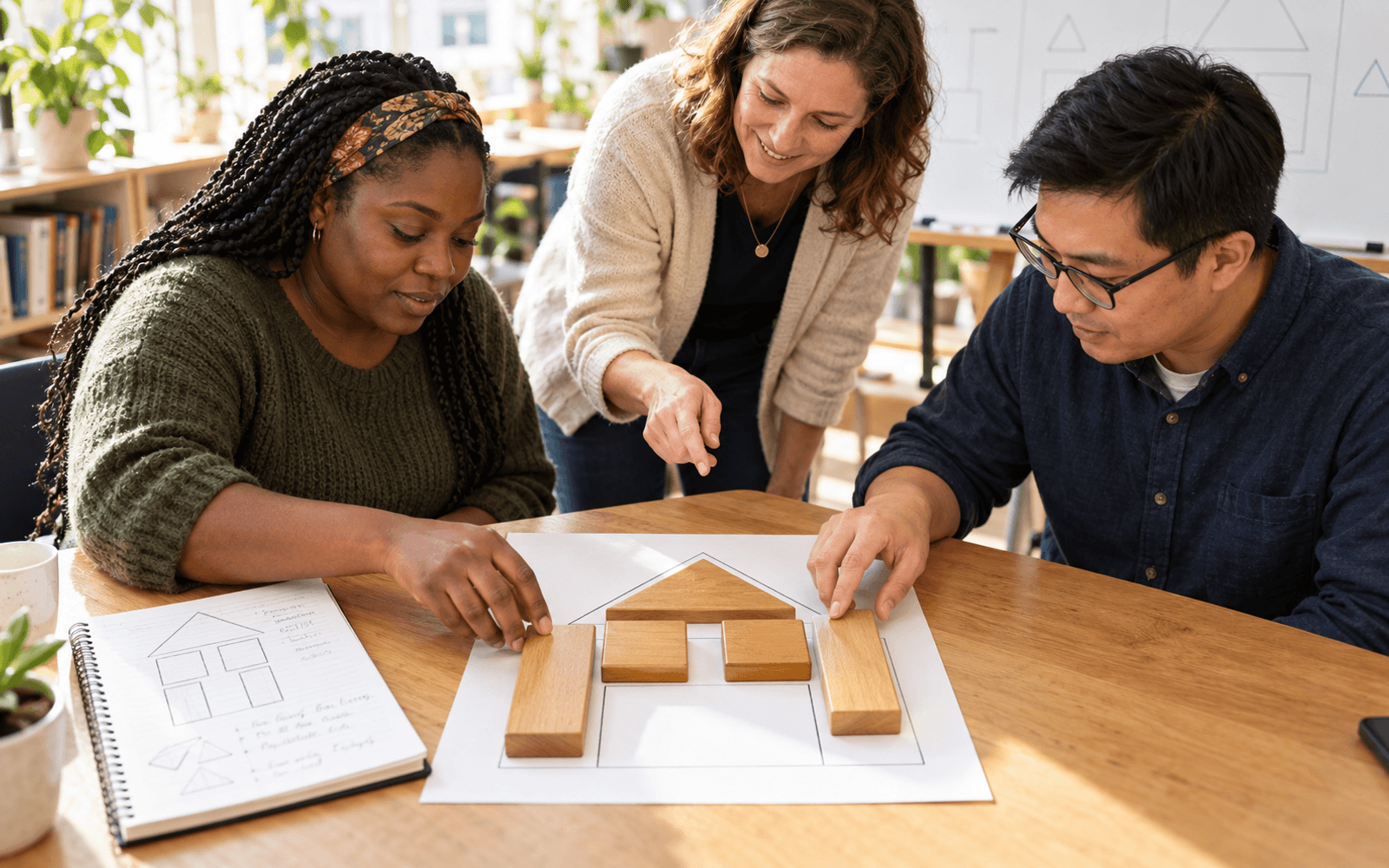
In an illustrative mathematics workshop, learners work on a sequence of geometric construction problems. Each problem has an understandable goal and provides feedback through whether the construction satisfies the constraints. The teacher offers optional hints and a route to a more demanding case. Some learners become absorbed as they test and refine strategies; others need explanation or a different entry point. The teacher uses those differences to adjust support rather than assuming that one difficulty level suits everyone.
A flow perspective can encourage coherent tasks, useful feedback, and periods of sustained attention with fewer unnecessary interruptions. It should not justify withholding help, making tasks artificially addictive, or demanding constant immersion. Breaks, reflection, discussion, and explicit instruction remain important. An activity may feel absorbing because it repeats a well-practised skill, while substantial learning may sometimes involve slower, effortful, or uncomfortable work that does not feel like flow.
Educational studies have examined associations between reported engagement, challenge, skill, and classroom conditions. Such findings help generate design questions, but they do not establish that increasing a self-reported flow score automatically causes durable learning. Measurement can involve questionnaires or experience sampling, each with limitations. Camera-based emotion guesses, click counts, and time on task should not be treated as direct measurements of this internal experience.
For a practical evaluation, ask learners about concentration, challenge, feedback, and their sense of progress, then separately assess what they learned and can transfer. An AI tutor that continually adjusts difficulty should be checked for educational progress as well as engagement and learner control. Include an easy way to pause, ask for help, or change the activity. Flow is most useful as one lens on the quality of learning experience, alongside understanding, wellbeing, access, and purposeful effort. The aim is to create conditions in which deep engagement is possible while preserving the freedom and support learners need to learn in many other productive ways too.