AI Agents, Tools, and Workflows
How AI agents combine models, context, tools, and action loops, why workflows mix fixed and adaptive steps, and where human control and verification remain essential.
출처
전체 수업 요약
An AI agent is a system that uses a model to pursue a goal through a sequence of decisions and actions. A chatbot may answer once from the context it receives. An agent can instead gather information, choose a tool, inspect the result, update its working context, and continue until it reaches a stopping condition. The model supplies language and decision capabilities, while a surrounding harness manages instructions, available tools, permissions, memory, execution, and the loop itself. Agency is therefore a property of the whole system, not of the model alone.
A common agentic loop begins by understanding the task and collecting relevant context. The system then selects an action, invokes a tool, observes what happened, and decides what to do next. ReAct research showed how interleaving reasoning and actions can help language models use external information and adjust a plan. Coding agents illustrate the pattern clearly: they can search files, edit code, run tests, read failures, and revise the implementation. A useful stop is not simply a confident sentence. It is evidence that the requested outcome has been produced and checked.
Tools are explicit interfaces to capabilities such as search, calculation, file access, databases, or laboratory equipment. Their descriptions and input schemas tell the agent what actions are possible. The Model Context Protocol offers a standard way for applications to expose tools, resources, and reusable prompts to AI clients. Standard connectivity does not guarantee good judgment or safe execution. A tool can return stale, malicious, ambiguous, or incomplete information, and a model can select the wrong tool or supply harmful arguments.
A workflow organizes actions toward a repeatable outcome. Some steps should be deterministic, such as validating a file type or checking a numerical threshold. Other steps may benefit from agentic choice, such as deciding which source to inspect next. Strong systems combine both: fixed gates constrain important transitions, while the agent adapts within a bounded space. Reliability improves through least-privilege access, approvals for consequential actions, limits on time and tool use, structured logs, checkpoints, tests, and explicit failure and stop conditions. Tool outputs should be treated as untrusted input, especially when they can contain instructions aimed at redirecting the agent.
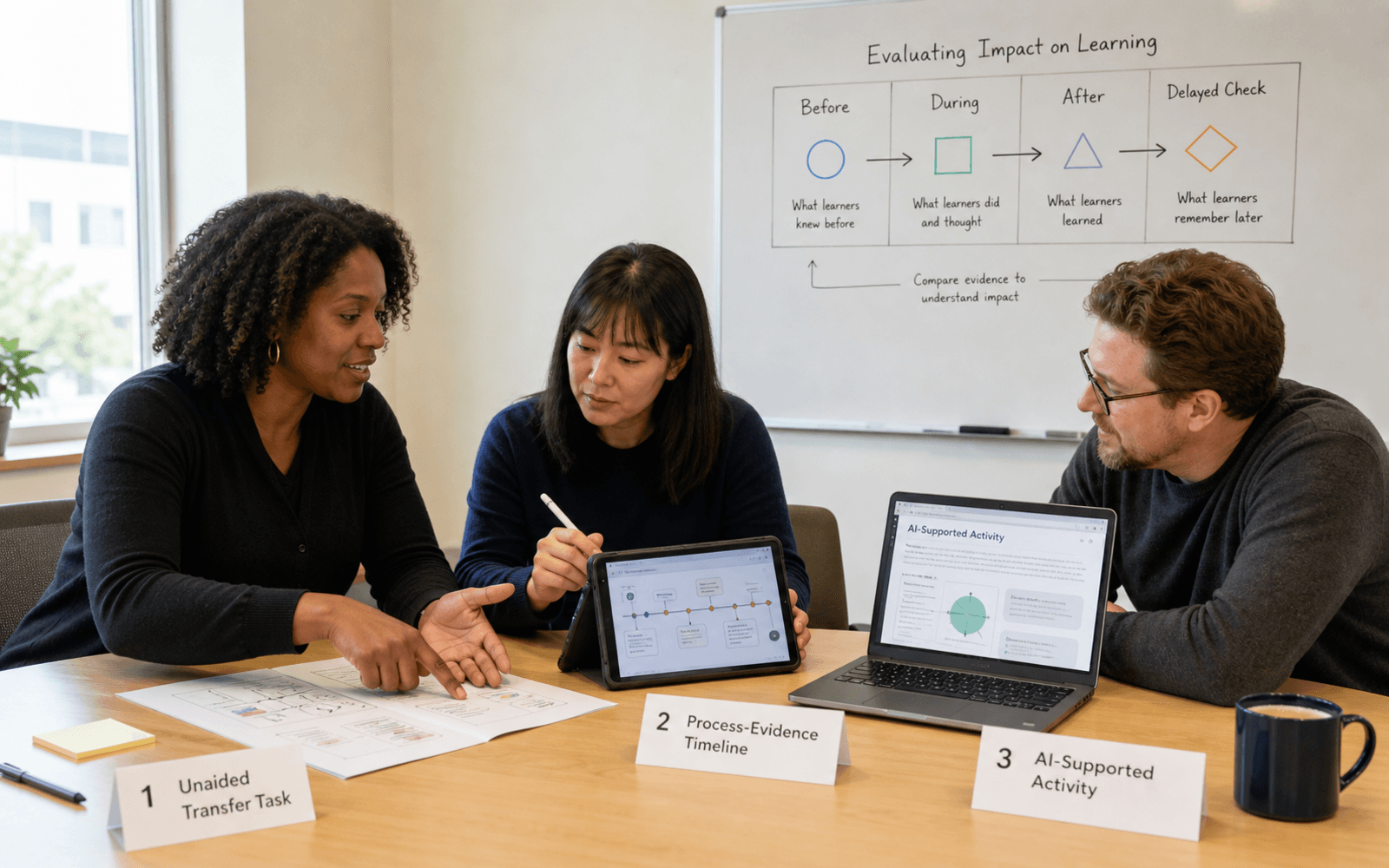
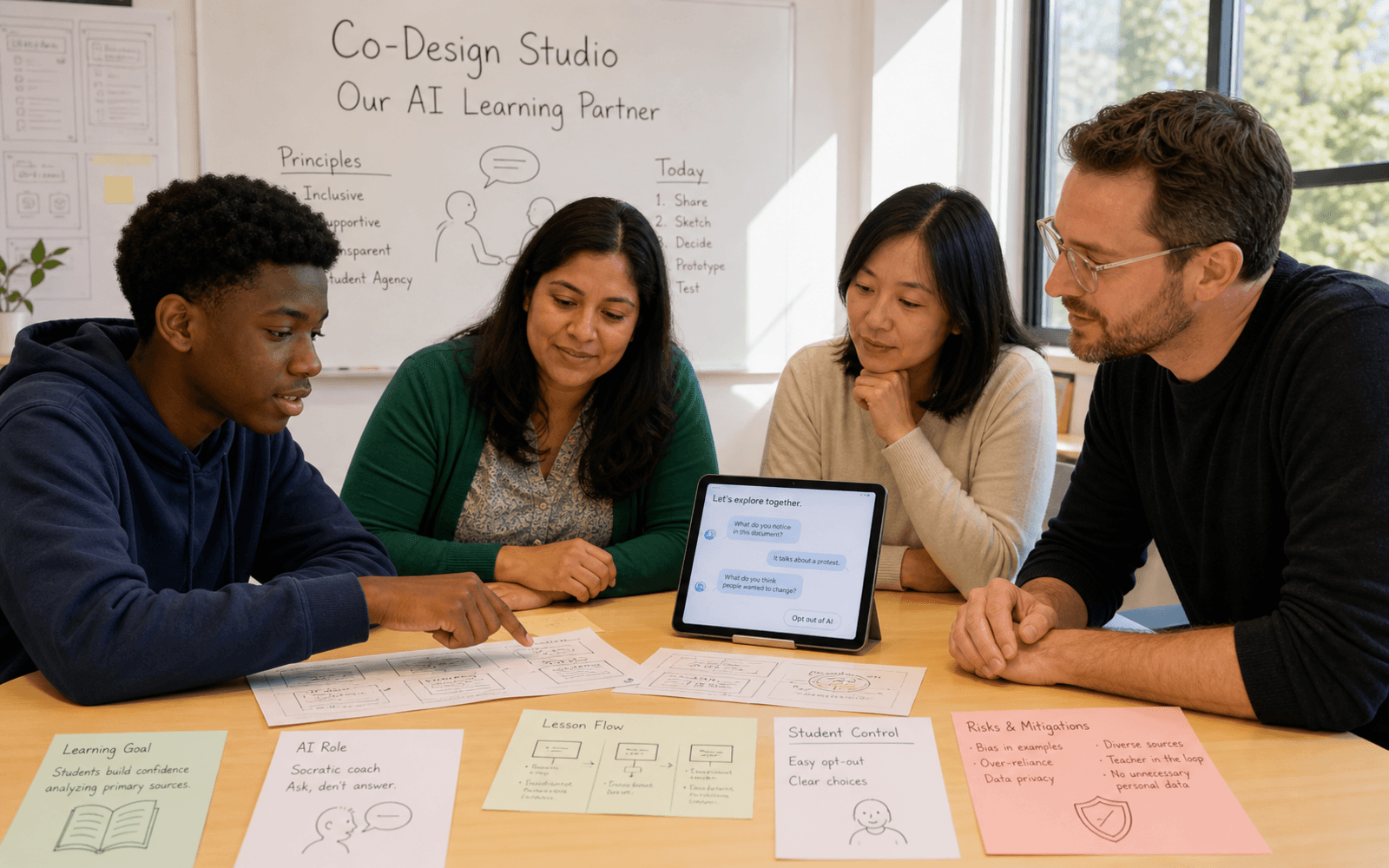
In education, agents are most useful when learners can inspect meaningful decisions and artifacts. A class might give an agent a small approved source collection and a bounded research question, then record which tools it used, what evidence each tool returned, and why the final answer should be trusted. Learners can compare a fixed workflow with an adaptive agent, predict failure points, and design verification rules. They should evaluate observable actions and results rather than request private hidden reasoning. Teachers remain responsible for task design, data protection, accessibility, and high-impact decisions. The central lesson is controlled delegation: an agent can coordinate useful work, but people must define authority, examine evidence, and decide when the work is genuinely complete.