An engineering module taught students to audit AI claims before using them in design work
Christine E. King, Beth A. Lopour
Biomedical Engineering Education
500語要約
Telling students to check an AI answer is easier than showing what a good check should contain. Christine E. King and Beth A. Lopour developed a biomedical engineering module that turned verification into an assessable activity. Students compared generated claims with published research, examined references and documented the changes needed to make a proposed design credible. The aim was to make the boundary between a plausible suggestion and supported engineering reasoning visible before students relied on AI in a larger project.
The activities were introduced in an upper-division quantitative physiology course with 68 students. One assignment used a published review of brain–computer interfaces as a reference point. Students questioned ChatGPT about relevant developments, checked the accuracy of its responses and investigated the citations it supplied. They identified kinds of query for which the output was useful or unreliable. This made source evaluation part of disciplinary work rather than an abstract warning about hallucination or a test of whether prose sounded convincing.
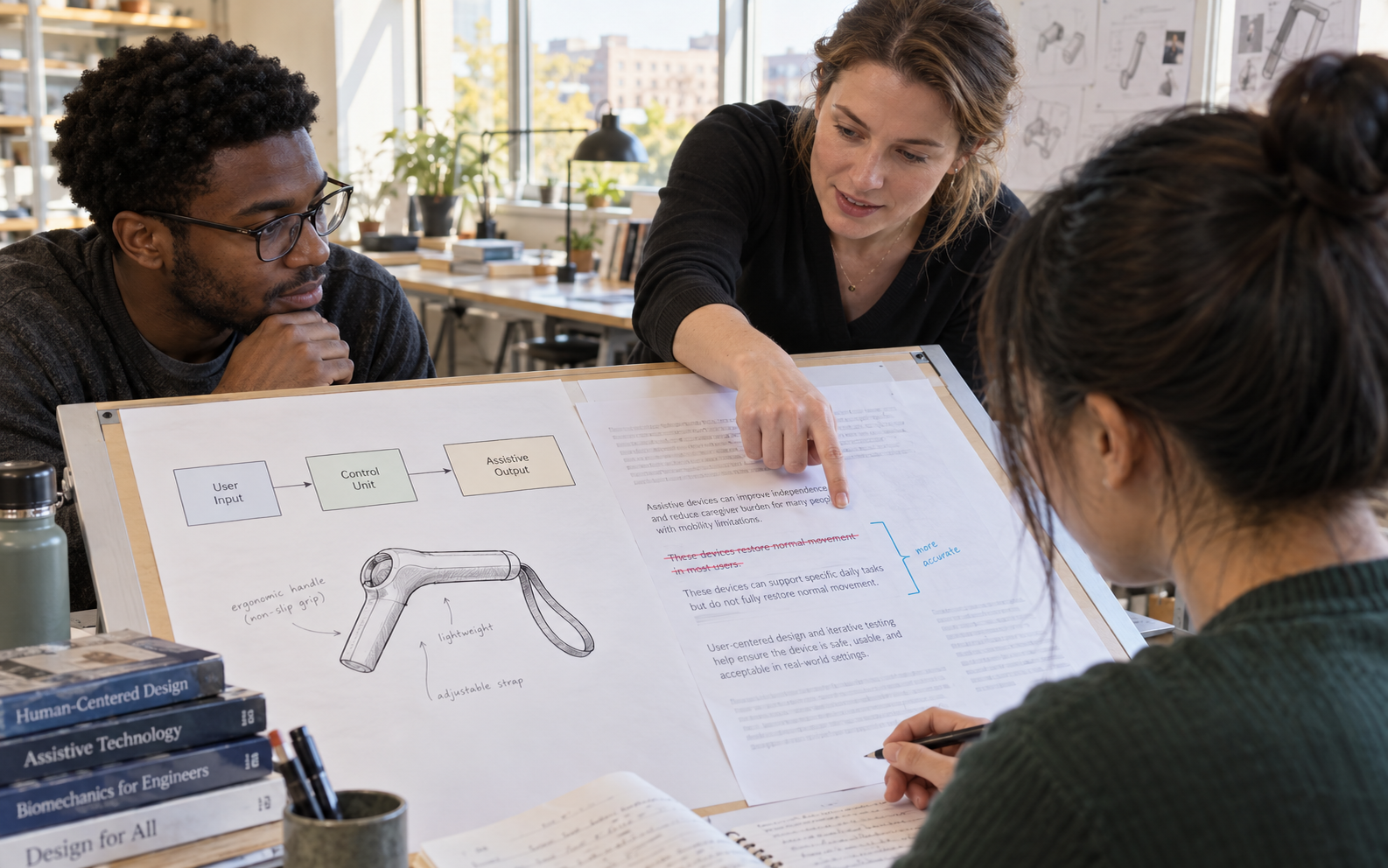
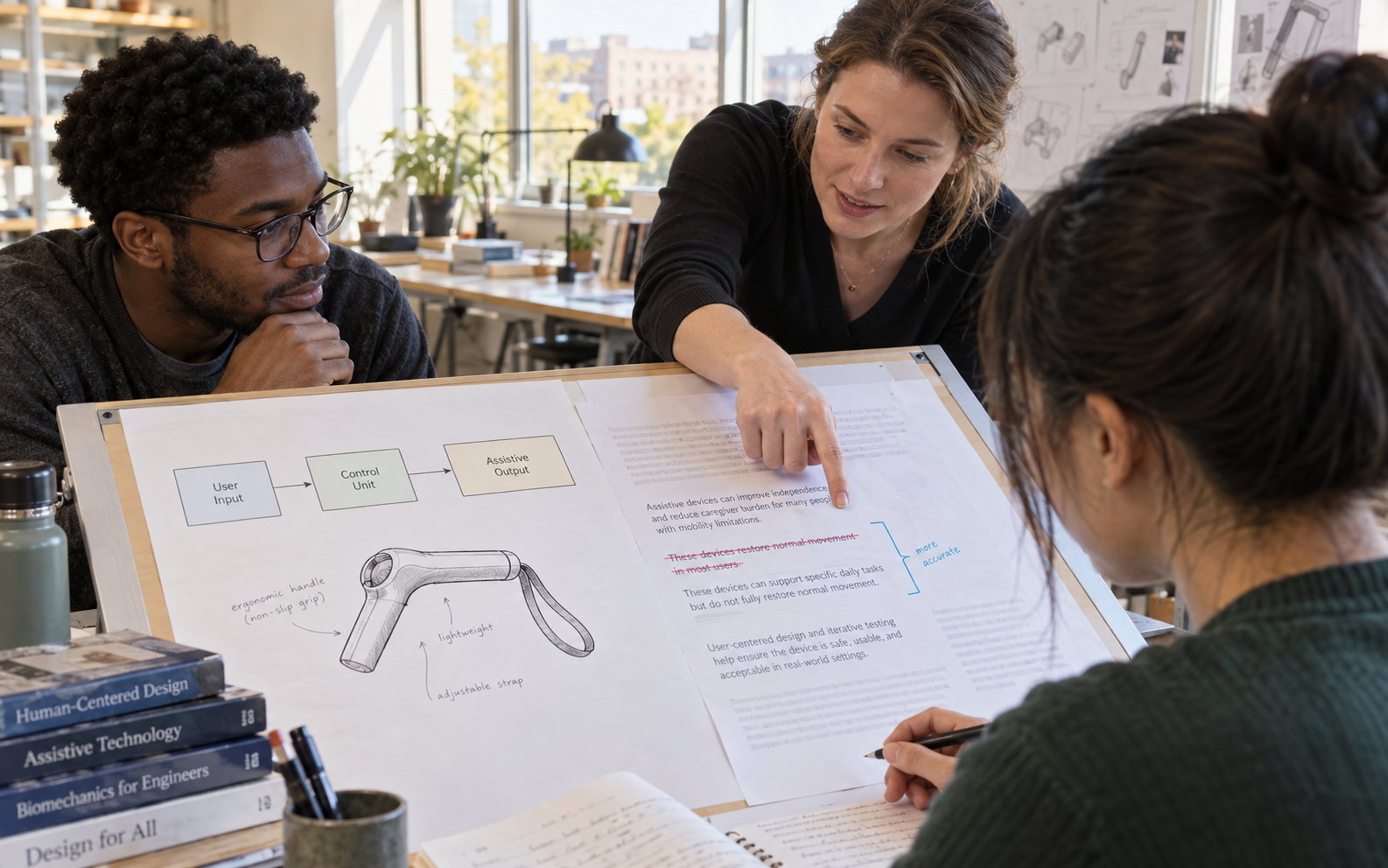
A second assignment asked students to obtain a proposed brain–computer-interface design from ChatGPT and revise it. The deliverable included the original response, an edited version with tracked changes and explanations supporting retained or altered statements. Students had to make the design feasible and connect its claims to relevant literature. They then completed a problem-based design project in which AI use was optional, but any use had to be described. The structure therefore preserved evidence of students' judgment as well as the final design artifact.
Only 31 students completed the optional evaluation survey. Respondents generally reported a better understanding of the tool's strengths and weaknesses and less trust in unverified responses. The statistical tests compared their ratings with a neutral response, so the reported significance should not be read as a randomized gain in critical-thinking skill. Project reflections added useful detail: five of 22 groups did not use ChatGPT, while eleven described using it mainly for ideation. Some groups explicitly described further research to check generated information.
This is a teaching report with encouraging process evidence, not a controlled effectiveness trial. Fewer than half of enrolled students answered the survey, creating a risk that respondents differed from nonrespondents. The module used ChatGPT 3.5, and its behavior and knowledge limits should not be generalized automatically to later systems. Treating a review article as a reference also does not make that article infallible. The authors explicitly state that the study was not adequately powered to assess student learning outcomes. It cannot establish that skepticism alone produced better design decisions.
For AIEDHK, the transferable contribution is the assignment architecture. Students can submit a claim, the source used to check it, a correction and a reason for the final decision. Teachers can assess the quality of that evidence trail, including justified acceptance rather than only rejection of AI suggestions. A later independent task could test whether verification practices carry over to unfamiliar material. These are proposed evaluation steps beyond the report. The educational goal is a learner who can judge a useful idea against evidence and constraints, not merely produce a polished account of having used AI responsibly.