Universal Design for Learning
How proactive design can reduce barriers through flexible engagement, representation, and action while keeping learning goals rigorous and evaluating whether options actually help.
出典
完全なレッスン要約
Universal Design for Learning, or UDL, is a framework for designing goals, assessments, methods, materials, and environments in anticipation of learner variability. Instead of waiting for one standard pathway to exclude someone and then repairing it, educators examine likely barriers early and create purposeful options. UDL does not mean making every lesson different for every learner, lowering expectations, or offering unlimited choice. It aims to preserve a worthwhile learning goal while increasing the ways learners can access the task, participate, use support, and demonstrate relevant understanding.
CAST Guidelines 3.0 organizes UDL around multiple means of engagement, representation, and action and expression. Engagement concerns access to purpose, belonging, interest, effort, persistence, collaboration, and emotional capacity. Representation concerns how learners perceive and make sense of language, symbols, media, perspectives, and knowledge. Action and expression concerns interaction, communication, strategy, and ways to show learning. These areas interact rather than forming a fixed sequence. The current guidelines emphasize learner agency and barriers connected to identity, bias, and exclusion as well as disability and access.
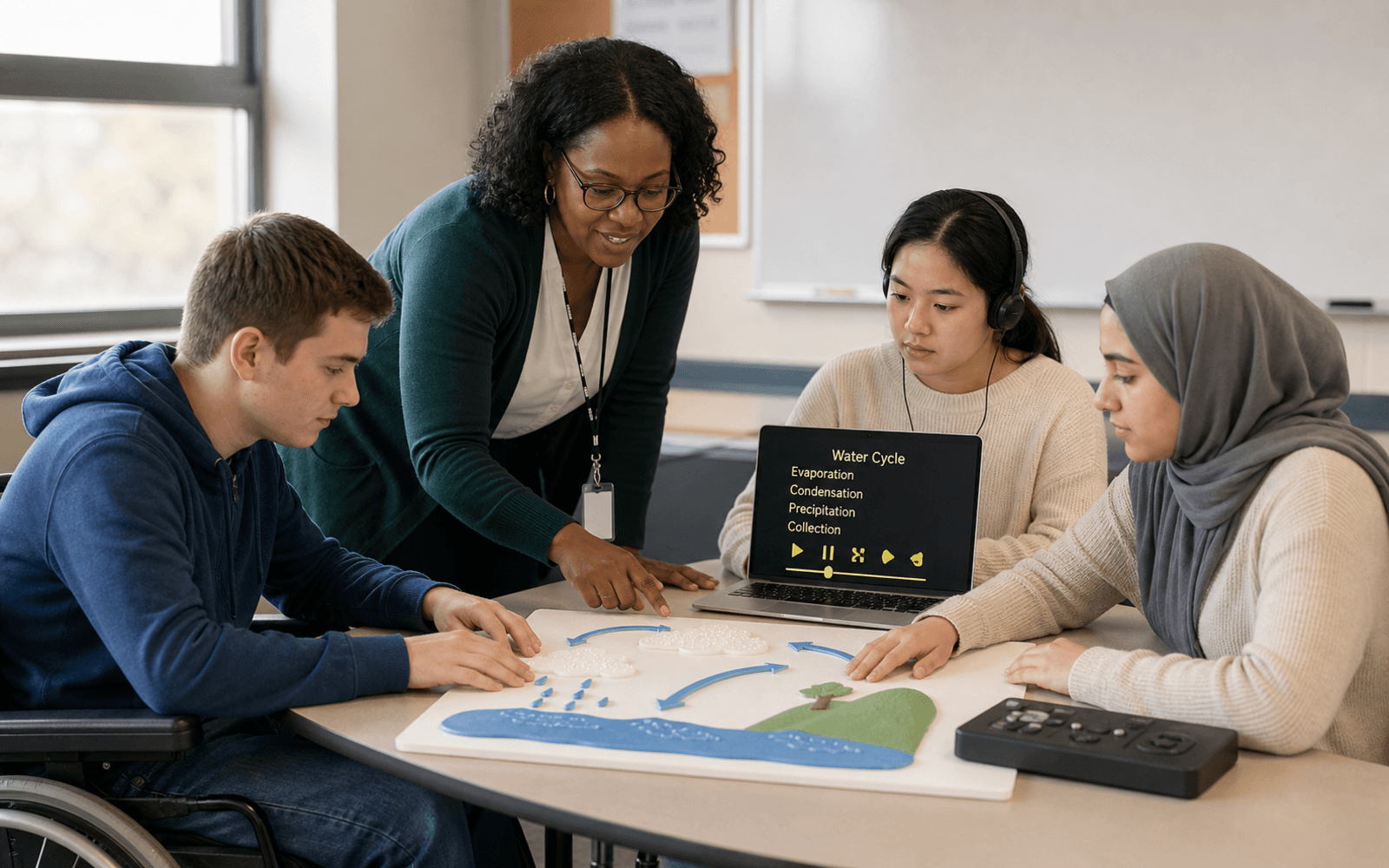
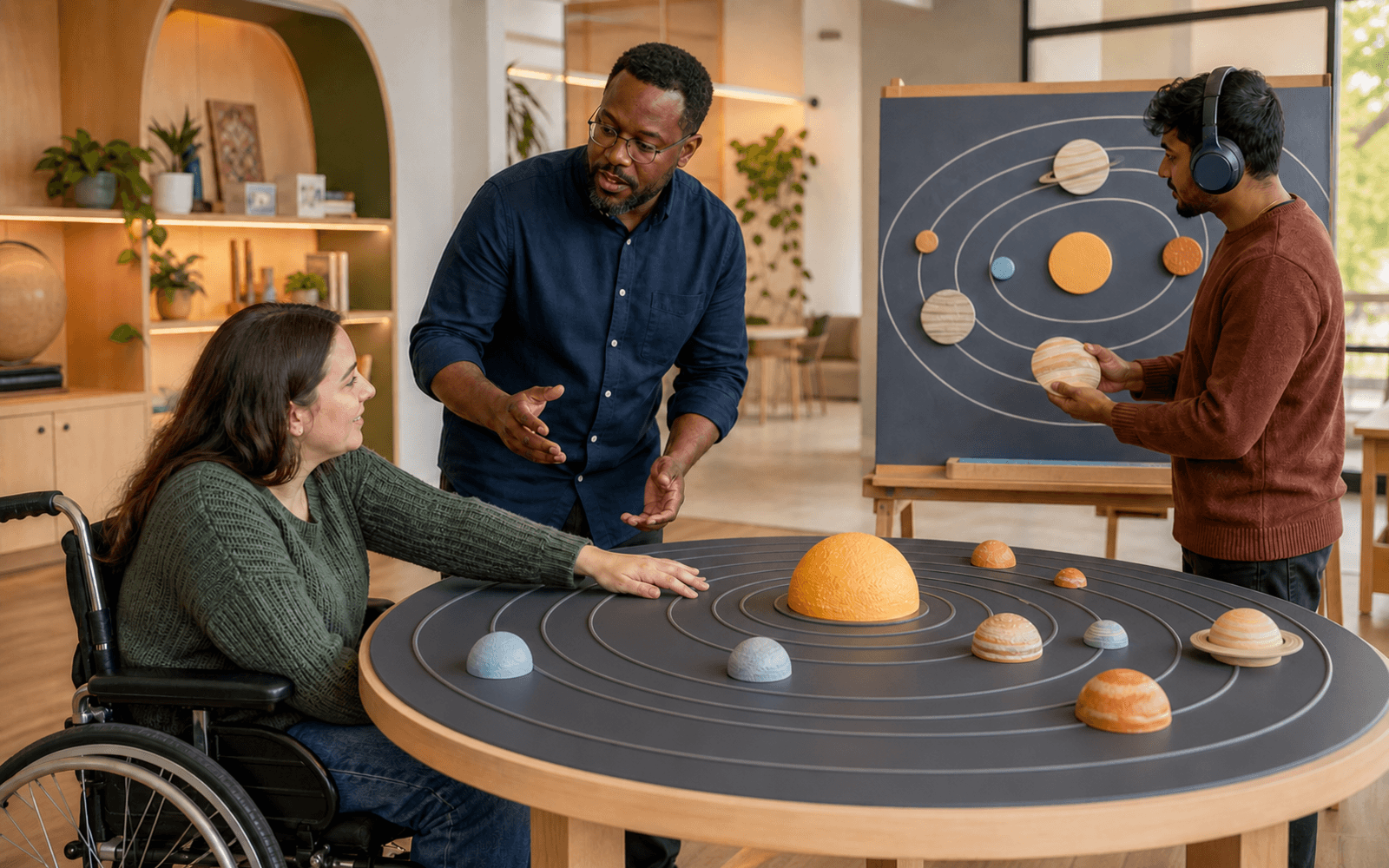
Effective options remain aligned with the goal. If the goal is to explain planetary motion, learners might inspect a raised orbit model, hear a carefully described explanation, and study a clear diagram. They might then explain the relationship orally, in writing, through a labeled model, or with accessible technology, provided each response supplies comparable evidence about the target concept. If decoding scientific notation is itself the goal, removing all notation would change what is being assessed. Teachers therefore distinguish the intended knowledge or skill from incidental demands that block learners without contributing useful evidence.
UDL complements, but does not replace, accessibility standards, assistive technology, individualized accommodations, specialist expertise, or direct teaching. More formats do not automatically create better learning, and UDL should not be confused with assigning instruction according to unsupported learning-style categories. Options need usable navigation, accurate captions and descriptions, compatible documents, clear language, explicit instruction, and feedback. Teachers should ask learners which barriers remain and examine participation and learning evidence. CAST describes the guidelines as suggestions, not a prescription or checklist.
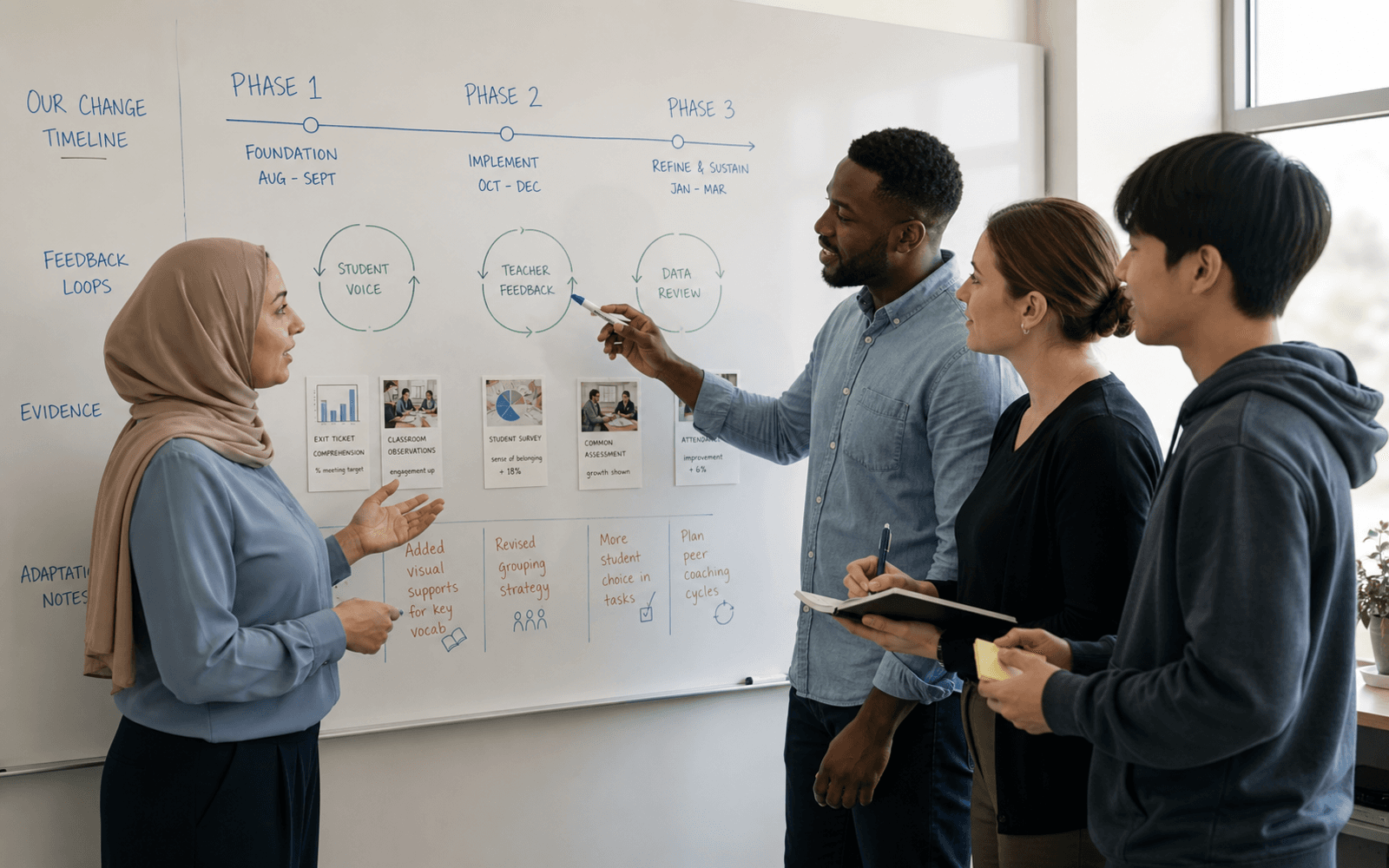
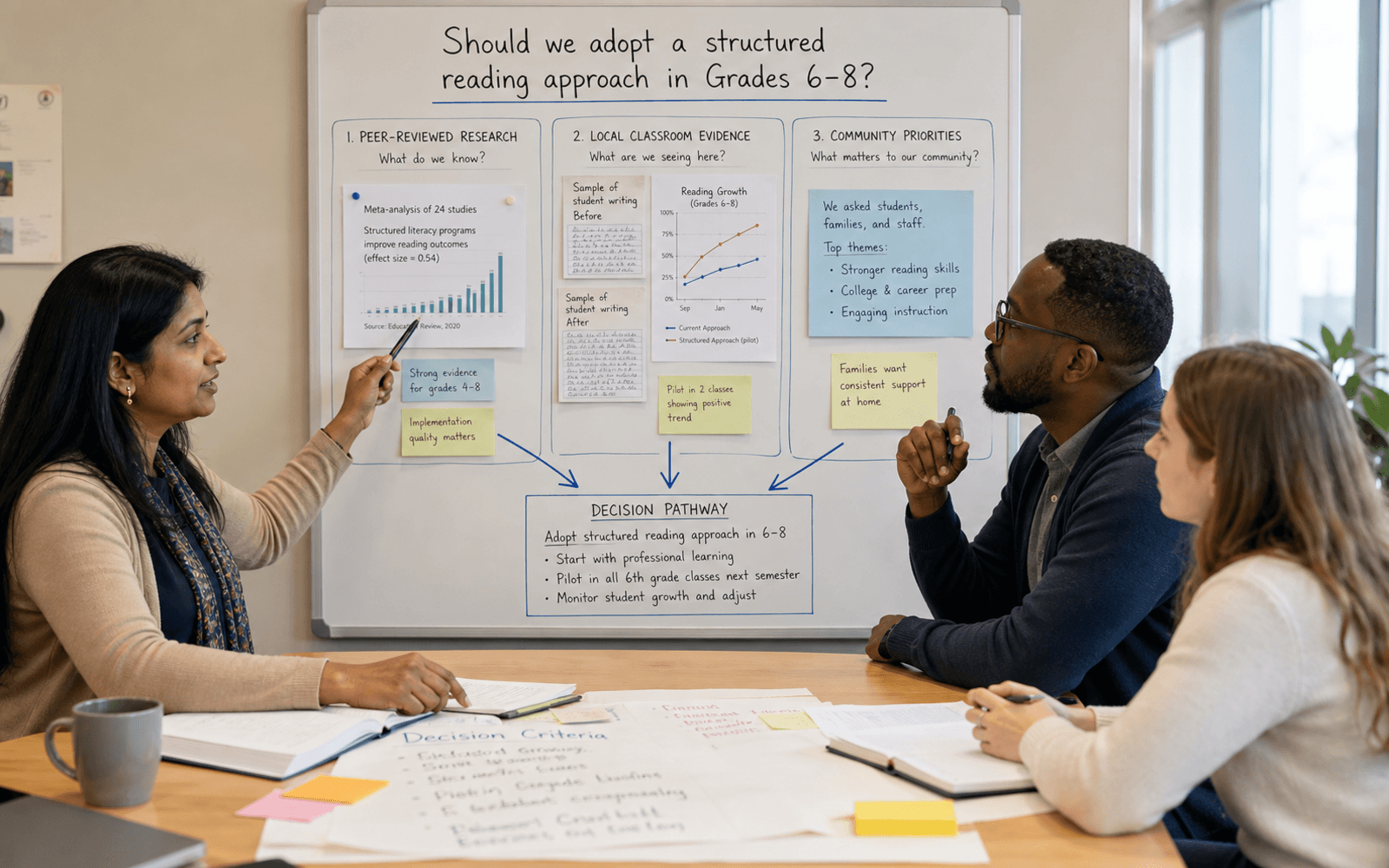
Research warrants both interest and caution. A meta-analysis of controlled studies reported a moderate average achievement benefit for UDL-based instruction, but the included interventions, learners, settings, and implementation varied. Critical reviews also question whether all claims attached to the guidelines have direct empirical support. Educators should therefore treat UDL as a design framework to test thoughtfully, not as an automatic guarantee. In education, learners can redesign one science activity by naming the fixed goal, identifying barriers, creating two purposeful access or response options, and checking each option against the same success criteria. They then gather user feedback and performance evidence, revise the design, and document which barriers still require individual support.