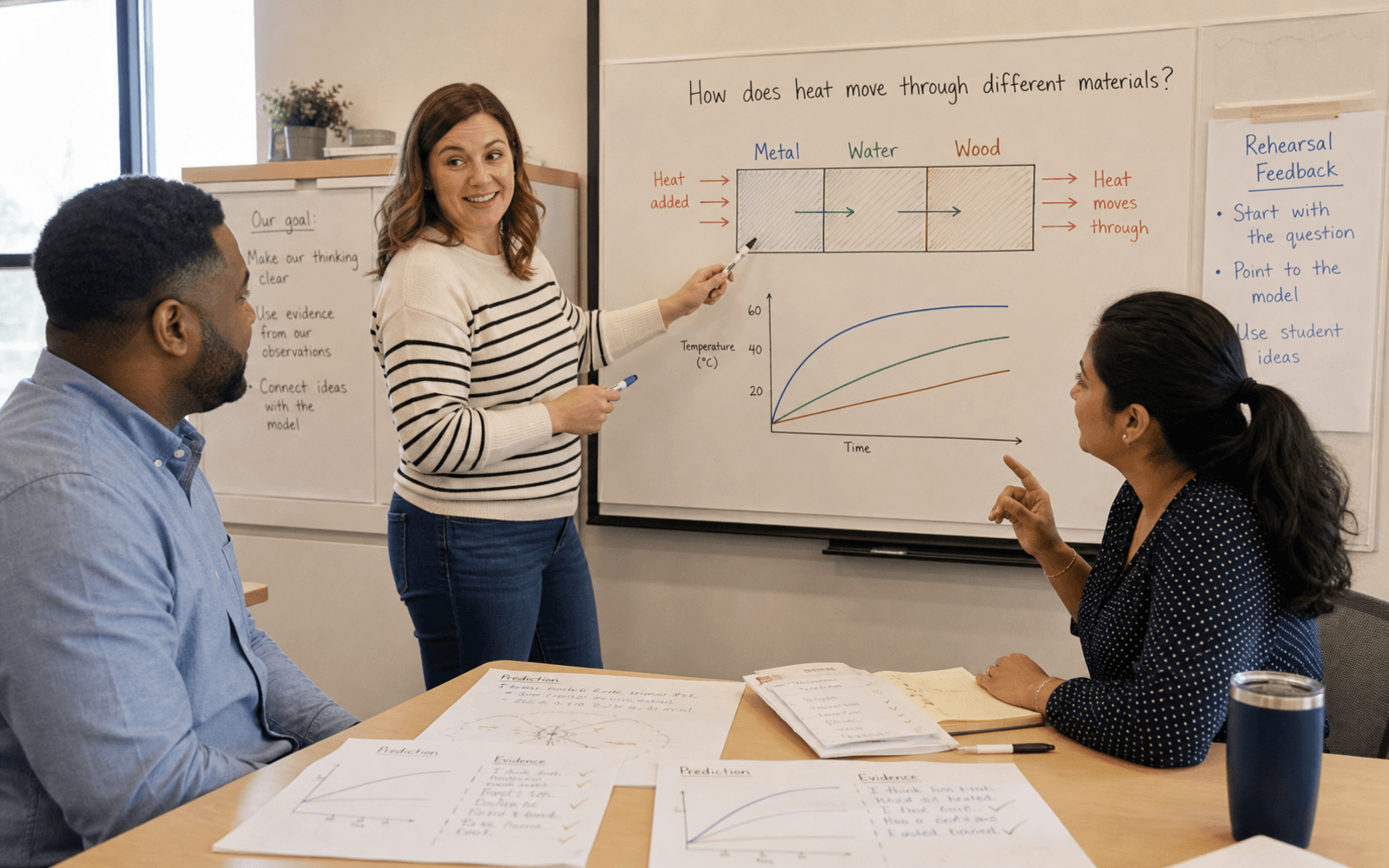
Reflective Practice
How educators can examine a puzzling moment in practice, test their interpretation, and use the inquiry to improve a subsequent decision.
出典
完全なレッスン要約
Reflective practice is the deliberate examination of experience to improve understanding and action. It asks more than whether a lesson went well or badly. A practitioner identifies a puzzling event, considers evidence and alternative explanations, and decides what to try next. Reflection can connect professional knowledge with the uncertainty of real situations, where a standard procedure may not fully explain what is happening.
Donald Schön emphasized reflection-in-action: noticing and responding to an unexpected situation while work is unfolding. Reflection-on-action examines the event afterward, when there is more time to reconstruct decisions and consider other possibilities. John Dewey's account of reflective thought similarly treats inquiry as an examination of the grounds and consequences of a belief. These traditions provide ways to reason about practice; they do not make every personal impression a reliable explanation.
Imagine a teacher leading a discussion in which only three learners respond. During the lesson, the teacher notices that questions requiring immediate speech seem to exclude others and introduces a brief written pause before discussion. That is a provisional adjustment within the situation. Afterward, the teacher reviews a few response sheets and notes which questions generated substantive ideas. They consider alternatives: perhaps the issue involved wait time, language demands, unclear prior knowledge, or a classroom norm about who is expected to speak.
A useful reflection separates observation from interpretation. "Three people answered the first four questions" is a different statement from "The class was unmotivated." The teacher can invite learner feedback, consult a colleague, and inspect work samples before choosing an explanation. A next lesson might retain the written pause while changing one other feature deliberately. The follow-up asks whether participation and reasoning improved, for whom, and under what conditions. This creates a small cycle of inquiry rather than a retrospective story that merely justifies the original decision.
Reflection needs time, trust, and proportionate records. An exhaustive diary after every lesson can become a compliance exercise. A short account of one consequential decision may be more useful if it includes evidence, an alternative interpretation, and a testable next step. Peer discussion can expose blind spots, but observation records and learner comments require appropriate privacy. Staff should not be pressured to disclose personal experiences or perform self-criticism to demonstrate professional commitment.
Assessment of reflective practice should focus on the quality of reasoning and subsequent adjustment, not on how eloquently someone describes feelings. Emotion can signal that something deserves attention, while further evidence helps clarify what it means. AI can help organize notes or suggest questions, but it cannot verify events it did not observe and may generate a convincing explanation without support. The practical aim is disciplined professional curiosity: remain open to being mistaken, examine the situation carefully, and make the next action more informed than the last.