Procuring and Evaluating Educational AI Vendors
A practical method for comparing educational need, independent evidence, data flows, security, accessibility, model change, costs, support, contract rights, exit, and accountable pilot results before purchasing AI.
出典
完全なレッスン要約
Procuring educational AI is a decision about a learning system, not a shopping comparison of feature lists. Institutions first define the educational problem, affected users, current workflow, evidence of need, and non-purchase alternatives. A product should not be selected merely because it demonstrates fluent output or promises personalization. Requirements should state the learner or educator outcome, acceptable risks, implementation capacity, and evidence needed to continue.
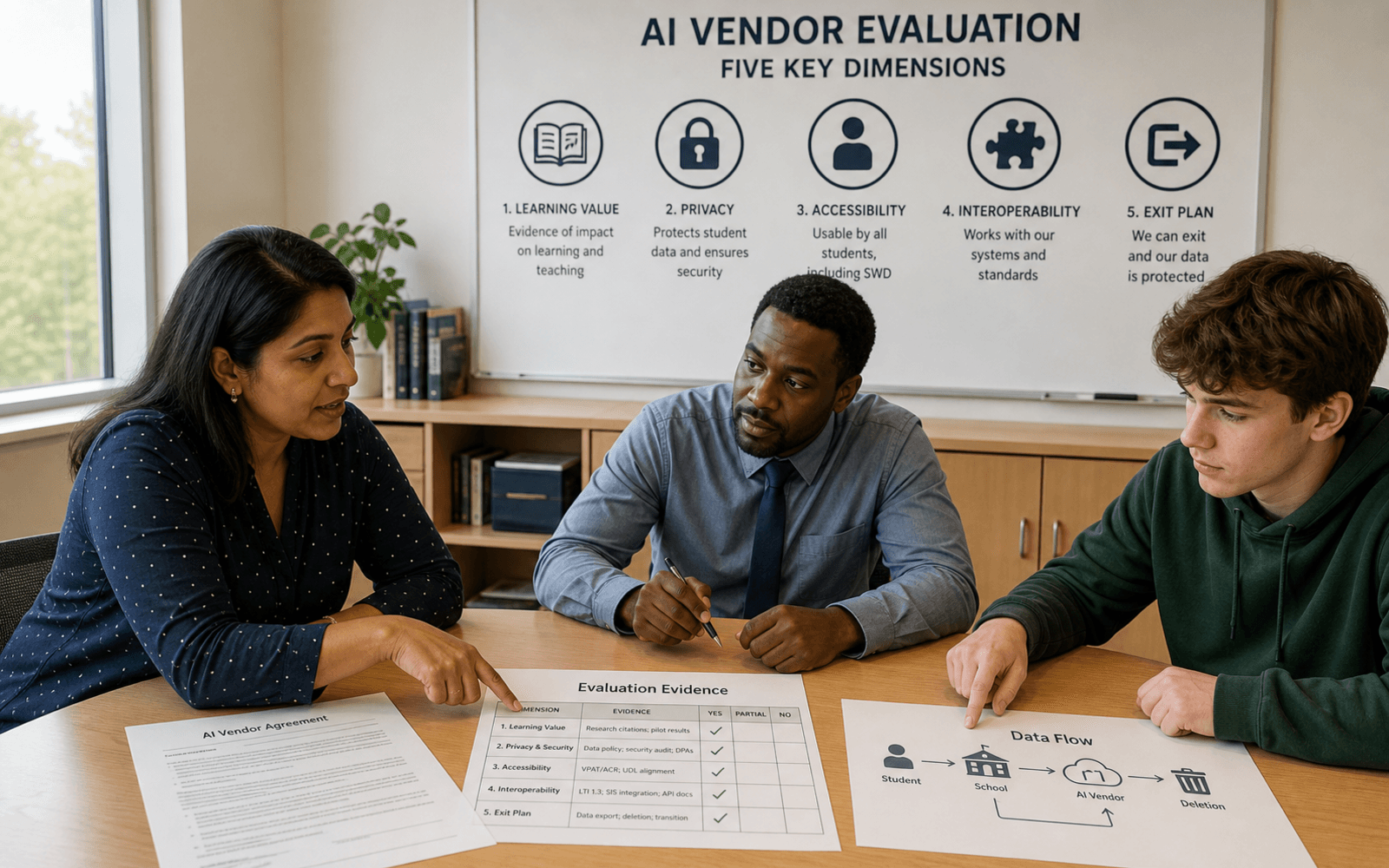
Vendor claims require verification. Buyers can request evaluation methods, representative populations, limitations, error examples, subgroup results, accessibility testing, security practices, incident history, model and data documentation, and references from comparable settings. A benchmark score may not match the local curriculum, language, age, or decision. Demonstrations should use institution-designed cases, including failures and accessibility needs, rather than only vendor-selected prompts.
Data and technical review maps every flow. Teams ask what is collected, inferred, retained, combined, used for training, shared with subprocessors, stored in which jurisdictions, and deleted at contract end. They examine authentication, encryption, role controls, logs, breach response, integrations, availability, exports, and recovery. Contract language should address ownership, confidentiality, audit, change notification, service levels, intellectual property, indemnity, legal compliance, and the institution's ability to suspend a risky feature.
Full cost includes licences, usage charges, devices, network capacity, integration, migration, training, accessibility remediation, monitoring, support, security review, staff time, and exit. Promotional pricing can hide later dependence. Institutions need usable data exports, deletion confirmation, transition support, and a fallback if the service changes or closes. A model update that materially changes behaviour should trigger notice and reassessment rather than arrive as an invisible improvement.
In education, learners can act as a procurement panel comparing two fictional AI tutors and an improved non-AI alternative. They create weighted criteria for learning evidence, accessibility, privacy, security, teacher control, total cost, model change, support, and exit. After testing common cases, each group identifies unanswered questions and contract conditions. The panel may reject all bids, recommend a bounded pilot, or approve with limits and a review date.
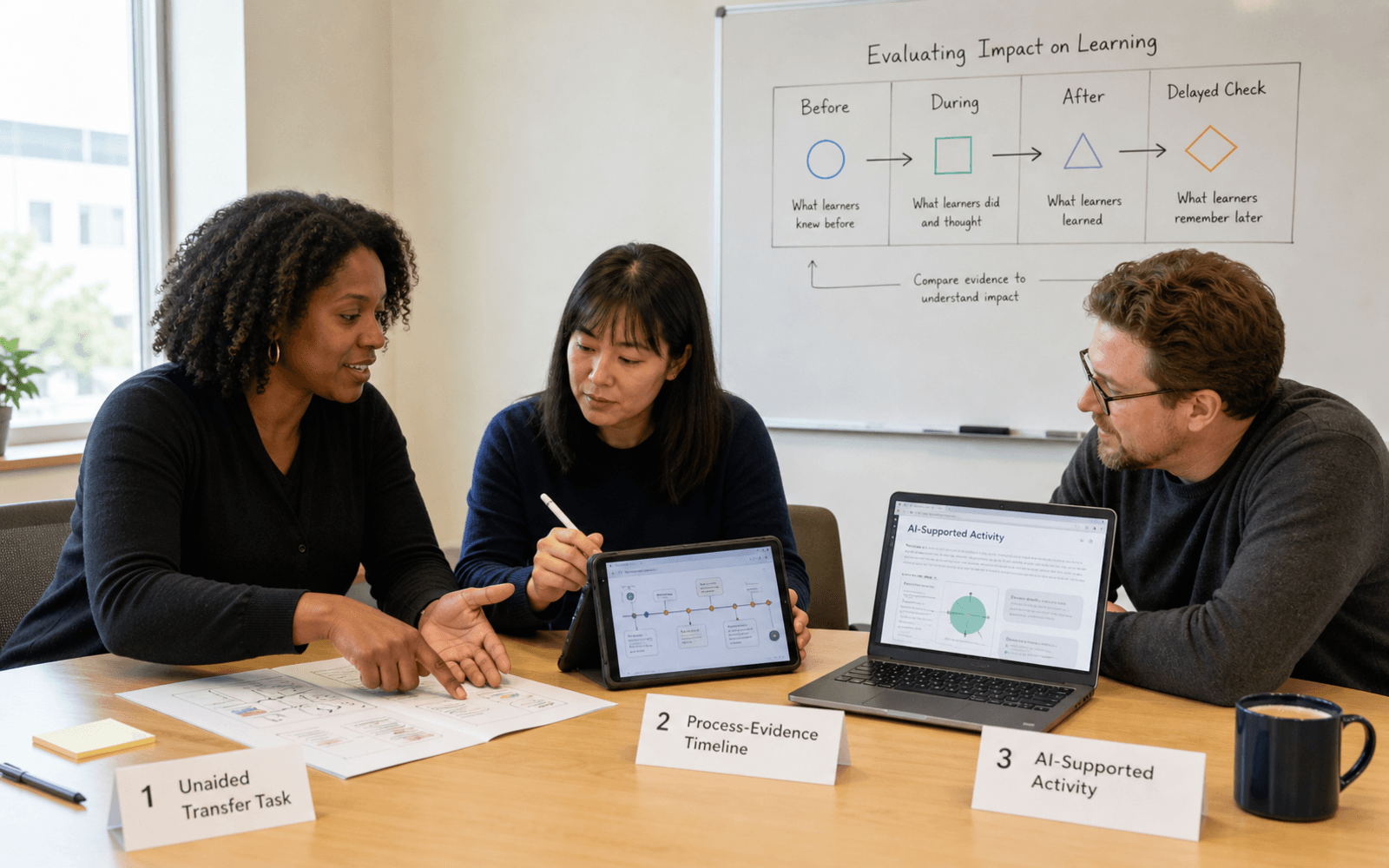
A pilot is part of procurement evidence, not an automatic path to purchase. It should use representative users, independent measures, clear consent, protected alternatives, success and stop thresholds, and a plan for deletion. Learners and educators report burden as well as benefit. Procurement is responsible when it preserves institutional choice, makes vendor dependence visible, and ties continued payment to demonstrable educational value, rights protection, and acceptable operation throughout the contract. Renewal should repeat key checks rather than rely on the original sales review. Buyers should compare actual usage, total spending, support records, incidents, accessibility fixes, model changes, outcome evidence, and the cost of switching. A credible exit test confirms that data can be exported and deleted before dependence becomes irreversible. That choice should remain genuinely reversible.