Multi-Agent Coordination
Multi-agent coordination divides work among interacting AI processes. It can support specialization and parallel work, but adds communication, verification, and shared-state problems that need explicit control.
出典
完全なレッスン要約
An AI workflow may use one process to find sources, another to draft an explanation, and a third to check calculations. Multi-agent coordination concerns how such processes divide work, communicate, share information, and decide when the task is complete. An agent here is a computational component with a role, context, and available actions. Several named agents do not necessarily represent independent expertise or independent evidence.
Coordination can take different forms. A central coordinator may assign bounded tasks and integrate results. Agents may pass work through a sequence, or several may propose alternatives before a selection step. Systems such as AutoGen and CAMEL illustrate approaches to agent conversation and role assignment. Their existence demonstrates design possibilities, not a guarantee that more agents improve every task or make human review unnecessary.
The interfaces between agents are important. Each needs a clear input, expected output, authority boundary, and stopping condition. Shared files or records require ownership rules so that one agent does not overwrite another's work. Messages should distinguish observations, assumptions, recommendations, and completed actions. Otherwise, a confident draft can be mistaken for verified evidence, or a proposed tool operation can be reported as executed.
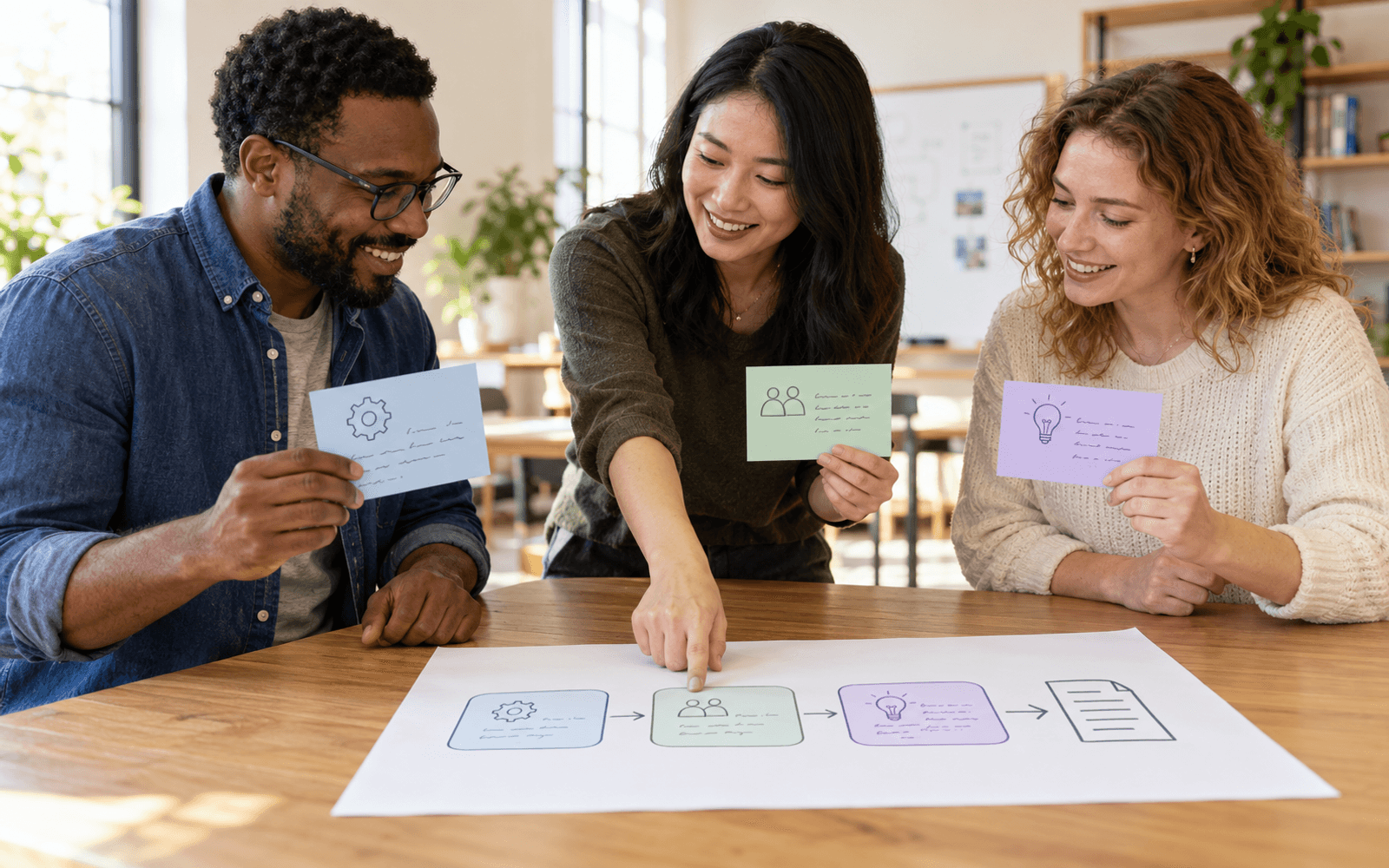
Imagine a department preparing a lesson about population growth. A source agent retrieves approved reference material, a mathematics agent checks a numerical example, and an editor integrates the explanation. Each returns evidence in a defined format. The editor checks that the numerical assumptions match the source material and that the citations support the final claims. A teacher then reviews the lesson against its learning objective. Parallel work helps only if the subtasks are sufficiently independent and the integration preserves their meaning.
Several failure modes deserve attention. Agents using the same model may repeat the same misconception, so agreement is not equivalent to corroboration. One agent can pass an incorrect premise through the whole group. Long conversations can increase latency and cost without improving the result. Broad tool permissions create opportunities for unintended actions, and malicious content retrieved by one agent can influence others if it is treated as instruction. Verification should rely on external evidence and well-defined checks wherever possible.
A classroom activity can simulate the workflow with human roles and fictional data. Give one role an incomplete source and ask the group to document how the uncertainty travels through the process. Compare the coordinated approach with one person following a clear checklist. Measure accuracy, time, communication effort, and unresolved disagreement. In an educational application, select the simplest arrangement that meets the need, restrict each agent's actions, and provide a human escalation route. Multi-agent coordination is a way of organizing computation; its educational value must be demonstrated through the quality of the completed work and the reliability of the process that produced it.