Product news: Gemini adds selective video analysis, opening a new route to checkable lecture search
Google DeepMind
AI Product and Learning Report
Ringkasan 500 kata
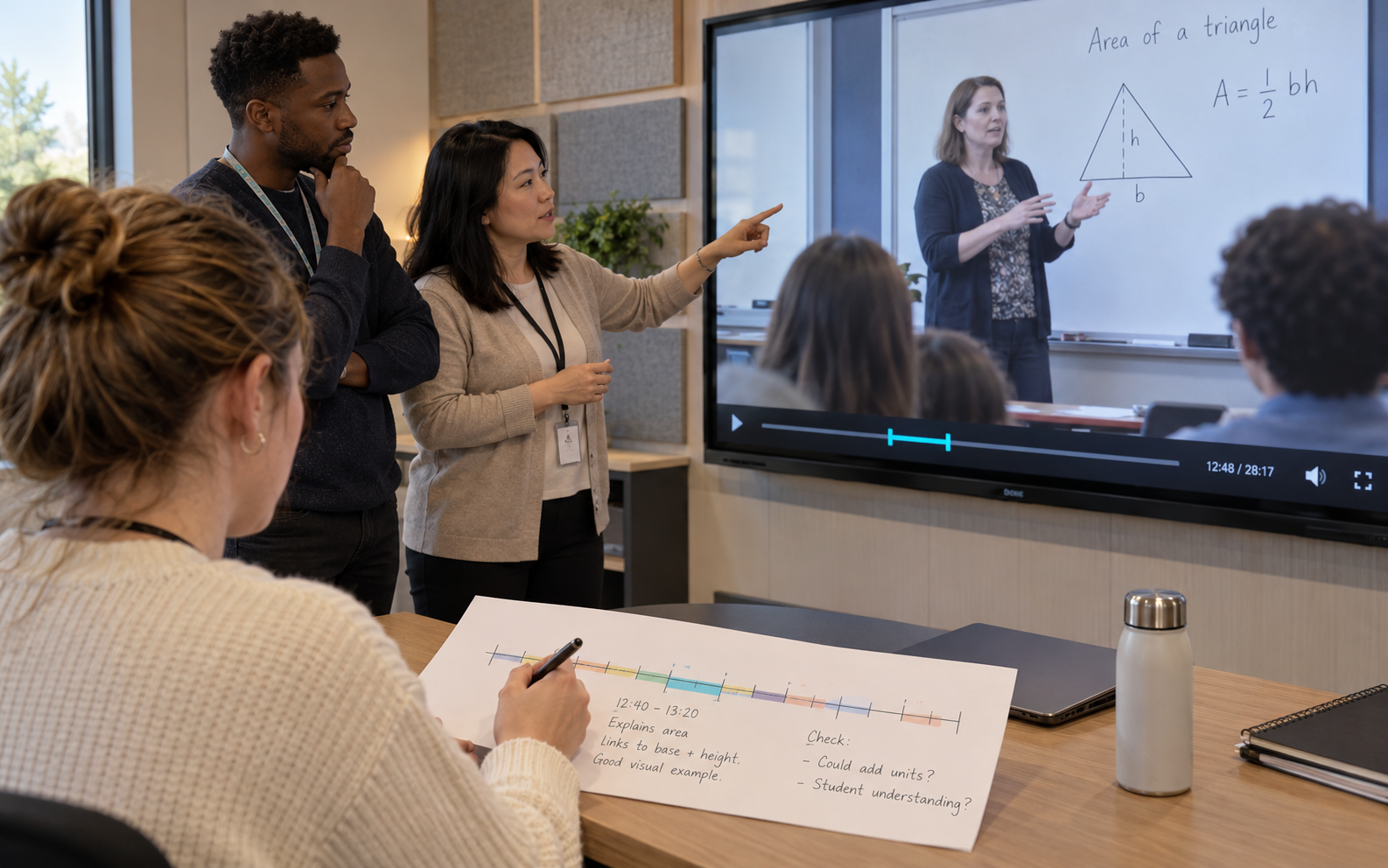
Google introduced agentic video understanding on September 1, 2026 for Gemini 3.7 Flash, 3.6 Flash, and 3.5 Flash-Lite. The feature lets the model search and inspect selected parts of a recording across visual frames, audio, and transcripts. Google reports improved efficiency and accuracy in its evaluations. The initial announcement makes the capability available through developer interfaces, while describing Gemini-app availability as forthcoming. Schools should not assume it appeared in every student's app that day.
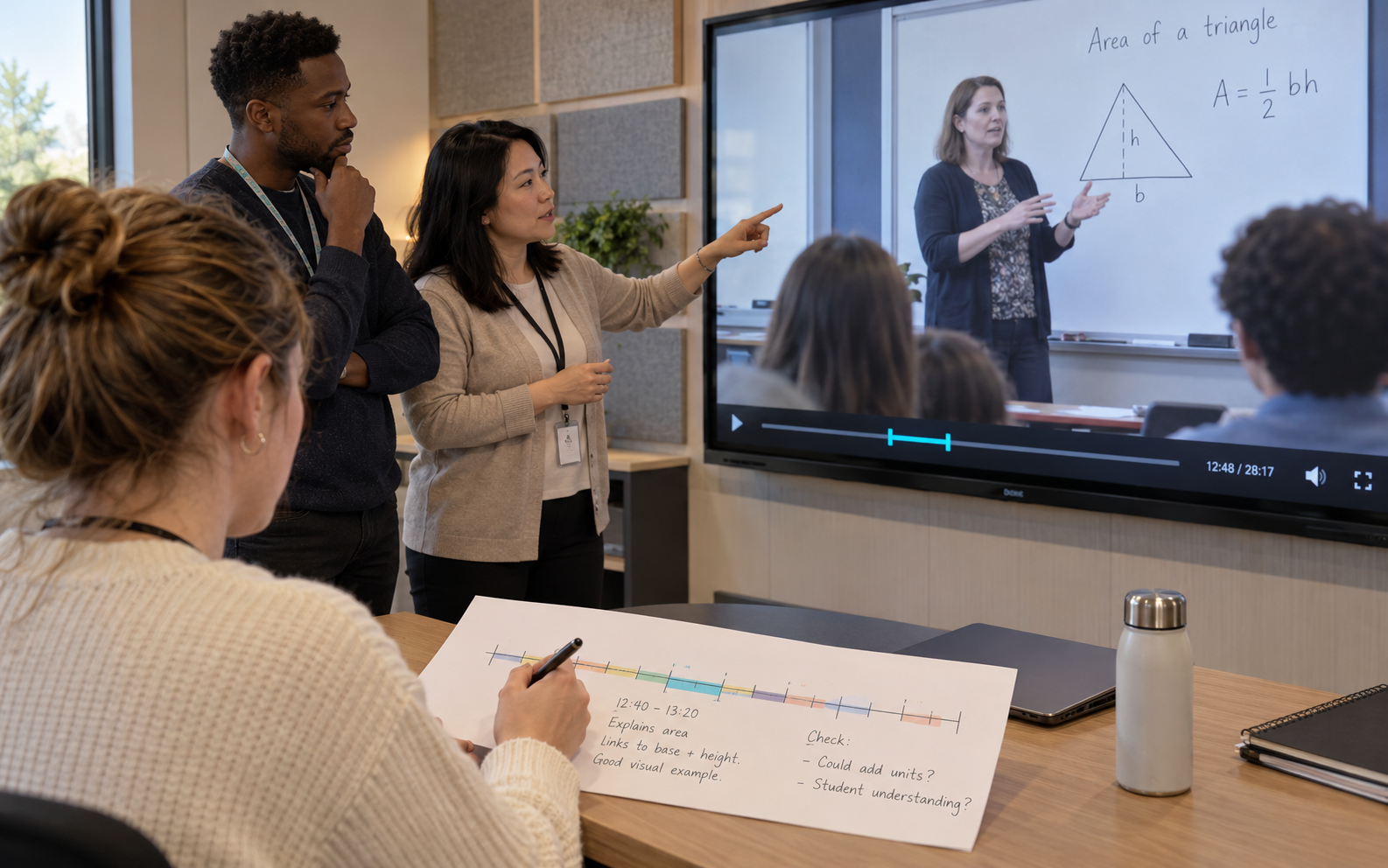
The educational opportunity is more specific than summarising a whole lecture. A learner might ask where a lecturer changes an assumption, demonstrates an exception, or connects two diagrams. An assistant that can revisit relevant moments could return a short set of timestamps for review. The student can then watch the surrounding material and decide whether the selection answers the question. The returned clip is evidence to examine, not a substitute for the interpretation.
For teacher education, a proposed exercise could use a deliberately recorded demonstration lesson with consenting adult participants. Trainees might first mark moments where the teacher checks understanding, then compare their selections with the assistant's. Disagreement can be productive: one observer may count a general invitation for questions, while another requires evidence that a learner's reasoning was elicited. The group would need to define the category before treating a count as meaningful.
Selective viewing also creates a methodological issue. A system can find a convincing example while missing a contradictory moment elsewhere in the recording. Asking for the “best example” and asking for “every instance” are different tasks. An evaluation should include cases where the relevant event is brief, repeated, partly obscured, or absent. Reviewers should check whether the assistant admits uncertainty and whether the cited timestamps actually support its explanation.
OpenAI's recent school partnerships focus on bringing managed AI tools and training to educators. Anthropic's browser developments extend what an assistant can inspect and act on during web work. Gemini's video update adds another form of access: targeted inspection within media. Across these approaches, educational teams should define the evidence they need before choosing a tool. More accessible information does not automatically supply a sound interpretation of it.
A small pilot could begin with public instructional videos whose content teachers already know. Students could receive the same question and compare ordinary searching with assistant-selected clips. The assessment might examine whether they locate the right passage, preserve its qualifications, and explain a new example afterwards. Time saved would be recorded separately. This would help distinguish efficient retrieval from improved understanding without claiming either outcome in advance.
The data source matters as well. A public demonstration, a licensed lecture recording, and identifiable classroom footage are not interchangeable inputs. Institutions need appropriate permission and a clear purpose for the material they use. Google's announcement makes video analysis more flexible, but a defensible educational workflow still needs traceable timestamps, agreed categories, and human interpretation. The most promising use is one that helps people return to the right evidence and think more carefully about what it shows.