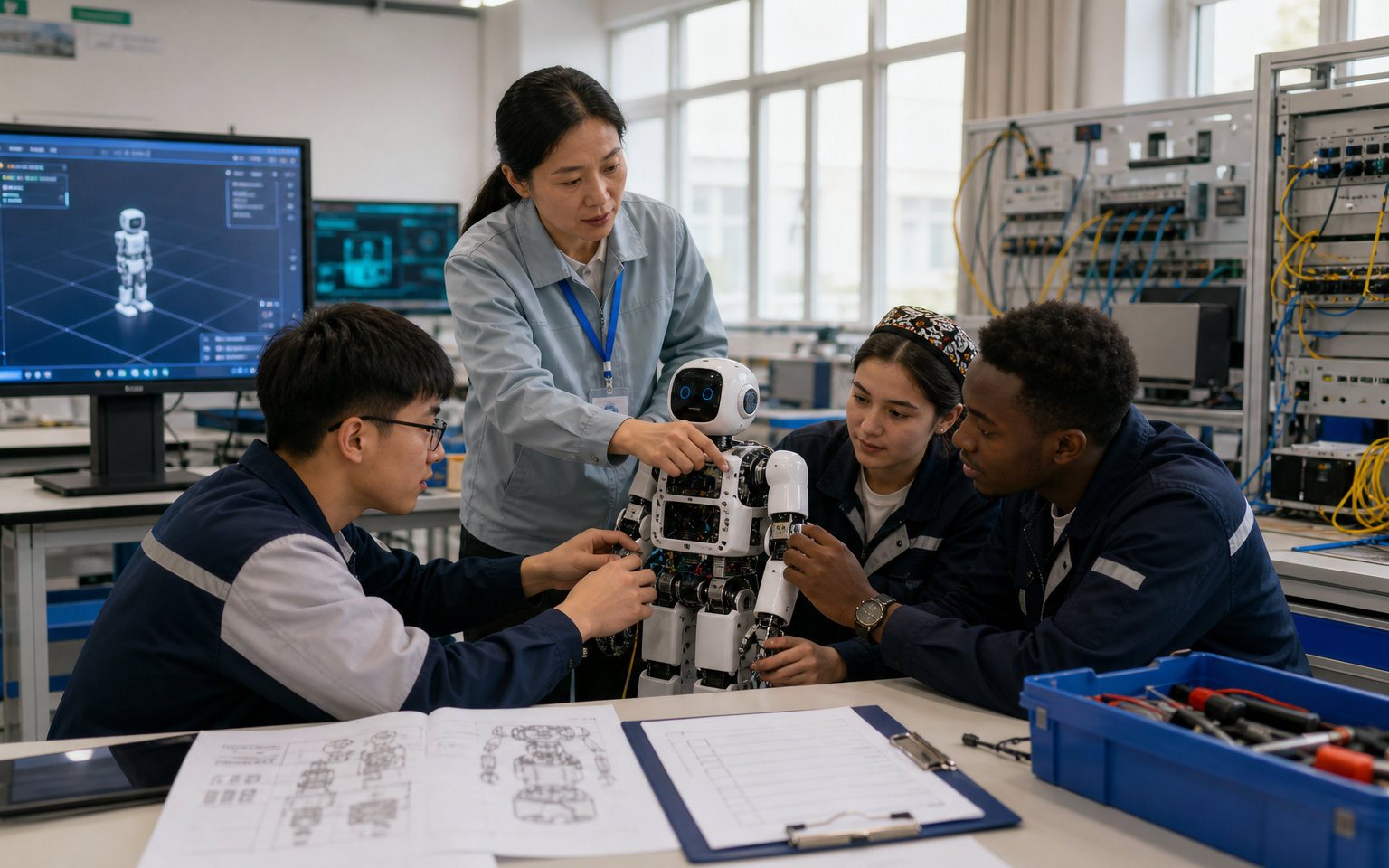
Product news policy brief: China adds 27 vocational majors including humanoid robotics and embodied-intelligence computing
Ministry of Education of the People's Republic of China
AI Policy and Workforce Education Report
Ringkasan 500 kata
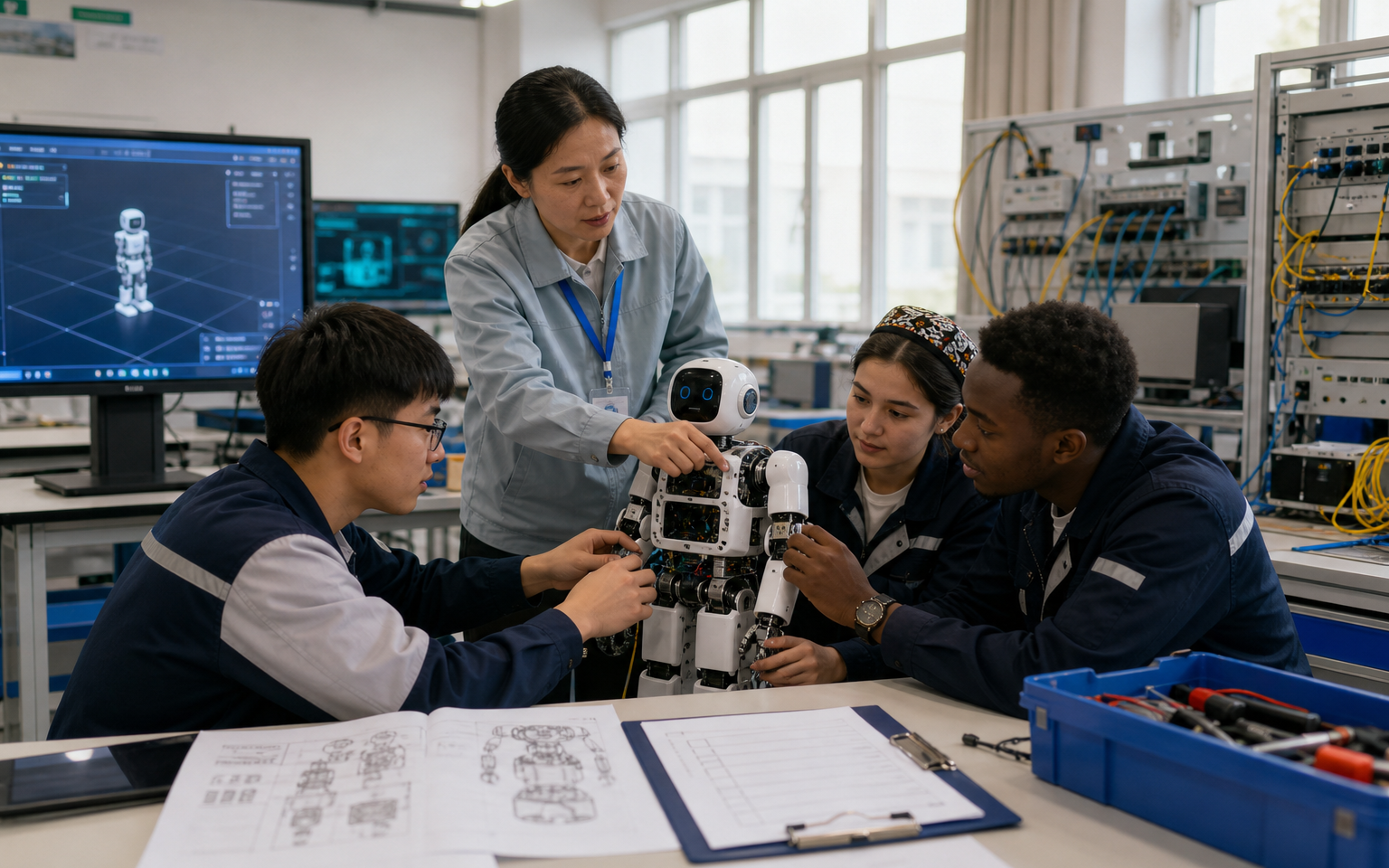
China's Ministry of Education announced on July 16 that it had completed the 2026 supplement to the national Vocational Education Major Catalogue. The update adds 27 diploma- and bachelor-level vocational majors: nine at higher-vocational diploma level and 18 at vocational bachelor level. Together they span 14 broad major categories and 20 professional classes. The ministry presents the catalogue as a mechanism for aligning high-skilled talent preparation with new industries, services, technologies and employment roles during the country's next planning period.
The additions cover more than artificial intelligence. Official examples include fields connected to the digital economy, low-altitude economy, advanced equipment, urban renewal, hydrogen and energy storage, health and family services. AI-adjacent additions include humanoid robot engineering technology, marine intelligent robot application technology and embodied-intelligence computing technology. Other digital fields named in the official explanation include computing-network convergence engineering, industrial software engineering, digital-twin engineering, agent communication technology and vehicle-network communication technology.
The ministry says the selection drew on applications from sectors and local authorities, expert review, consultation and industry-education partnerships intended to translate workplace demand into programme design. It links some additions to occupations in the national occupational classification and to identified technical roles. Since the 2021 catalogue was issued, annual supplements have added 169 majors in total, which the ministry says represents 11% of the catalogue. The accompanying official explanation also cautions local authorities and colleges against following fashionable fields without evidence or adequate conditions.
This is a catalogue and workforce-policy event, not an implementation or impact evaluation. An approved major name does not show that every eligible institution has opened the programme, recruited qualified teachers, built laboratories, secured placements or enrolled a first cohort. The announcement supplies no completion, employment, salary or learning-outcome data for these new majors. It also cannot establish how long demand for a rapidly changing technical specialization will last. Reporting should therefore say the ministry added or authorized catalogue fields, not that 27 programmes are already operating everywhere.
For Hong Kong, the update is a useful regional signal rather than a binding curriculum. VTC, applied-science universities and continuing-education providers could compare the new fields with Greater Bay Area employer demand, especially in robotics, digital twins, industrial software and intelligent communications. Before creating a qualification, however, a Hong Kong provider would need local labour-market evidence, Qualifications Framework alignment, credible teaching staff and equipment, safe laboratory practice, industry placements and pathways that remain useful when particular platforms or job titles change.
A responsible local response would begin with modular evidence rather than a full programme copied from the catalogue. Institutions could test a microcredential or shared laboratory project, map competencies to real job tasks and publish employer, learner and graduate feedback. Programmes should combine technical practice with data governance, human oversight, system safety and communication across Cantonese, Chinese and English contexts. The product-news value of the July 16 announcement is the policy signal it sends about emerging skill priorities; whether any corresponding programme delivers durable educational and employment value still requires independent local evidence.