Conference paper: Educators in Hawai‘i designed AI audits around community knowledge and shared review
Dora Zhao, Hannah Cha, Michael J Ryan, Angelina Wang, Rachel Baker-Ramos, Evyn-Bree Helekahi-Kaiwi, Rebecca Diego, Josiah Hester, Diyi Yang
CHI Conference on Human Factors in Computing Systems (CHI 2026)
500-शब्द सार
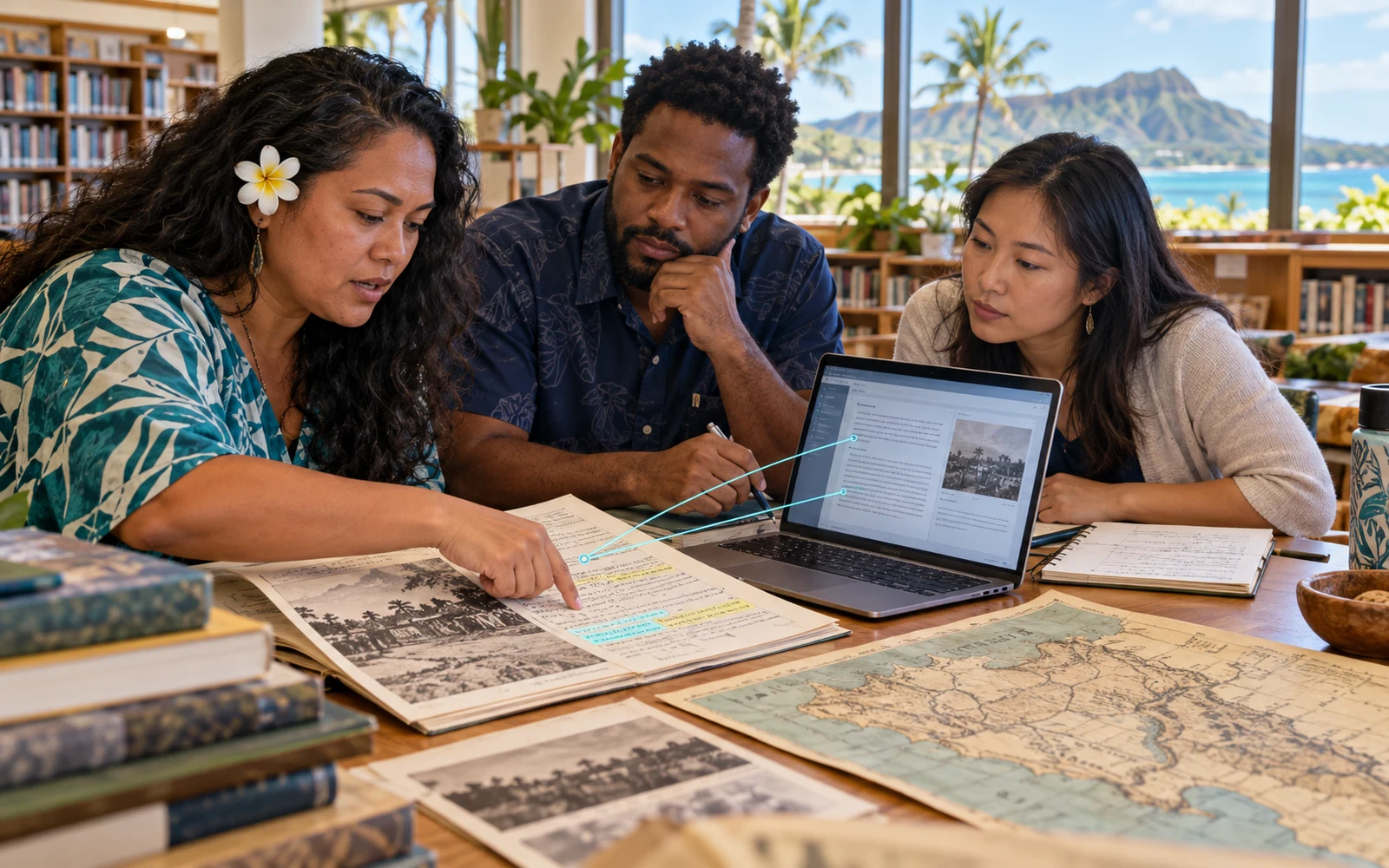
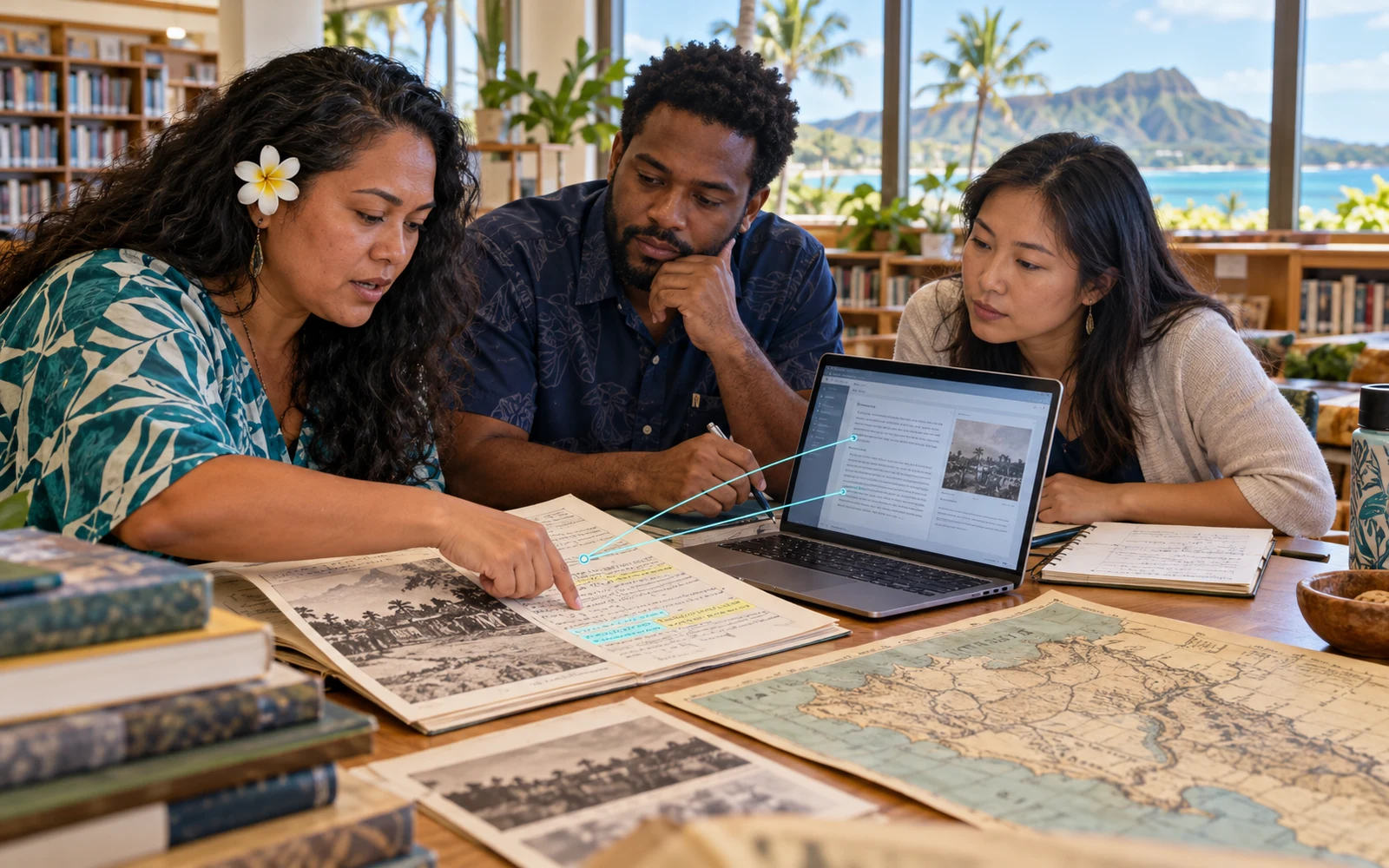
Dora Zhao and colleagues studied how educators in Hawai‘i wanted to examine culturally sensitive AI output. Their CHI 2026 paper reports four co-design workshops with 22 public-school educators in O‘ahu. Participants proposed ways to inspect sources, compare perspectives and flag problematic material. They emphasised knowing who produced an interpretation and the people from whom that knowledge came. The contribution is a set of situated design insights, rather than a tested auditing product or evidence of improved student learning.
The sample was voluntary and limited to elementary-level public-school educators. Students, administrators and cultural practitioners were not represented in the workshops. The authors also focused on text-based systems. These boundaries matter: a design developed with one community should not be presumed to represent other communities, languages or media.
For AIEDHK, the paper opens a useful practical question: who should help decide whether an AI-generated teaching example is appropriate? Consider a proposed local-history lesson in which a model produces a short account of a neighbourhood. A teacher could compare that account with a public archive, an appropriately shared oral-history source and a museum resource. The aim would be to identify where the account simplifies disagreement or presents one viewpoint as the only available account. This is an editorial teaching proposal, not an activity evaluated in the study.
Students could annotate one sentence at a time. One annotation would record what the sentence claims, another the evidence supporting it, and a third the perspective it leaves uncertain. A learner might discover that a date is well documented while the explanation of why an event mattered varies between accounts. The teacher could use that distinction to discuss the difference between checking a factual statement and understanding an interpretation. The activity should allow an honest unresolved question to remain visible.
A teaching team could prepare the exercise with people familiar with the place and its histories. Contributors should decide which materials can be used, how their contributions are described, and what should remain outside a public dataset. A shared review sheet could record a concern, the passage that prompted it, and the reason for a revision. That record would help a second teacher understand the decision without treating the first teacher's judgment as an unexplained rule.
Evaluation could begin modestly. Before the lesson, students might explain how they would check an unfamiliar account. Afterwards, they could examine a new passage and justify which source they would consult next. Teachers would inspect those explanations for attention to evidence and perspective, while recording whether the activity creates an unreasonable preparation burden. A later independent task could show whether students carry the checking practice into their own work.
The proposed educational value lies in making interpretation discussable. A convincing paragraph and a source link are useful starting points, but students still need to explain what the source establishes, whose account it represents, and what they cannot yet conclude. Schools can use that question to shape a small, reviewable lesson before investing in a larger AI-auditing workflow.