Pedagogy-grounded prompts improved DeepSeek-generated lesson plans, but classroom learning was not tested
Yinan Lu, Weinuo Li, Yue Cai
Systems
500-शब्द सार
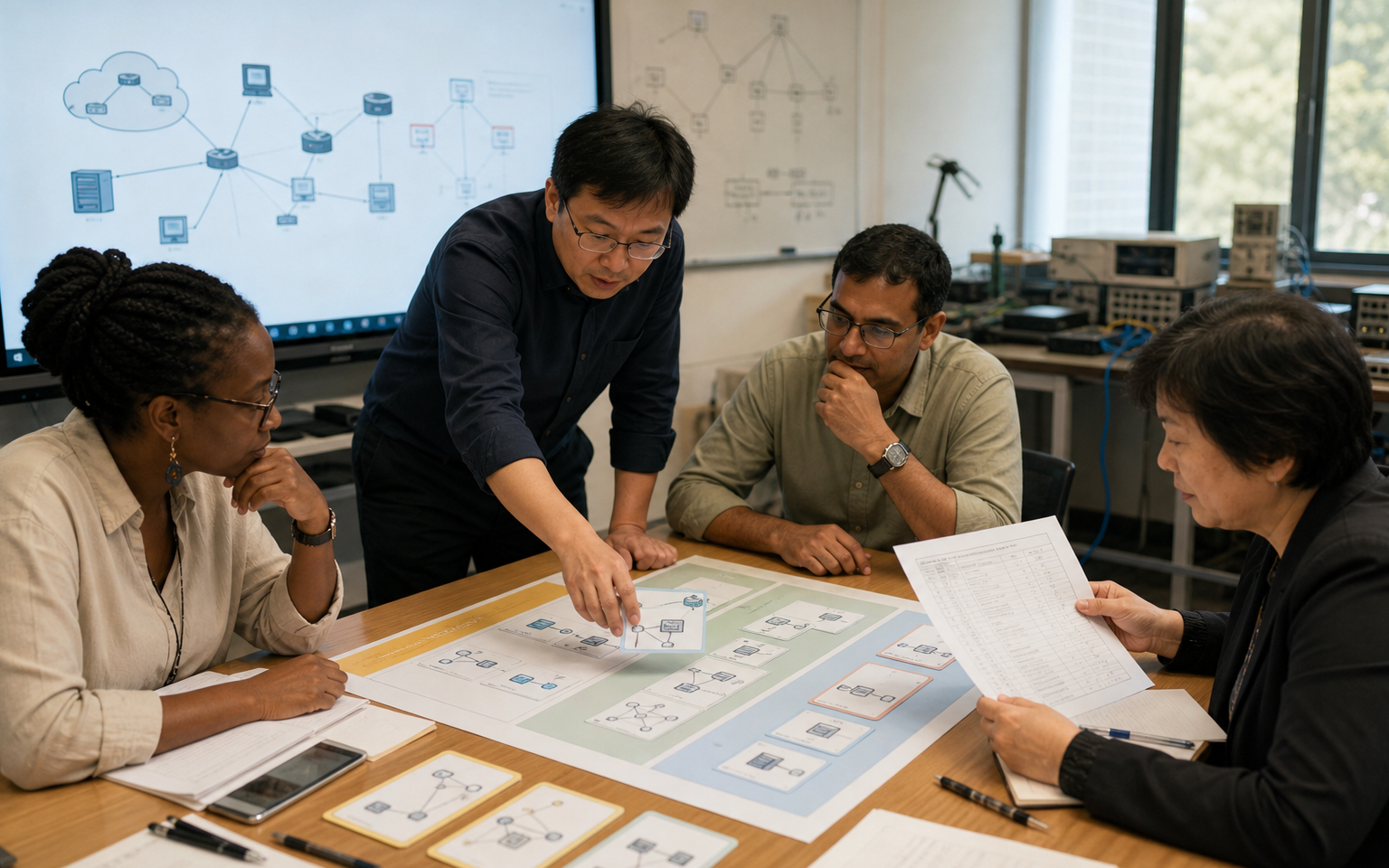
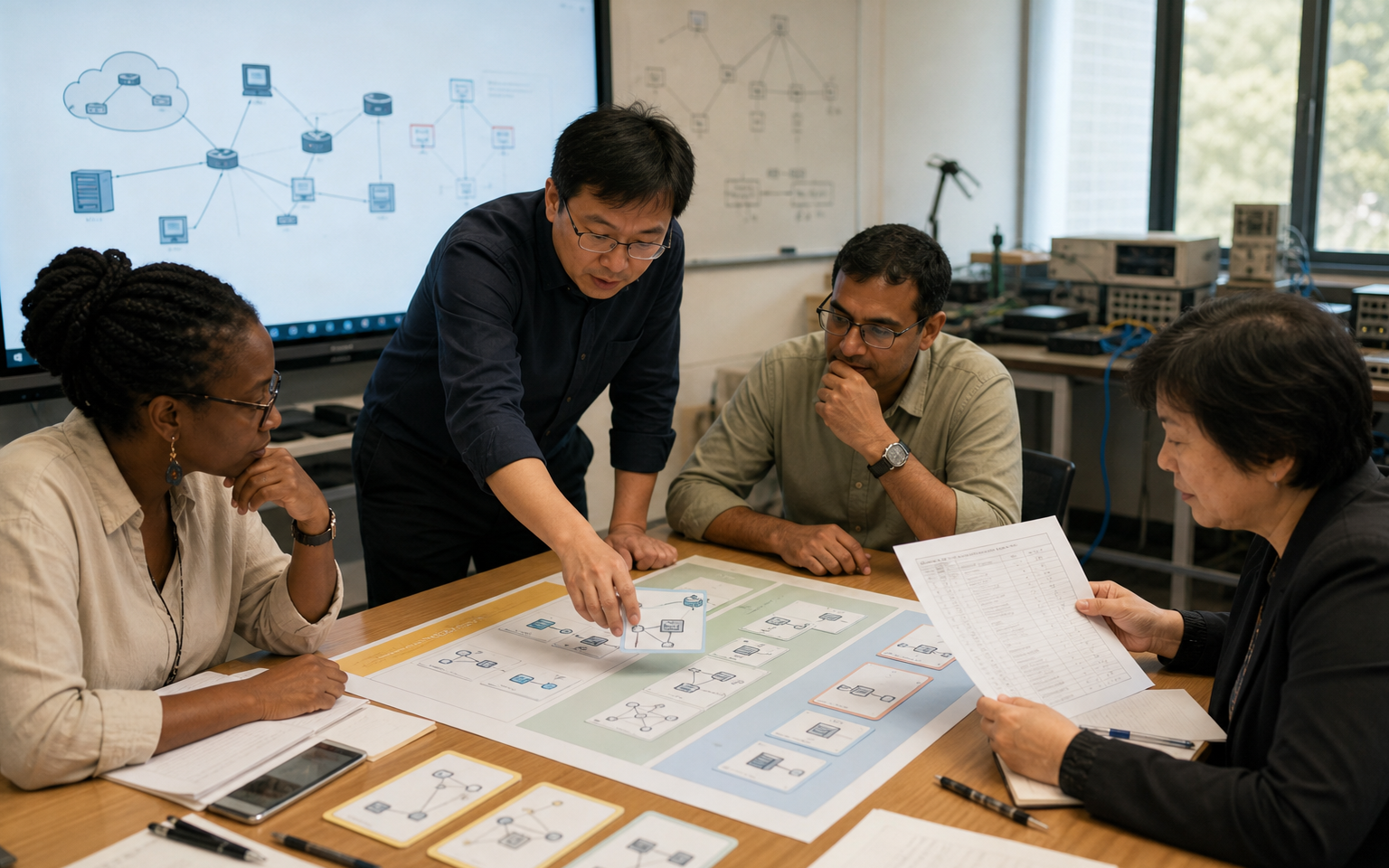
Lu, Li and Cai test whether pedagogical structure can improve large-language-model lesson plans beyond a single general prompt. Their framework divides planning into three dependent stages: measurable learning-objective design, instructional-unit design and teaching-activity design. Bloom's taxonomy guides the objectives. Either ACT-R phases or Gagné's instructional-event structure guides the units, while problem-chain theory can guide activities. Outputs from one stage become inputs to the next, and the design allows a teacher to inspect or revise an intermediate result before generation continues.
The experiment used three DeepSeek models: R1, V3 and R1-Distill-Qwen-32B. Researchers crossed them with five prompting strategies across ten authentic topics drawn from a Computer Networks course, generating 15 plans per topic and 150 plans in total. Generation used a fixed temperature of 0.7 and a fixed random seed. The comparison included a naive baseline plus four theory-grounded variants that combined either ACT-R or Gagné unit structures with basic or problem-chain activity design.
Evaluation covered both structural completeness and functional quality. An LLM judge scored the full 150-plan corpus for coverage of Gagné's nine events and a 12-indicator functional rubric. Five university computer-science teachers, blind to model and strategy, rated a stratified sample of 30 plans after calibration. Across the complete automated evaluation, every theory-based strategy exceeded the naive baseline for every model and raised event coverage above 90%. The smaller 32B model showed the largest structural rise, from 71.6% under baseline to 98.7% in its strongest condition.
Human ratings supported the direction but narrowed the certainty. Average event coverage in the human sample was 74.1% for baseline plans and 89.8% to 93.5% for theory-grounded strategies. The paper reports functional-quality improvements of up to 17.3% under the LLM judge and 53.6% under human rating. Gagné-based structure performed better than ACT-R under base conditions, while problem-chain guidance particularly benefited the ACT-R route. The LLM judge nevertheless scored plans systematically higher than humans, so automated absolute scores should not be treated as objective teaching quality.
The study evaluates generated documents, not live co-design or classroom outcomes. All topics came from one university Computer Networks course, all models belonged to one model family, and only 30 of 150 plans received human validation. Teachers were expert evaluators rather than participants whose real planning time, revisions or acceptance decisions were studied. No students received the lessons, and the design measured neither engagement, attainment nor transfer. It is therefore accurate to report improved plan coverage and rubric scores, but not improved teaching or learning.
For Hong Kong, the three-stage workflow is a testable professional-learning scaffold. Teachers could compare a one-shot draft with a staged draft aligned to local curricula, revise each intermediate output and record review time, factual errors, accessibility and language quality in Cantonese, Chinese and English. A classroom pilot should then score independent student work and teacher workload rather than assuming a complete-looking plan is effective. The paper's practical contribution is a structured prompting hypothesis; local educators still supply curriculum judgment, safety review and the evidence needed to decide whether the resulting lesson works.