Product news: OpenAI's Agents API brings managed execution to research and educational applications
OpenAI
AI Product and Learning Report
500-शब्द सार

OpenAI introduced the Agents API in public beta on September 10, 2026. It brings the execution framework used by Codex to developers, including support for tools, longer sessions, context management, and subagents. Developers can choose an execution environment rather than assemble every part of the workflow themselves. For education and research software, the announcement makes sustained tasks easier to explore, while leaving the purpose, evidence standard, and user experience for the application team to define.
A longer task needs a more explicit record than a single answer. If an assistant gathers sources, analyses a file, and drafts a report, each stage can fail in a different way. A missing source may be mistaken for an absent finding; a partial computation may be mistaken for a complete result. The application should make those states visible so a user can tell what actually happened and decide whether work should continue.
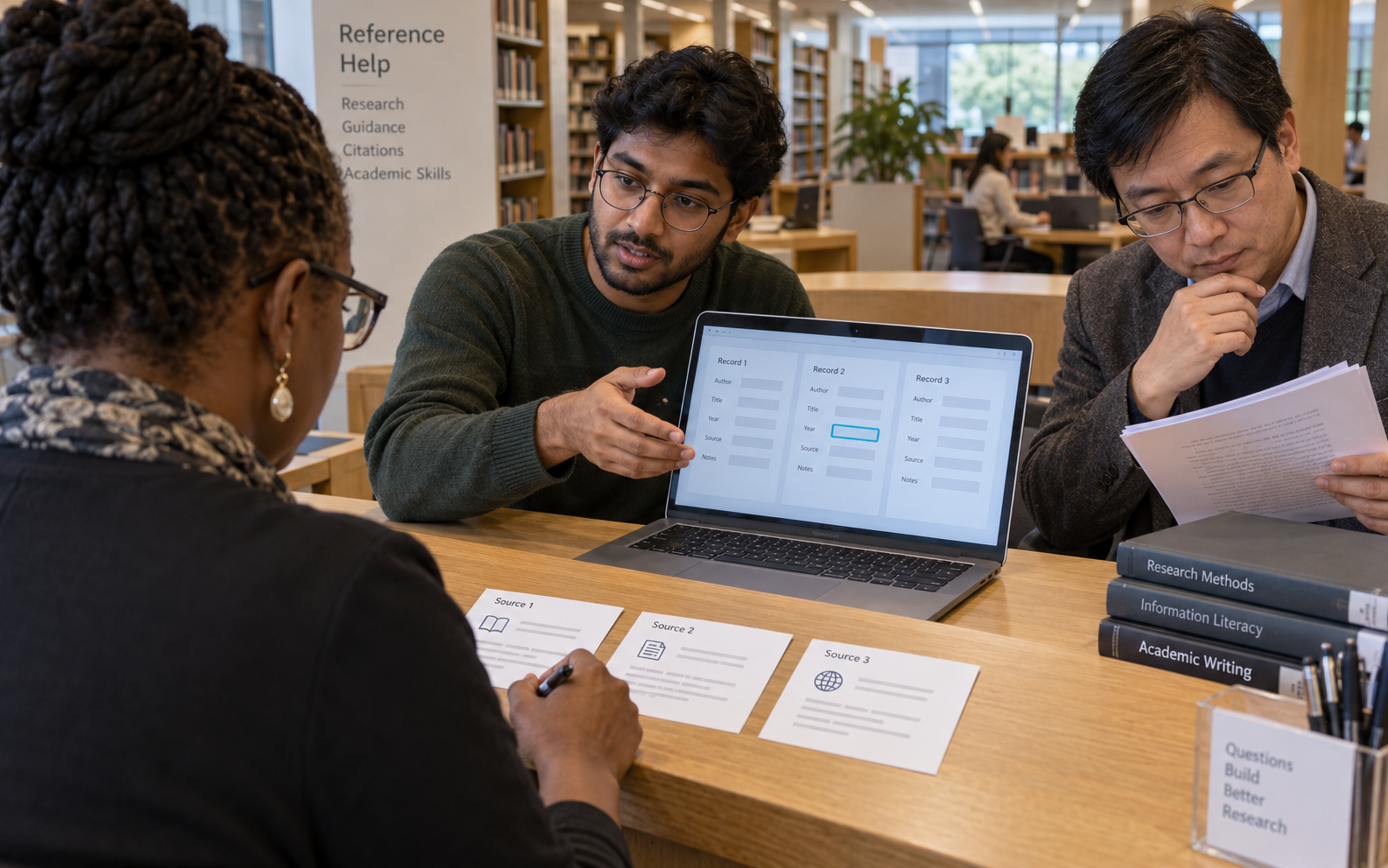
Consider a proposed research-support tool for a university library. It could collect candidate public sources on a topic, remove duplicates, and prepare a comparison table. The table should preserve the original links and distinguish retrieved facts from the assistant's interpretation. If access to one source fails, the result should say so rather than fill the gap with a plausible summary. A librarian can then assess both the useful material and the remaining uncertainty.
Subagents create another design choice. Dividing a task among several assistants may speed up independent work, but the pieces can rely on inconsistent definitions or overlapping sources. A coordinator needs a clear way to reconcile disagreements and keep the final claims connected to evidence. More participants do not automatically create independent verification if they repeat the same unsupported assumption. Application designers should decide which checks genuinely add a different perspective.
Anthropic's August memory update supports continuity across chat and Cowork. Gemini's September video feature selectively inspects media segments. Compared with OpenAI's managed execution, these updates address different parts of a sustained workflow: remembered context, access to evidence, and carrying out the task. An educational application may need only some of them. The learning objective should determine which capabilities are useful and what the user should still inspect directly.
A development team can begin with a short public dataset and a known expected result. It can deliberately remove an input, interrupt a run, or change an instruction, then check whether the application reports the situation accurately. The purpose is to test meaningful behaviour, not merely whether the agent returns a success message. The same exercise can become a software-engineering lesson about recovery, accountability, and the difference between attempted and completed work.
The beta is an infrastructure release, not a ready-made tutor or a guarantee of research quality. Its educational promise is that teams can spend more attention on the task and less on repeatedly assembling supporting machinery. The resulting application should still make it easy to identify the sources used, the actions performed, the checks passed, and the decisions left for a person. Those records are what allow longer AI work to remain reviewable.