Literature Review on the Integration of Generative AI in Programming Education
Jemimah Nathaniel, Solomon Sunday Oyelere, Jarkko Suhonen, Matti Tedre
International Journal of Artificial Intelligence in Education
500-शब्द सार

Nathaniel, Oyelere, Suhonen, and Tedre review a question that is now central to computer science education: how can generative AI tools be integrated into programming education without weakening students' foundational logic, problem solving, and higher-order thinking skills? The paper is useful for AIEDHK because it moves beyond generic enthusiasm for ChatGPT or Copilot. It asks whether the tools are embedded in teaching methods, assessment routines, and learning processes that still require students to understand code rather than only generate it.
The review synthesizes 40 empirical studies using PRISMA 2020 and Kitchenham-style review methods. Its focus is not simply whether GenAI can solve programming tasks. Instead, it examines how studies connect GenAI tools with programming curricula, teaching methods, assessment designs, integration processes, and student skill development. That framing is important because programming education has a long history of intelligent tutoring systems, automated feedback, Parsons problems, code explanation tools, and step-based support. GenAI adds flexibility and natural-language interaction, but it also increases the risk that learners accept generated code without understanding algorithms, syntax, data structures, or debugging logic.
The paper's findings are deliberately implementation-focused. The authors argue that successful integration depends on intentional teaching strategies, thoughtfully designed assessments, and structured integration processes. They also identify barriers: limited accessibility support, insufficient bias mitigation, weak curriculum alignment, and tool selection driven by availability rather than educational fit. These are practical concerns for any school or university considering AI-assisted coding. A tool that improves productivity for experienced developers can still be harmful for novice learners if it bypasses the struggle needed to build mental models.
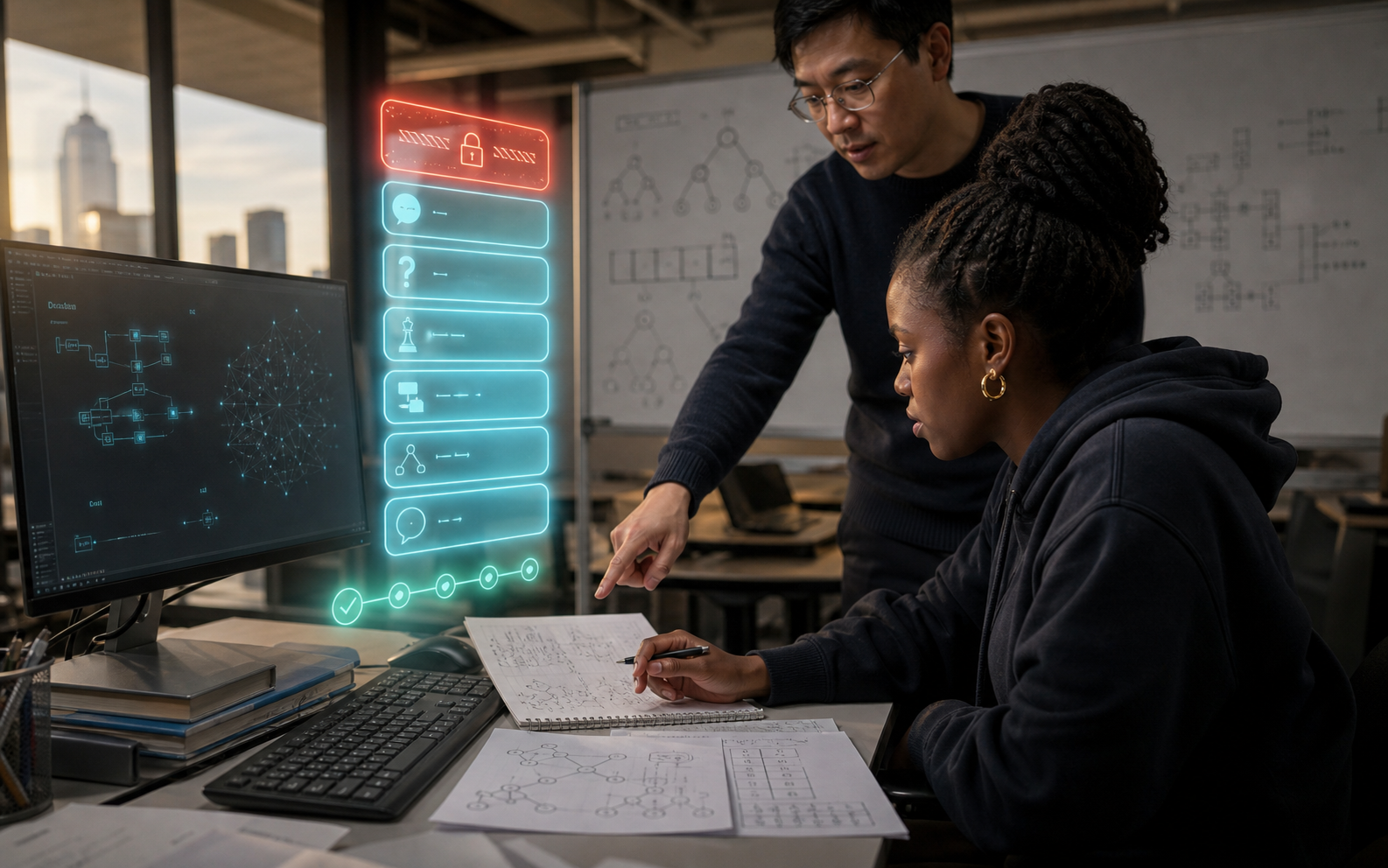
The review also proposes a GenAI-Ped framework that combines self-regulated learning, universal design principles, prompt-engineering support, and iterative feedback. For AIEDHK, this is the most actionable contribution. It suggests that GenAI in coding courses should be framed as a guided learning partner, not an answer machine. Students need orientation on when to ask for help, how to inspect generated code, how to explain a solution, and how to reflect on what they have learned. Teachers need assessment formats that reveal reasoning, not only final code output. Product teams need interfaces that encourage explanation, comparison, revision, and metacognitive checks.
The paper is especially relevant for Hong Kong because programming education is multilingual, high-stakes, and often linked to future workforce claims. GenAI coding support can make programming more accessible, but only if it is aligned with local curricula, language needs, teacher capacity, and assessment expectations. AIEDHK can use this review to evaluate AI coding tutors, coding assistants, and student copilots through a clear test: does the system help learners develop durable programming understanding, or does it mainly make correct-looking code easier to obtain?