Industry news: OpenAI's district-adoption programme puts coordination and staff support ahead of account counts
OpenAI Academy
AI Product and Learning Report
Resumen de 500 palabras
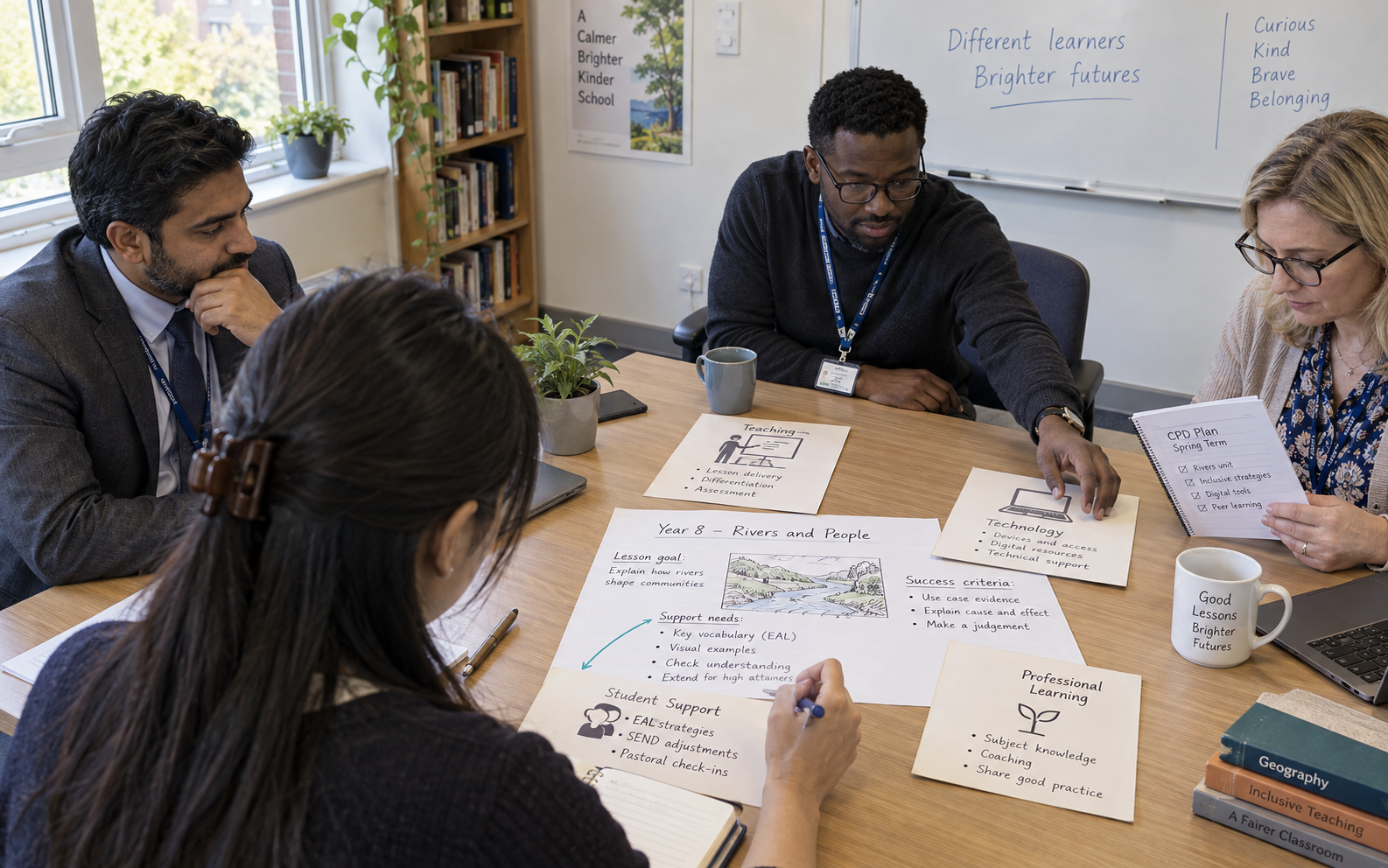
OpenAI Academy listed “ChatGPT Edu: Leading District-Wide Adoption” for September 9, 2026. Its published programme focuses on coordinating technical teams, instructional leaders, professional learning staff, communications teams, and schools. It also addresses expectations for review, approved information, and continuing support. This report draws on the public agenda; it does not claim to have observed the session or to know whether participants later implemented its recommendations successfully.
The topic is useful because an AI rollout can look complete before ordinary work becomes easier. Accounts may be active while staff remain unsure what they are allowed to upload, whom to ask for help, or whether an output is suitable for a lesson. A clear implementation plan should connect these questions to people and processes. The technical team cannot make every instructional decision, and teachers should not have to diagnose every access problem alone.
A school can test its plan with a simple scenario. A teacher wants to adapt a reading passage, encounters an account restriction, and receives a draft containing an unsupported fact. Who resolves the restriction? Who decides whether the source material is appropriate? How does the teacher report the factual problem? Following that single activity through the organisation can reveal gaps that are invisible in an account-activation dashboard.
Communication should also describe the limits of an initial rollout. Staff need to know which activities are being tried, what evidence will inform expansion, and how they can decline or suggest a different approach. A long policy document may be less useful than a short, accurate explanation linked to a named contact. Updates should reach people who missed the first training session, including temporary and newly appointed staff.
The surrounding announcements show why this matters now. Anthropic's August 28 teacher offer adds central school and district management. Google's September 8 Missouri partnership includes Gemini tools, training, and credentials across educational and workforce settings. Compared with OpenAI's agenda, these developments highlight the same practical transition from individual experimentation to organisational provision. They remain different offers, and a local institution must inspect the actual arrangements rather than assume the products share one model of access.
A continuing support plan could distinguish three kinds of question: getting into the service, using it for a particular task, and deciding whether the result is good enough. Staff with different expertise can handle each one, while a shared record helps identify recurring problems. If many teachers misunderstand the same feature, another login tutorial will not solve the instructional issue. The response should follow the pattern of difficulty.
For education leaders, the useful output of a rollout meeting would be a small set of defined activities, named responsibilities, and a review date. Evidence can include corrected materials, unresolved cases, staff experiences, and examples of a workflow that was intentionally stopped. OpenAI's published agenda supplies a timely discussion framework. The institutional work is to make that framework concrete enough that a colleague knows what to do when their first real task does not go as expected.