Participatory Design of Educational AI
How learners, educators, families, and affected staff share knowledge and influence across problem framing, requirements, prototyping, testing, governance, deployment, monitoring, and redesign rather than merely reacting to a finished AI product.
Fuentes
Resumen completo
Participatory design involves people affected by a system as contributors to shaping it, not only as subjects who test a finished product. In educational AI, learners, teachers, families, support staff, leaders, and communities hold different knowledge about goals, routines, barriers, relationships, risks, and consequences. Their participation can change whether AI is needed, what role it receives, what data are acceptable, and how success is defined.
Participation begins with problem framing. A school may assume it needs an AI engagement predictor, while students reveal that inaccessible schedules and unclear deadlines are the real problem. Co-design can redirect effort toward simpler changes. Teams map stakeholders, including people who may not volunteer or who could be harmed. They clarify which decisions are open, what constraints apply, how contributions will influence the result, and who remains accountable.
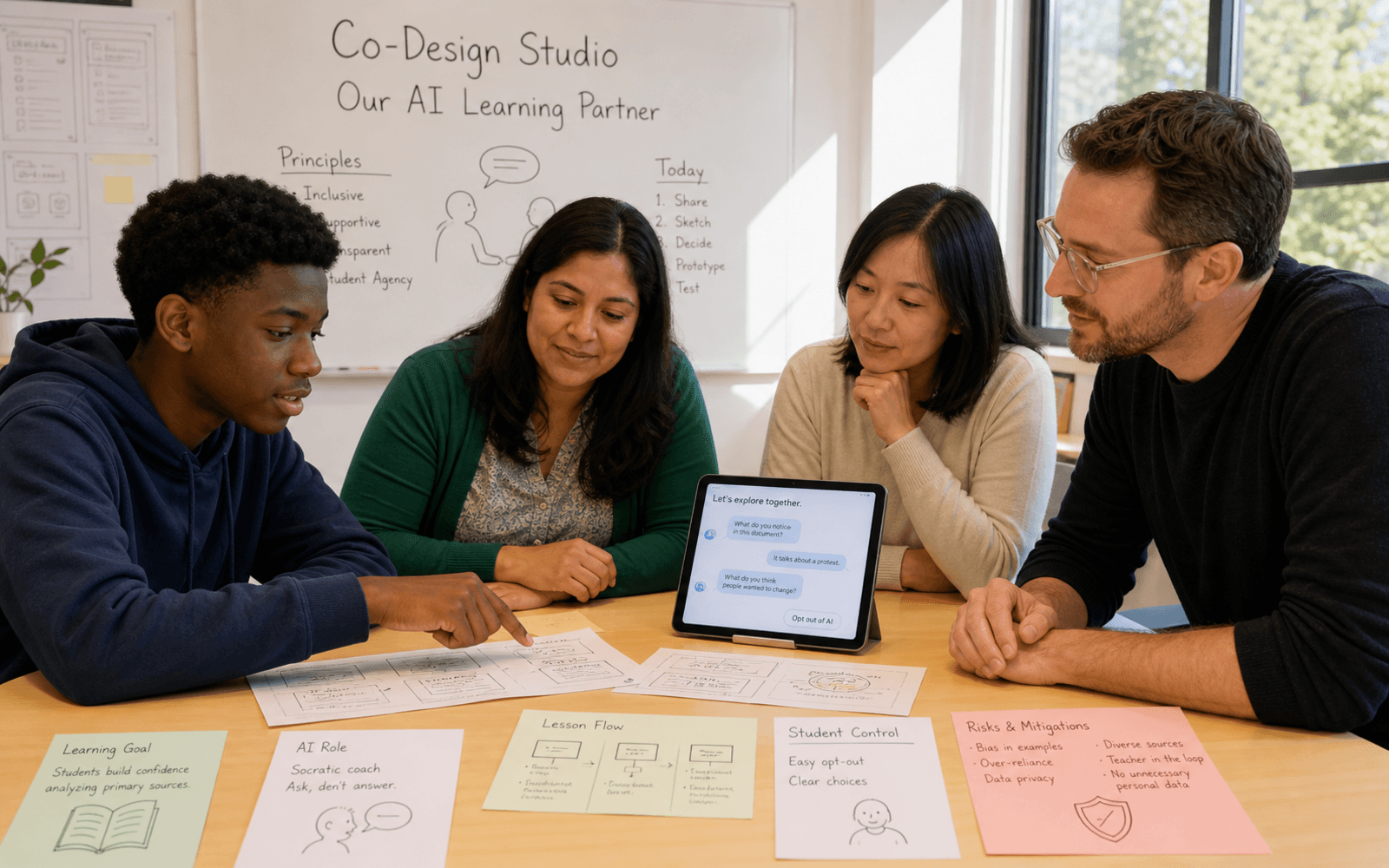
Methods can include interviews, observation, journey maps, storyboards, paper prototypes, role-play, scenario critique, diary studies, workshops, and supported trials. Materials should be understandable without technical expertise. Children and marginalized participants need age-appropriate information, safeguarding, accessible communication, privacy, and freedom to disagree or withdraw. Compensation and scheduling recognize participation as labour. One representative cannot speak for an entire group.
Power must be designed, not assumed away. Product teams control budgets and technical choices; teachers control classroom access; adults may dominate children; fluent speakers may dominate meetings. Facilitators can use small groups, anonymous routes, independent advocates, multiple languages, and published decision logs. Feedback shows which proposals were accepted, changed, or rejected and why. Participation without influence becomes extraction and can deepen distrust.
In education, learners can co-design an AI study planner. Participants first describe current planning practices and barriers. They create low-tech alternatives and AI prototypes, then test scenarios involving changing deadlines, shared devices, disability access, family responsibilities, and unwanted data collection. A decision log records tradeoffs. The group defines what the planner must never infer, how users correct it, what evidence would justify a pilot, and who can stop deployment.
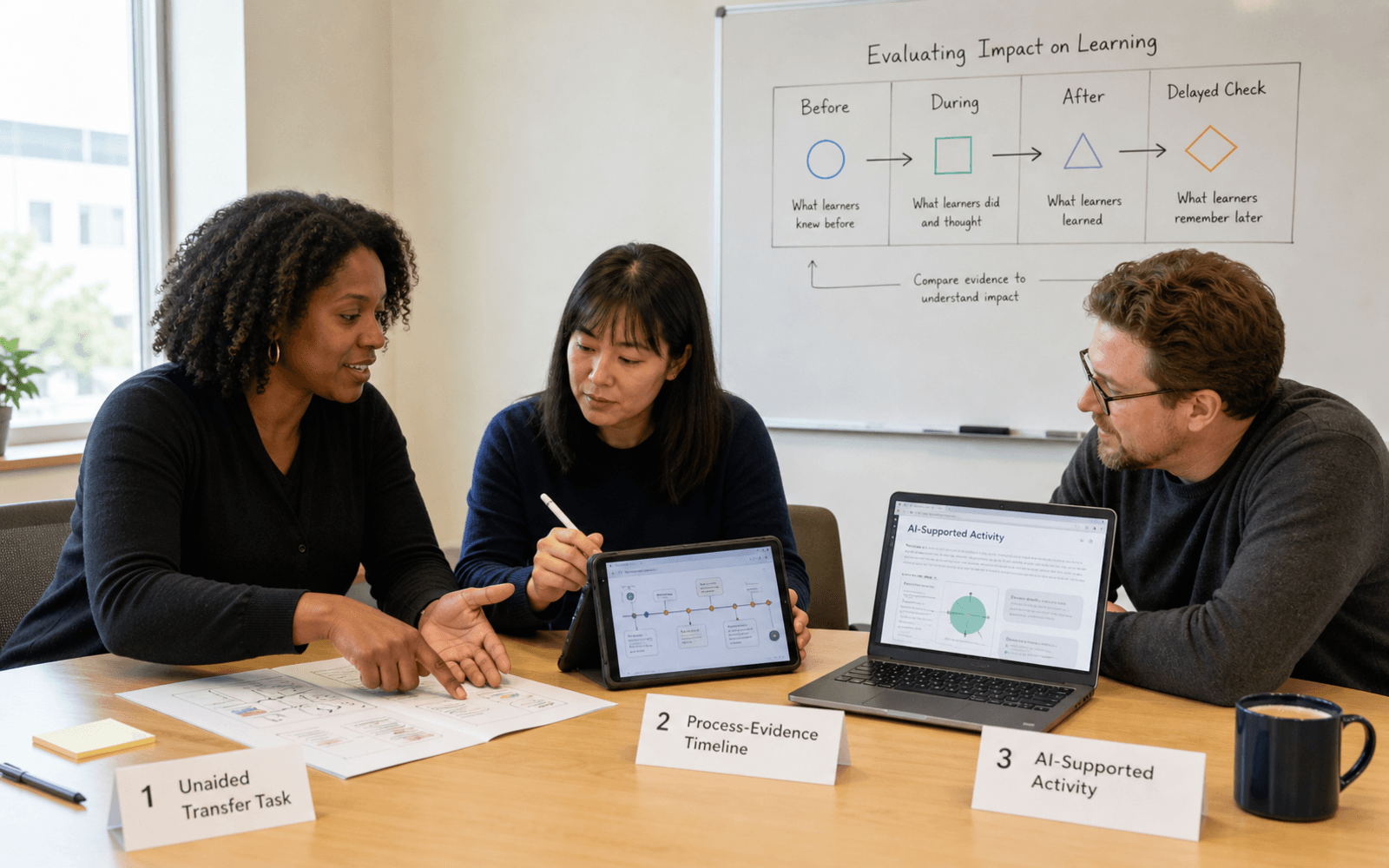
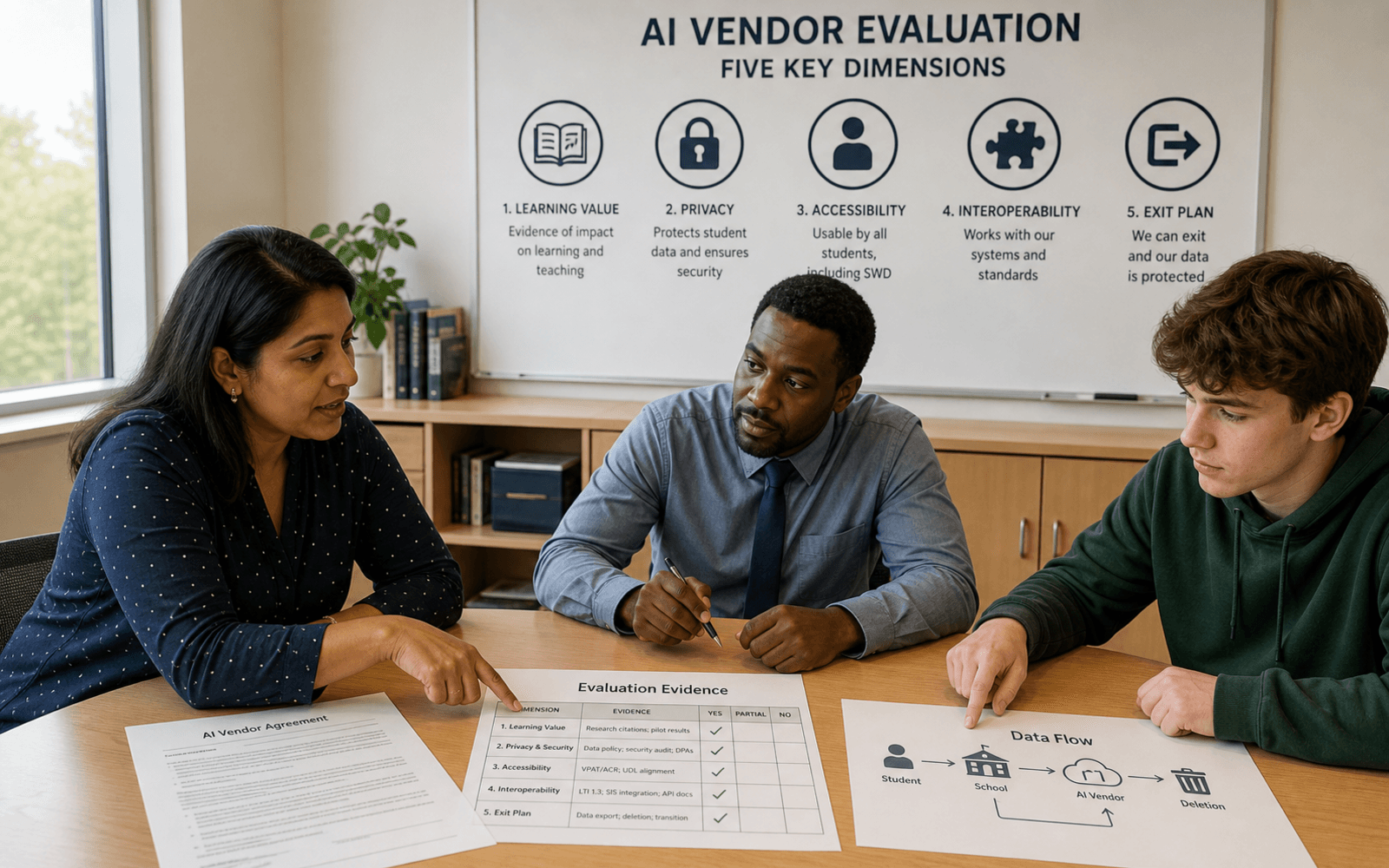
Participation continues after launch. People affected by errors need reporting and appeal routes, and governance groups need monitoring evidence and authority to require change. Teams should evaluate both the product and the participation: who joined, who was missing, whose ideas influenced decisions, and whether burdens were fairly distributed. Participatory design does not guarantee a safe or effective system, but it improves the knowledge and legitimacy available for decision-making and keeps educational AI answerable to the communities it changes. Institutions should budget participation as core project work, not unpaid goodwill. They should return findings in accessible forms, preserve dissenting views, and explain how later evidence changed the design. When participation reveals that the original problem or product is inappropriate, cancellation should count as a successful design outcome. Stopping is also valid design work.