Product news: OpenAI launches a standards-connected K-12 Educator plugin for district deployments
OpenAI, Anthropic
AI Product and Learning Report
500-word summary

Listen to the product news report
Audio summary
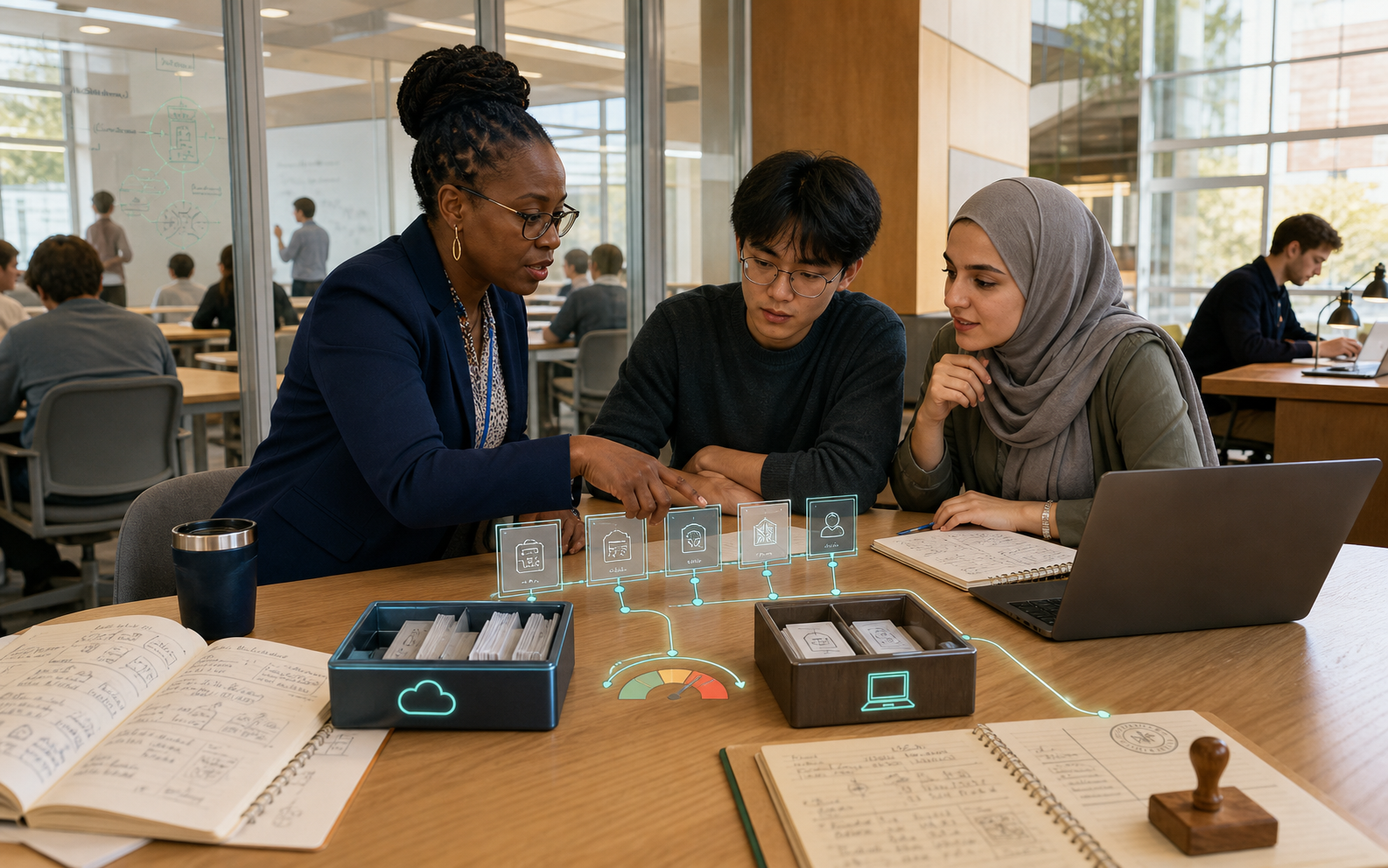
OpenAI's August 4 announcement introduces three education plugins for ChatGPT Work and Codex: one for K-12 educators, one for college educators and one for college students. A plugin packages approved apps, role-specific skills, instructions and common workflows so a user does not need to construct every process from a blank prompt. For K-12 schools, the important product change is a governed educator workflow rather than another general chatbot interface.
The K-12 Educator plugin is designed to work with materials and tools that teachers already use. OpenAI says it can create differentiated resources, design interactive visuals and surface actionable classroom insights. Examples include assignment translation, exit-ticket briefs, family updates and practice tests. Its Learning Commons integration can connect a request to local academic standards, smaller learning components and progressions between prior and future learning. The announcement explicitly leaves pedagogical decisions, grading and agentic actions under educator control.
Availability has a consequential boundary. OpenAI says the new education plugins are available through ChatGPT Edu and ChatGPT for Teachers district deployments. That does not mean every teacher with a personal Free or Plus account automatically receives the K-12 plugin. District leaders still need to decide which materials and connected apps are approved, who may install or run workflows, what actions need confirmation and how generated resources are reviewed before classroom use.
The teacher offers also differ and should not be collapsed into a universal discount. ChatGPT for Teachers, introduced in 2025, is free through June 2027 for verified educators and staff at accredited U.S. K-12 schools or districts; it is not a student plan and supports shared workspaces and administrative controls. Anthropic's Claude for Teachers, introduced on July 14, offers verified U.S. K-12 individual educators a full free year if they sign up by June 30, 2027. It includes Pro-level features, Claude Code, Cowork, Learning Commons and education connectors, but is educator-only, follows Claude's 18-and-over policy and lacks several district-management features of an organizational plan. Neither offer establishes eligibility for Hong Kong teachers.
Product capability is not learning evidence. Standards retrieval can be incomplete, a differentiated worksheet can lower rather than improve cognitive demand, and an interactive visual can misrepresent a concept. Before adoption, a school can test the plugin against real curriculum cases using synthetic student data. Reviewers can score accuracy, standards fit, accessibility, language quality, cultural relevance and whether the material reveals or obscures student thinking.
For Hong Kong schools, the announcement is best read as a design pattern: curriculum-grounded agent workflows inside an accountable workspace. A local implementation would need Hong Kong curriculum mappings, bilingual review, approved data routes and evidence that teachers save time without reducing quality. Free educator access can support exploration, but institutional deployment requires a separate decision about governance, professional learning and measurable educational value.
Districts should preserve a versioned example set and reviewer rubric so later plugin or model updates can be compared against the same teaching tasks. This turns a one-time launch review into continuing evidence about quality, workload and control.