Case-Based Reasoning
Case-based reasoning uses a relevant previous experience to interpret and respond to a new situation, with adaptation, testing, and reflection rather than direct copying.
Sources
Full lesson summary
Listen to Case-Based Reasoning
Audio summary
An experienced teacher encounters a discussion in which several learners remain silent. A previous lesson comes to mind, but the teacher also notices that the present group has different language needs and a different task. Case-based reasoning describes reasoning from particular prior situations. A useful case includes context, the problem, actions taken, outcomes, and explanations of why those actions helped or failed.
A common computational account describes a cycle of retrieving, reusing, revising, and retaining cases. Retrieve a relevant case, adapt its solution to the new situation, evaluate and revise the result, and retain what has been learned for future use. The cycle also offers a useful educational design idea, provided it is not treated as a complete description of every human decision. A collection of stories becomes more valuable when learners know how to index, compare, and question them.
Relevance is the central challenge. Two cases can share obvious features while differing in the relationship that matters. A quiet group may reflect uncertainty about content, fear of public error, inaccessible materials, or an unclear discussion task. Retrieving only cases labelled low participation could hide those differences. Cases should therefore include the conditions and reasoning behind an intervention, not merely a successful technique and a positive outcome.
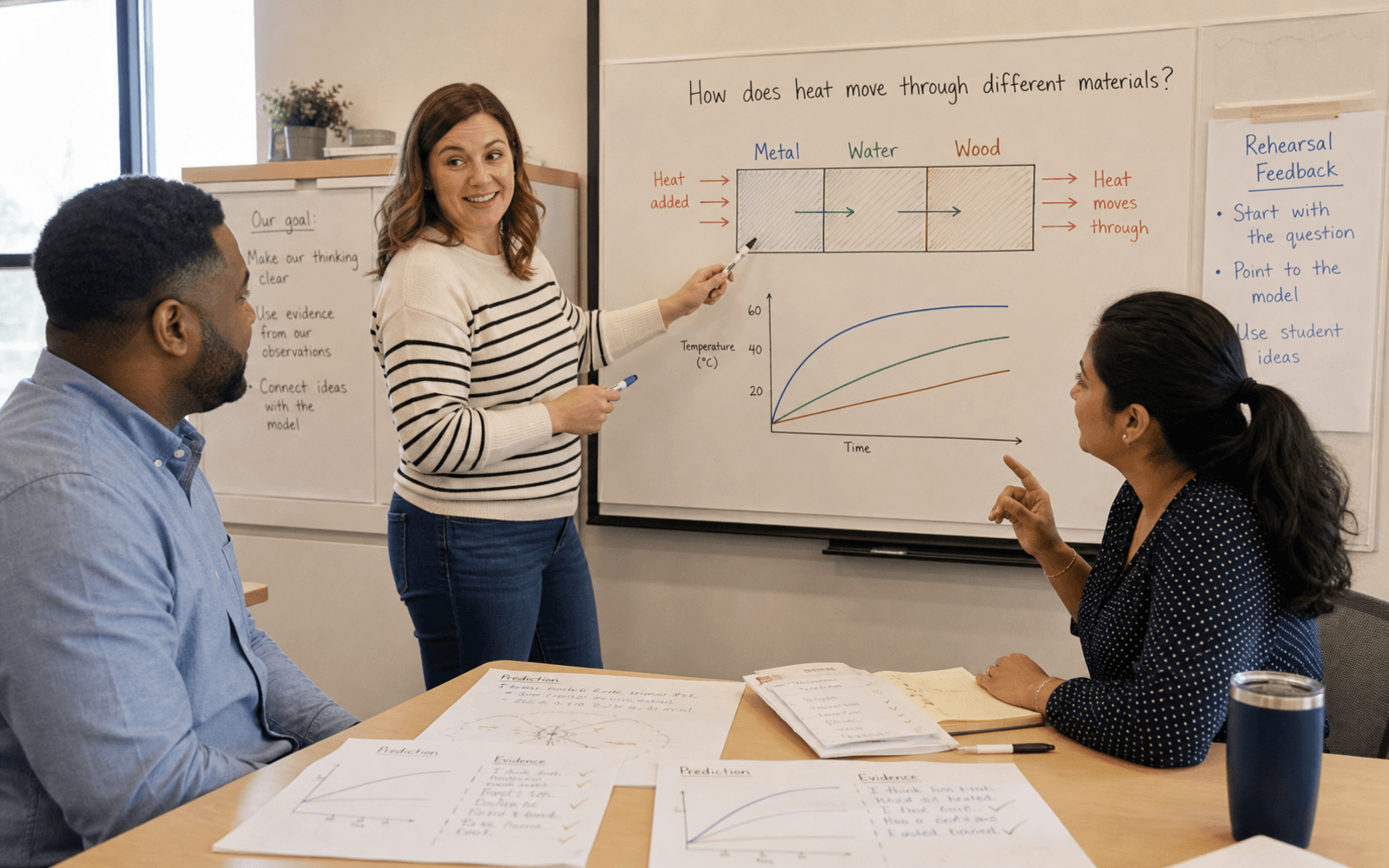
In a teacher education seminar, participants study a fictional case where individual writing followed by paired discussion improved the visibility of learners' ideas. They then receive a second case involving a student who cannot access the assigned text. Groups explain which features are similar, which differ, and why repeating the earlier participation routine would be insufficient. They propose an adapted response that first addresses access, then plan what evidence would show whether participation and understanding improved.
Reflection makes a case reusable. Ask learners to record the problem as they initially understood it, the evidence that changed their interpretation, their selected action, and the eventual result. Include unsuccessful cases and unresolved outcomes. A case library containing only polished successes can encourage overconfidence and conceal the conditions required for success. Protect privacy when using classroom experiences, and avoid turning identifiable learners into permanent examples of difficulty.
Case-based reasoning can support professional learning, but an anecdote is not a causal estimate. A method that worked in one classroom may have coincided with other changes, and remembered events can be selective. Compare cases with broader research, local evidence, and the perspectives of people involved. AI-assisted retrieval can locate candidate cases quickly, but the system's similarity score is not a professional judgment. Assess learners on their reasoning about relevance, adaptation, and verification rather than their ability to recall the most familiar story. The goal is to make experience available for thoughtful use while preserving the uncertainty and context that prevent experience from becoming an inflexible recipe.