Product news: Claude enters Google Docs, Sheets, and Slides in beta, bringing review closer to the file
Anthropic
AI Product and Learning Report
500-Wörter-Zusammenfassung
Anthropic launched Claude for Google Workspace in public beta on October 6, 2026 for paid Claude plans. The add-on works inside Google Docs, Sheets, and Slides, while separate beta connectors let Claude create and edit Google files from a conversation. The assistant can work with selected text, cells, or slides. This moves assistance closer to the artifact, but it also makes the scope of an edit more important because the source file itself can change.
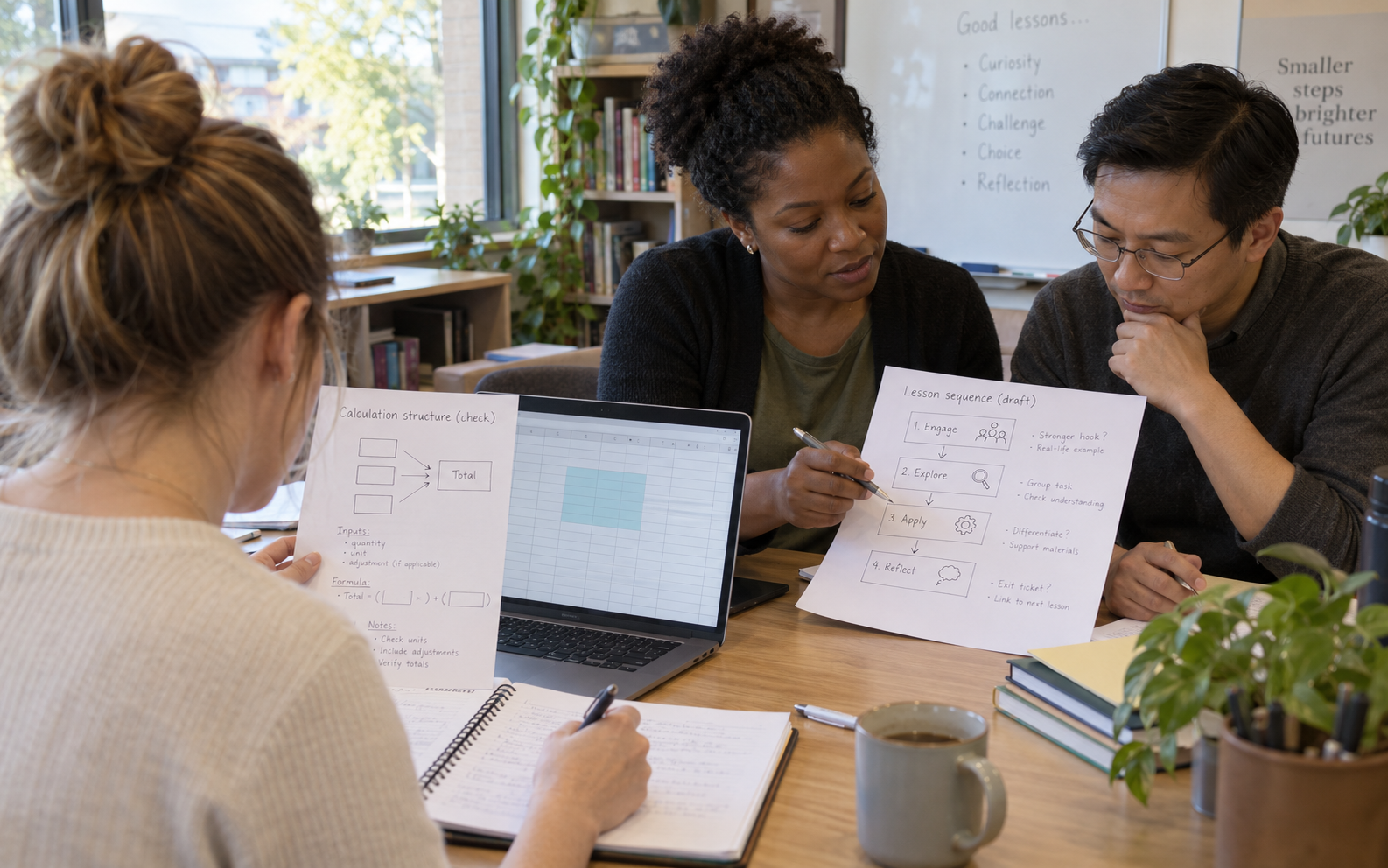
For a teacher revising a handout, the intended change may be narrow: clarify an instruction without changing the question, adjust the reading level without removing the reasoning, or reorganise headings without altering the content. A useful request states both what should change and what should remain stable. The resulting edit should then be checked in the document, rather than accepted because the assistant describes it as an improvement.
Spreadsheets require a different kind of review. A formula can produce a plausible value while selecting the wrong rows or treating missing entries as zero. In a teaching exercise, students could compare a generated calculation with a small manual example and explain any discrepancy. They should inspect the referenced cells and assumptions, not only the appearance of the chart. That turns direct editing into an opportunity to practise spreadsheet reasoning.
Presentations add another boundary between content and form. A slide can look cleaner after a revision while losing a unit, a qualification, or the connection to its source. Students could be asked to identify one detail that must remain visible and explain why. A peer could review the edited slide against the underlying material. The goal is a clearer representation that still preserves the meaning of the evidence.
OpenAI's ChatGPT for Word offers another in-document route for drafting and revision. Gemini in Classroom brings course and assignment context into study prompts. Compared with these tools, Anthropic's Workspace release offers a new way to work directly across familiar file types. The interfaces differ, but educators should still distinguish access to a file, permission to change it, and acceptance of the resulting content.
A department can establish a modest review habit without making every small edit burdensome. Staff might keep an original version for substantial revisions, define the section or range involved, and record changes that affect interpretation or assessment. Formatting corrections need a different level of attention from changes to a grading formula or research conclusion. The review should follow the consequence of the edit.
The release is likely to interest teams already working in shared Google files, though beta status and local account controls remain relevant. A useful educational adoption would reduce mechanical copying while keeping the important decisions inspectable. Learners and teachers should be able to explain what the assistant changed, why the change was wanted, and how they checked the result. Familiar document software can then become a place to practise responsible revision, rather than a surface where fluent changes happen unnoticed.