Privacy, Security, and Educational Data
How educational data move through a lifecycle, why privacy and security solve related but different problems, and how purpose limits, minimization, safeguards, and accountable governance reduce risk.
Quellen
Vollständige Zusammenfassung
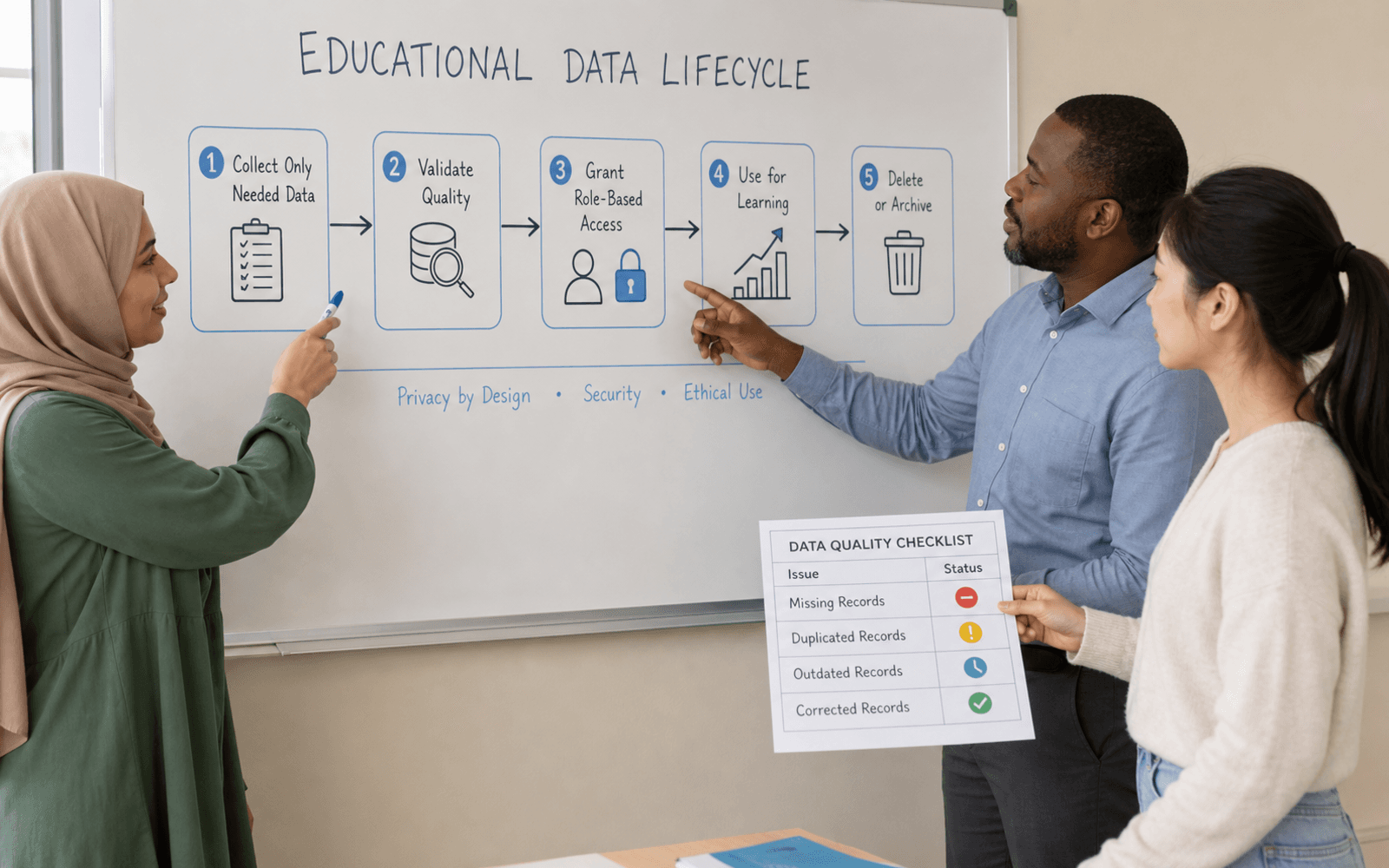
Educational data are created whenever people teach, learn, assess, communicate, or use digital services. They include names and contact details, submitted work, scores, attendance, accessibility needs, messages, recordings, device information, click histories, and inferences produced by analytics or AI. A useful way to understand these data is as a lifecycle: collection, use, sharing, storage, access, correction, retention, and deletion. Risk can appear at every stage. A dataset does not become harmless merely because it has moved from a classroom application to a school system, research repository, model provider, or backup.
Privacy and security are related but different. Privacy concerns how data processing can affect people, whether the purpose is appropriate, what choices and protections people have, and who is accountable. Security concerns protecting information and systems from unauthorized access, alteration, loss, or disruption. Strong security cannot make an unnecessary or unfair use appropriate. Likewise, a worthy educational purpose does not protect records from stolen credentials, insecure devices, or a poorly controlled vendor account. Responsible practice needs both privacy risk management and cybersecurity risk management.
Governance should begin before collection. A school can state the educational purpose, identify each data element and data flow, and ask whether less sensitive information would accomplish the same task. It should assign decision owners, document who may access the information, examine service providers and onward sharing, set retention and deletion rules, and provide understandable notice and meaningful choices where appropriate. Consent is not a universal solution because power, age, jurisdiction, and whether participation is genuinely optional all matter. Pseudonyms can reduce direct exposure, but linked behavior, rare attributes, or outside datasets may still permit reidentification.
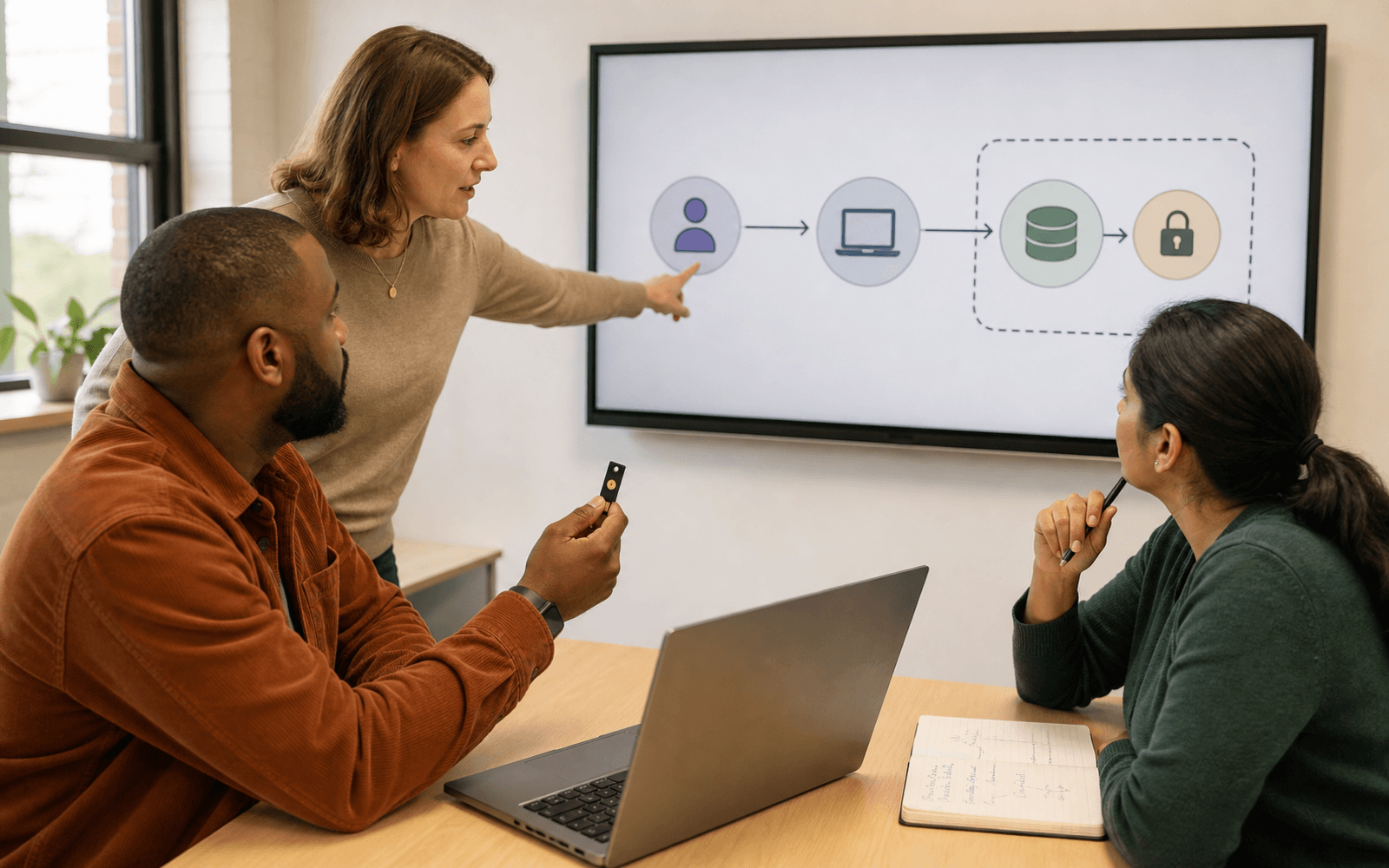
Security translates the risk assessment into layered safeguards. Examples include least-privilege access, strong authentication, appropriate encryption, secure configuration, software updates, protected backups, monitoring, staff preparation, and tested plans to detect, contain, communicate, and recover from incidents. The safeguards should match the likely harm and the sensitivity, scale, and duration of processing. Records should not be retained indefinitely simply because storage is cheap. Deletion must also address copies, exports, and contractual obligations, while audit records should show whether promised controls are operating rather than existing only in policy.
AI makes the lifecycle especially important because a system may derive predictions about knowledge, behavior, identity, or risk from ordinary learning traces. Learners and teachers should be able to distinguish observed data from inferred claims, challenge consequential errors, and know when a person will review a decision. In a classroom audit, students can map one learning tool from input to deletion, mark every person and organization that receives data, and test a proposed control against a realistic failure. They then decide what to stop collecting, what to protect, who is accountable, and what evidence would demonstrate improvement. The central principle is not to collect everything safely. It is to use only justified data for a clear educational purpose, protect them throughout their lifecycle, and remain answerable to the people affected.