Product news: ChatGPT Slides brings shared editing into Space, inviting closer review of group presentations
OpenAI
AI Product and Learning Report
৫০০-শব্দের সারাংশ
OpenAI's October 16, 2026 release notes describe the rollout of ChatGPT Slides to eligible Pro, Business, and Enterprise users with Space access on web and desktop. The feature supports real-time work on a shared deck and shared comments. The accompanying product page describes direct editing, AI-assisted changes, and presentation or export options. This October 17 report focuses on the new collaborative workflow inside Space; it is distinct from the previously reported PowerPoint add-in and Anthropic's separate slide tools.
For a group assignment, the central educational question is who can explain and defend the presentation. A deck may contain contributions from several students and an assistant, while the final visual style makes them look uniform. An instructor could therefore ask the group to identify the evidence for each major claim and describe the decisions behind two substantial revisions. This would give reviewers something more specific to examine than a general statement that the team used AI responsibly. The proposal does not assume that the software automatically records authorship in an assessment-ready form.
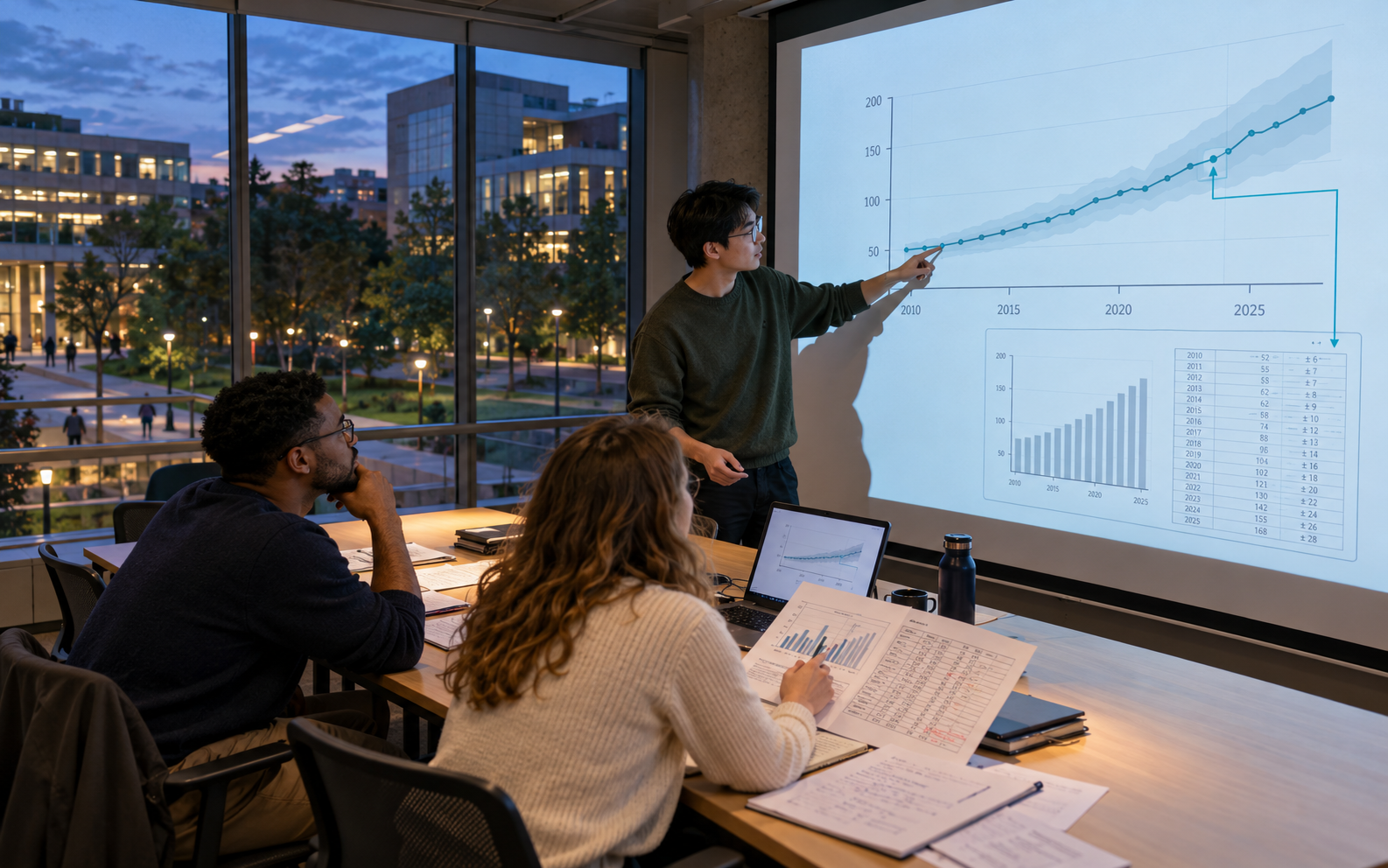
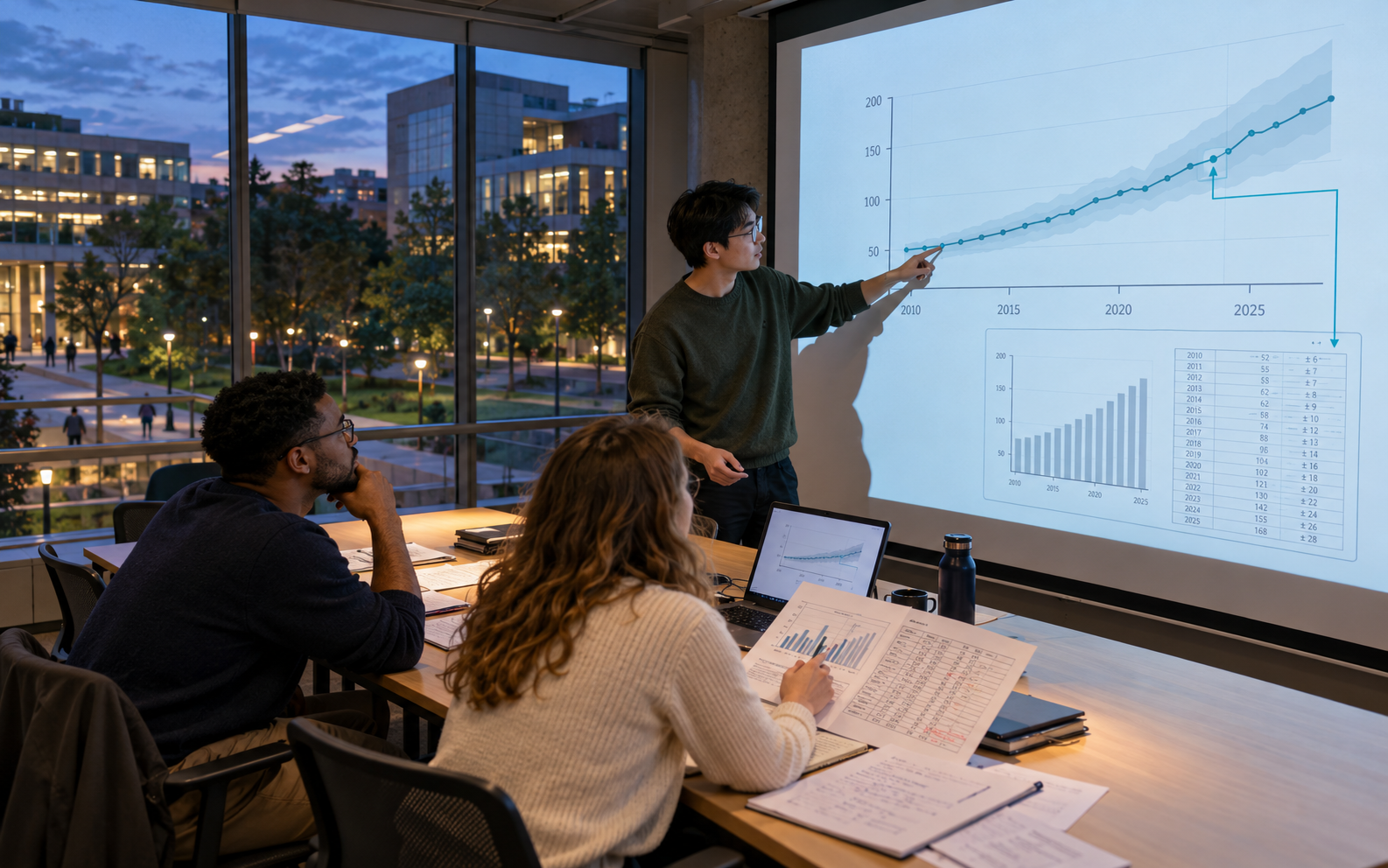
Consider a seminar in which students present a small, teacher-provided environmental dataset. One student checks units and chart axes, another checks the relationship between the data and the spoken conclusion, and another looks for omitted uncertainty. They discuss disputed changes before accepting them into the shared deck. A shortened sentence should still express what the evidence supports. If a visually attractive chart suggests a trend that the underlying values do not justify, the group should revise the chart and explain the problem in their own words.
The presentation could then undergo a deliberately focused peer review. Reviewers receive one question: which slide contains a claim that they cannot trace to the supplied evidence? The authors respond by improving the explanation, adding the missing support, or removing the claim. A separate round can address visual legibility and navigation. Keeping those rounds explicit helps the teacher see whether the group improved the argument, improved its appearance, or both. These are suggested assessment activities, not outcomes demonstrated by the product announcement.
Individual understanding still needs its own opportunity to appear. After the group presentation, each student could explain a selected chart without the deck, respond to a changed assumption, or identify a conclusion the data cannot support. The task need not reproduce every production step; it should test the reasoning the course intends students to learn. A shared artifact can be useful evidence of collective work while remaining insufficient evidence of each member's understanding, especially when an assistant helped reorganize or rewrite the content.
For institutions, a sensible pilot would start with an eligible teaching team and a bounded presentation task, then examine access, revision decisions, and the quality of students' explanations. The announced plan and Space requirements should be checked before making participation compulsory. Exported presentations should also be reviewed in the format students will actually present. The release offers another place to create and revise together; its educational value will depend on the assignment's demands for evidence, explanation, and individual accountability, rather than on the polish of the finished slides alone.