Product news: OpenAI retires Atlas while Claude Code makes auto mode the default, turning agent handoffs into a learning-design issue
OpenAI, Anthropic, Google for Education
AI Product and Learning Report
৫০০-শব্দের সারাংশ

This product-news report follows a shift from assistants that suggest work to agents that navigate, code and act across a workflow. OpenAI scheduled Atlas to stop working on August 9, 2026, and is moving browser-based agent capabilities into ChatGPT and Codex. Anthropic announced that new Claude Code sessions on Pro, Max and Team plans will start in auto mode from August 14 unless a user or administrator has pinned another default. Google’s Gemini for Education provides the explicitly educational comparison: its published purposes are to help institutions teach, learn and work inside a managed environment. The common design question is where an agent should continue independently and where a person must take control.
OpenAI’s transition guide says Atlas bookmarks, open tabs and browser history do not transfer automatically. Users were told to export or save important material and to treat cookies and session files as sensitive. The replacement direction is a more capable browser experience in ChatGPT and Codex, including multiple tabs, downloads, improved navigation and account-login support where available. For learners and researchers, migration is therefore not only a feature change. It is a reminder that an agent’s working context includes provenance, saved sources, authenticated sessions and records that may disappear when a product changes.
Anthropic’s August 7 Claude Code update changes the permission model. Auto mode routes each tool call through a classifier intended to block irreversible, destructive or outside-environment actions. When blocked, Claude may find a safer path or ask for approval; repeated blocks return the session to manual review. Anthropic reports that, in a controlled test with 1,053 paid participants, people stopped 13.6 percent of inserted dangerous commands while auto mode stopped 89 percent. Those are vendor-reported results from a test environment, not proof that autonomous coding is safe in every school or production system. Enterprise and API deployments remain opt-in initially, and Anthropic still recommends human review for high-stakes infrastructure changes.
Gemini for Education frames the purpose boundary directly. Google describes uses across teaching, learning and work: lesson planning, differentiated materials and assessment design; explanations, practice and writing feedback; and administrative or research support. It also describes a distinct under-18 experience, organizational data protections and administrator-managed access. These product claims do not establish learning gains, but they make a useful evaluation frame. A browser or coding agent should be attached to a defined educational purpose, not enabled merely because it can operate for longer.
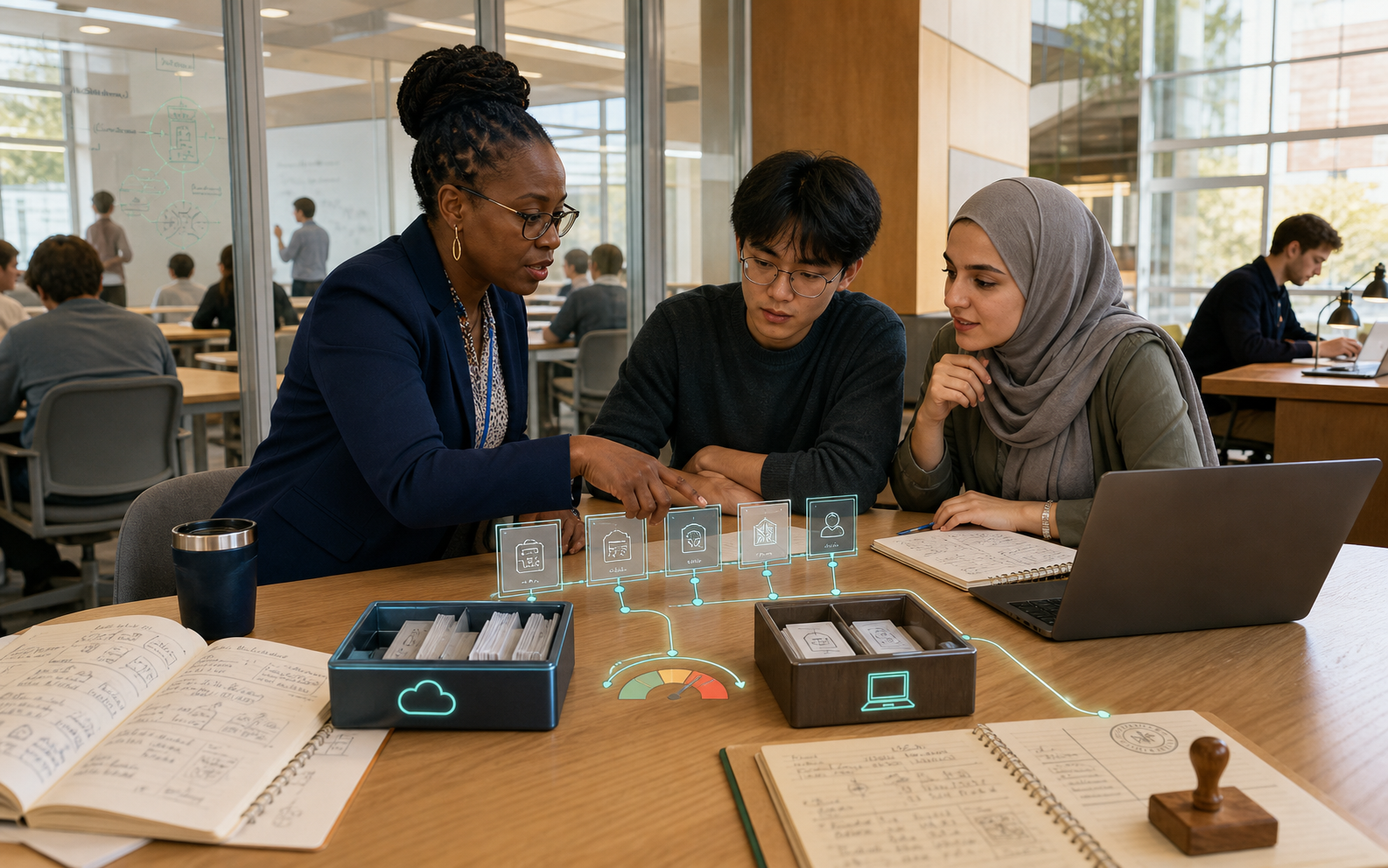
For Hong Kong schools and universities, a responsible pilot can make the handoff visible. Students might ask an agent to collect sources or test code in a limited workspace, then inspect its history, explain rejected actions and independently defend the final reasoning. Institutions should specify which accounts and data an agent may access, retain versioned artifacts, require approval for publishing or destructive actions and prepare an exit plan for product changes. Agent literacy now includes knowing what the system did, what safeguards actually ran and when fluent automation must yield to accountable human judgment.